
Discover the best website marketing strategies for 2026. Learn proven tactics to increase traffic, generate leads, and grow your home service business.
Running a home service business without a solid website marketing plan is like having a truck with no gas. You might look the part, but you’re not getting anywhere. The best website marketing strategies in 2026 combine multiple tactics that work together to drive traffic, generate leads, and convert visitors into paying customers. Whether you run a plumbing company in Houston or an HVAC business in Dallas, your website needs to do more than just exist online. It needs to actively bring in business every single day. Ready to turn your website into a lead-generating machine? Let’s break down what actually works.
Understanding What Makes Website Marketing Different in 2026
Website marketing isn’t what it used to be.
The days of building a basic site and hoping people find it are long gone. Today’s best website marketing strategies require a comprehensive approach that touches every part of your digital presence.
Think of your website as the hub of a wheel. Every marketing activity you do should point back to it. Your social media posts, your Google Ads, your email campaigns, even your truck wraps with your web address. They all drive people to one central location where you control the experience.
The Shift Toward Intent-Based Marketing
Modern consumers research differently than they did five years ago.
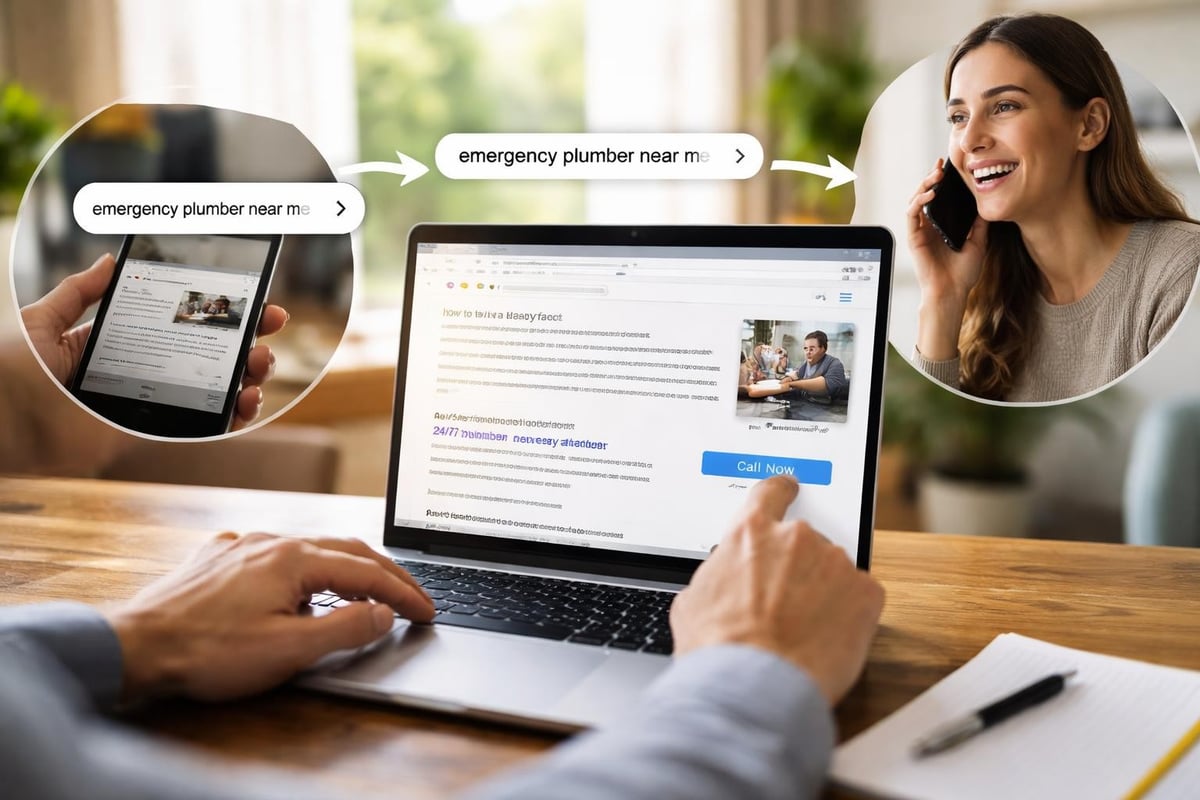
When someone searches “emergency plumber near me” at 2 AM, they’re not browsing. They’re ready to call someone right now. Your website marketing needs to capture these high-intent moments and convert them immediately.
Here’s what matters most:
- Fast page load times (under 3 seconds)
- Mobile-first design that works on any device
- Click-to-call buttons prominently displayed
- Clear service areas listed
- Transparent pricing information
- Customer reviews front and center
The best website marketing strategies prioritize user experience because that’s what Google rewards. Sites that answer questions quickly and make it easy to take action consistently outrank prettier sites that confuse visitors.
Local SEO: The Foundation of Home Service Marketing
If you’re not showing up in local search results, you’re invisible to your best customers.
Local SEO optimization is hands-down one of the best website marketing strategies for home service businesses. Why? Because nearly 80% of local searches result in a purchase within 24 hours.
Dominating Google Map Pack Results
The Google Map Pack (those three businesses that show up with the map) drives more clicks than almost anything else in search results.
Getting into that top three requires specific tactics:
- Claim and optimize your Google Business Profile with accurate business hours, service areas, and categories
- Build location-specific pages for every city you serve (not just one generic service area page)
- Earn consistent citations across directories like Yelp, BBB, and industry-specific sites
- Generate fresh reviews from real customers every single week
- Add posts and updates to your Google Business Profile regularly
Your plumbing SEO services should include deep local optimization because that’s where the phone calls come from. A plumber in San Antonio doesn’t need to rank nationally. They need to own the local market.
Creating Location-Specific Content That Ranks
Generic service pages don’t cut it anymore.
You need dedicated pages for each service in each location you serve. Not thin content either. Substantial pages that answer real questions people in that specific area are asking.
| Content Type | Purpose | Example |
|---|---|---|
| City Service Pages | Rank for “service + city” searches | “Emergency Plumbing in Fort Worth” |
| Neighborhood Guides | Capture hyperlocal searches | “Plumbers Serving Alamo Heights” |
| Local Problem Solving | Answer area-specific issues | “Hard Water Solutions for Austin Homes” |
| Community Content | Build local authority | “Supporting San Antonio Youth Sports” |
Each page should include local landmarks, service area specifics, and content that proves you actually work in that area. Google is smart enough to spot fake local pages.
Content Marketing That Actually Generates Leads
Content marketing gets misunderstood in the home service industry.
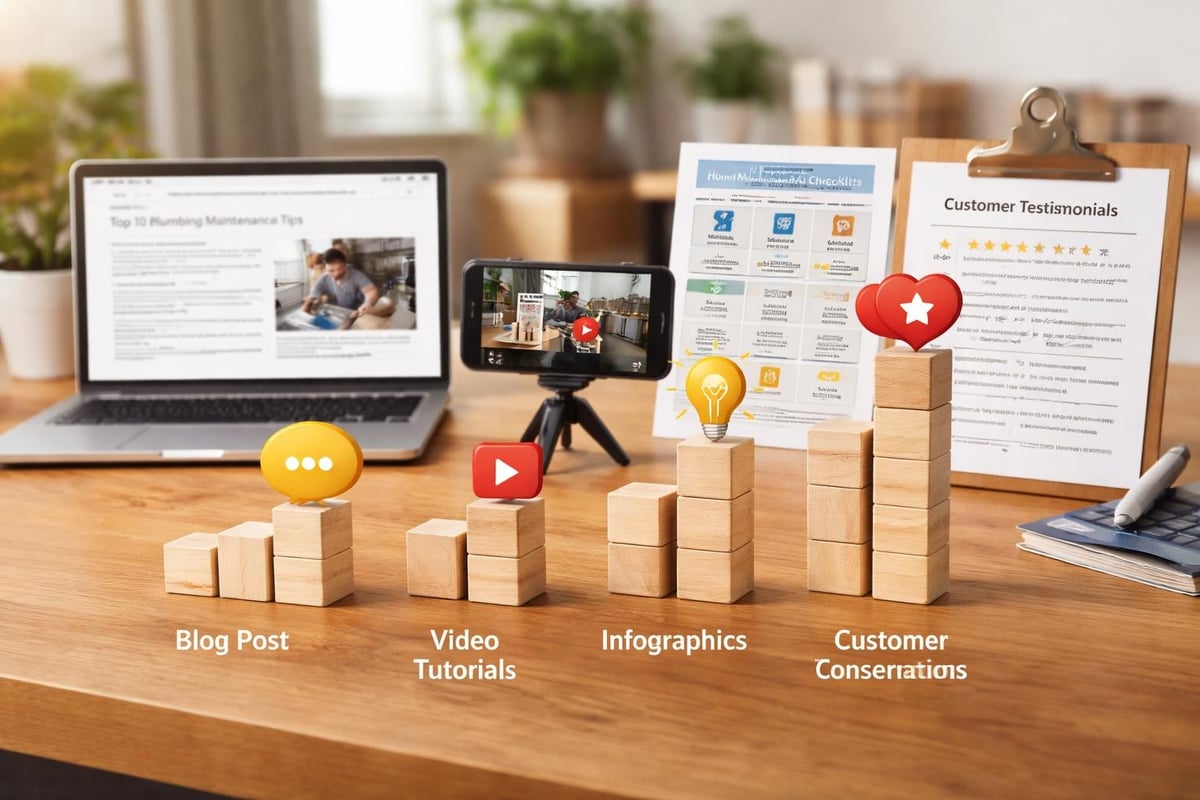
You don’t need to become a publishing house. You need content that answers the exact questions your customers ask before they’re ready to call. The best website marketing strategies include content that moves people from research mode to decision mode.
The Service Business Content Framework
Here’s what works for home service companies:
Problem-Aware Content targets people who know they have an issue but don’t know the solution. Articles like “Why Is My Water Heater Making Noise?” capture these searches.
Solution-Aware Content reaches people comparing options. “Tankless vs. Traditional Water Heaters” helps them evaluate while positioning your expertise.
Service-Ready Content converts people ready to hire. “Emergency Water Heater Replacement in Dallas” with clear pricing and availability wins the call.
You don’t need 50 blog posts a month. You need the right 20-30 cornerstone pieces that cover every stage of the buyer journey for your core services.
Video Content for Home Services
Video outperforms written content in almost every metric that matters.
A 60-second video showing how you diagnose an AC problem builds more trust than a 1,000-word article. People want to see your technicians, your trucks, and your actual work.
Video content priorities:
- Service explainer videos (what to expect when you call)
- Before-and-after project showcases
- Common problem diagnosis guides
- Customer testimonial interviews
- Seasonal maintenance tips
Post these on your website, YouTube, and social media. Each video is an opportunity to rank in both Google and YouTube search results. According to recent website promotion research, video content increases time on site by an average of 88%.
Conversion Rate Optimization: Turning Visitors Into Calls
Traffic without conversions is just expensive entertainment.
The best website marketing strategies obsess over conversion rates because that’s where marketing becomes revenue. If 1,000 people visit your site each month and only 10 call, you have a conversion problem, not a traffic problem.
Essential Conversion Elements for Service Sites
Your website needs to make calling you the obvious next step.
Mobile Click-to-Call Buttons should appear at the top of every page. Not buried in the footer. Right where thumbs naturally land.
Trust Signals include licenses, certifications, insurance information, years in business, and real customer photos. The more proof you provide, the more calls you get.
Clear Value Propositions tell visitors exactly why they should choose you. “24/7 Emergency Service with 90-Minute Response Times” is more compelling than “Quality Plumbing Services.”
Friction-Free Forms ask for only the essential information. Name, phone, and service needed. That’s it. Every additional field kills conversions.
Here’s what actually moves the needle:
- Live chat during business hours
- After-hours form submissions that trigger immediate text responses
- Callback scheduling tools
- Transparent service area maps
- Upfront pricing ranges (even if they’re estimates)
A/B Testing What Actually Matters
Test one element at a time.
Change your headline and measure the difference in form submissions. Test different call-to-action button colors. Try various phone number placements.
Small improvements compound. A 10% increase in conversion rate with the same traffic means 10% more revenue without spending another dollar on advertising.
Pay-Per-Click Advertising for Immediate Results
SEO takes time. PPC delivers today.
The best website marketing strategies combine both because they serve different purposes. PPC services give you immediate visibility while your organic rankings build over time.
Google Ads for Home Service Businesses
Google Search Ads put you at the top of results for your most valuable keywords.
When someone searches “emergency HVAC repair Dallas” at midnight, your ad can be the first thing they see. You only pay when they click.
Campaign structure that works:
- Emergency service campaigns with high bids on high-intent keywords
- Installation campaigns targeting replacement and new system searches
- Maintenance campaigns with lower bids for routine service searches
- Brand protection campaigns to own your business name searches
Location targeting is critical. Don’t waste budget showing ads outside your service area. Set precise radius targeting around your coverage zones.
Local Service Ads (Google Guaranteed)
LSAs appear above even regular Google Ads.
You only pay for actual leads, not clicks. Google verifies your business, and you get the “Google Guaranteed” badge that increases trust dramatically.
These work exceptionally well for home service businesses because they’re designed specifically for local service providers. The lead quality tends to be higher than traditional PPC because customers fill out a detailed form before contacting you.
| Ad Type | Positioning | Cost Model | Best For |
|---|---|---|---|
| Local Service Ads | Top of page | Per lead | Emergency services |
| Google Search Ads | Below LSAs | Per click | All services |
| Display Ads | Various sites | Per click/impression | Brand awareness |
| Remarketing Ads | Following visitors | Per click | Re-engaging traffic |
Email Marketing That Nurtures and Converts
Your email list is the only marketing asset you truly own.
Social media platforms can change algorithms. Google can update rankings. But your email list stays yours. The best website marketing strategies include consistent email nurturing because it keeps your business top-of-mind.
Building Your Email List Strategically
Every website visitor should have an opportunity to join your list.
Offer something valuable in exchange. A seasonal maintenance checklist. A homeowner’s guide to common plumbing issues. A discount on their first service call.
List building tactics:
- Exit-intent popups offering valuable resources
- Content upgrades on high-traffic blog posts
- Service estimate forms that opt people in
- Past customer email collection at point of service
- Referral incentives for sharing your emails
Segment your list by service interest and location. Someone who downloaded your AC maintenance guide doesn’t want emails about water heater installation.
Email Campaigns That Drive Revenue
Send value first, pitch second.
A monthly newsletter with seasonal maintenance tips positions you as the expert. When their AC breaks in July, guess who they’re calling?
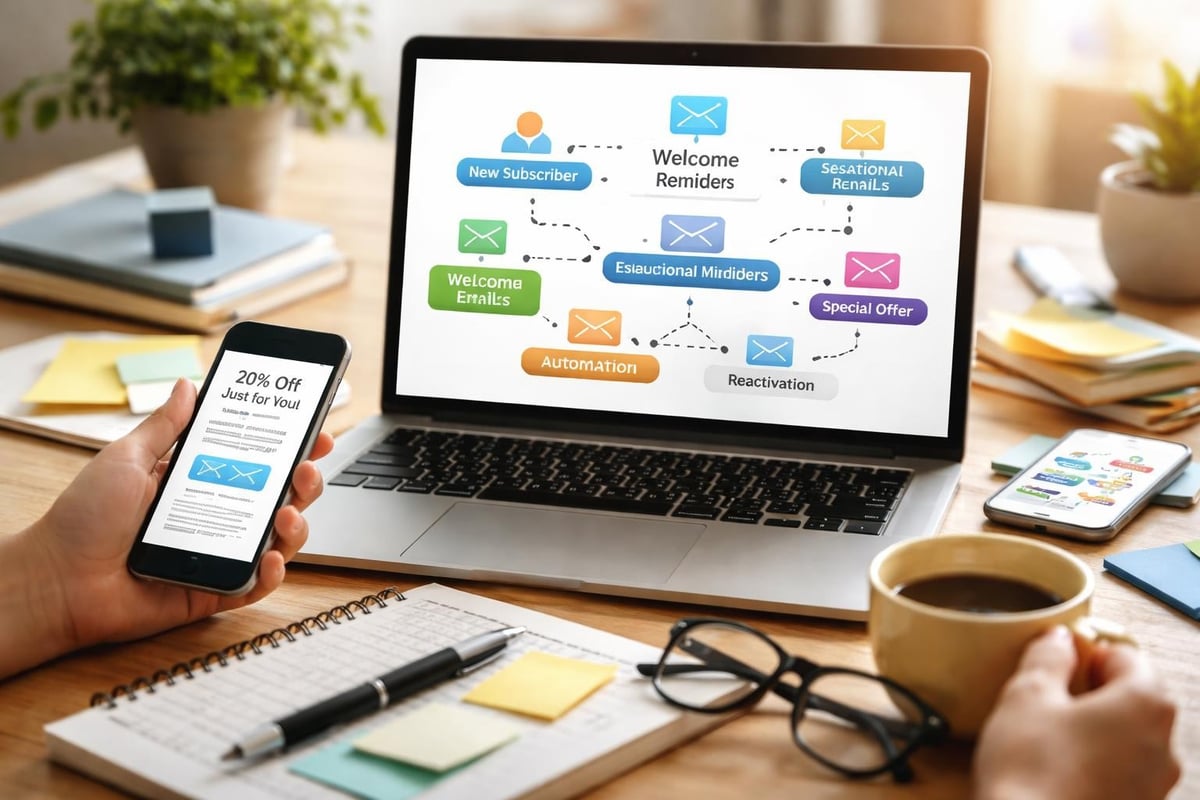
Email campaign types:
- Seasonal reminders about AC tune-ups before summer or heater checks before winter
- Educational content that helps homeowners maintain their systems
- Special promotions for specific services during slower seasons
- Review requests after completed jobs
- Reactivation campaigns for customers who haven’t used your services in 12+ months
According to experts discussing online presence management, email marketing delivers an average ROI of $42 for every $1 spent. That’s hard to beat.
Social Media Marketing for Local Brand Building
Social media isn’t about going viral. It’s about staying visible.
For home service businesses, platforms like Facebook and Instagram serve as digital word-of-mouth. When choosing website builders with marketing tools, integration with social platforms matters for consistency.
Platform Selection for Home Services
You don’t need to be everywhere. Be where your customers are.
Facebook remains the dominant platform for home service marketing. Your customers are there, they’re in local groups, and Facebook’s ad targeting is incredibly precise.
Instagram works well for visually impressive work. Before-and-after transformations, new installations, and team culture content perform best.
YouTube is technically social media and functions as the second-largest search engine. Tutorial content and project showcases live there permanently.
LinkedIn matters if you do commercial work or want to build B2B relationships with property managers and contractors.
Skip TikTok unless you have someone dedicated to creating trending content. It’s time-intensive and rarely drives home service leads.
Content That Builds Local Authority
Post consistently but don’t overthink it.
Content mix that works:
- 40% Educational (tips, how-tos, problem-solving)
- 30% Project showcases (before-and-after, installations)
- 20% Community involvement (local events, sponsorships)
- 10% Promotional (specials, seasonal offers)
User-generated content like customer photos and testimonials outperforms polished marketing content. Real people sharing real experiences builds trust faster than anything else.
Engage with local community pages. Answer questions in homeowner groups. Be helpful without being salesy. This grassroots approach builds recognition that translates to calls when people need your services.
Link Building and Authority Development
Backlinks remain a critical ranking factor.
Link building strategies for home service businesses differ from other industries. You’re not trying to get mentioned in national publications. You need relevant, local authority.
Local Link Building Tactics
Start with the easy wins.
Local business directories like your Chamber of Commerce, Better Business Bureau, and industry associations provide authoritative local links.
Community sponsorships of youth sports teams, local charities, and community events often come with website recognition and backlinks.
Local media coverage through press releases about community involvement, unique services, or expert commentary on local issues builds both links and brand awareness.
Partnership pages with complementary businesses (electricians linking to plumbers, HVAC companies linking to roofers) create mutual benefit.
Content That Earns Natural Links
Create resources other sites want to reference.
Comprehensive guides like “Complete Home Maintenance Schedule for Texas Homeowners” become linkable assets. Local real estate agents, property managers, and home improvement bloggers link to truly useful resources.
Original research or local data studies earn links naturally. Survey your customers about common issues, compile the data, and publish the findings. Local news sites and industry publications link to original research.
Technical SEO and Website Performance
Your website’s technical foundation affects everything else.
The best website marketing strategies require a solid technical base. All the content and backlinks in the world won’t help if your site is slow, broken, or penalized.
Core Technical Elements
Site speed impacts both rankings and conversions. Research from top online marketing services shows that pages loading in 1-2 seconds have the highest conversion rates.
Mobile optimization is non-negotiable. Over 60% of home service searches happen on mobile devices. If your site doesn’t work perfectly on phones, you’re losing more than half your potential customers.
SSL security (the little lock icon in the browser) is required for ranking. It’s also required for trust. Unsecured sites get warning messages that kill conversions.
Structured data markup helps Google understand your services, hours, service areas, and reviews. This powers rich results like FAQ snippets and review stars in search results.
Regular Technical Maintenance
Websites need ongoing maintenance like any other business asset.
Monthly technical checks:
- Broken link identification and fixing
- Page speed testing and optimization
- Mobile usability testing across devices
- Security updates and patches
- Backup verification
- Uptime monitoring
Working with experienced web design specialists ensures these technical elements stay optimized while you focus on running your business.
Tracking, Analytics, and Data-Driven Decisions
You can’t improve what you don’t measure.
The best website marketing strategies rely on data to guide decisions. Gut feelings and assumptions get expensive. Numbers tell the truth.
Essential Metrics for Home Service Businesses
Not all metrics matter equally.
Organic traffic shows your SEO progress over time. Track overall visitors and specific service page traffic.
Conversion rate matters more than traffic. Would you rather have 1,000 visitors and 10 calls or 500 visitors and 25 calls?
Cost per lead from paid advertising tells you which campaigns generate affordable leads and which waste money.
Lead quality scores help identify which sources send ready-to-buy customers versus tire-kickers.
Lifetime customer value shows which marketing channels attract your best long-term customers.
| Metric | What It Measures | Why It Matters | Target for Home Services |
|---|---|---|---|
| Organic Traffic | SEO performance | Long-term growth | 20%+ increase yearly |
| Conversion Rate | Website effectiveness | Revenue impact | 3-5% for service sites |
| Cost Per Lead | Marketing efficiency | Budget allocation | Under $100 for most services |
| Phone Calls | Lead volume | Direct business | Minimum 50 monthly |
Tools That Actually Get Used
Google Analytics 4 provides comprehensive website data.
Google Search Console shows exactly which searches bring people to your site and where you rank.
Call tracking software attributes phone calls to specific marketing sources. You’ll know if that Facebook ad campaign is generating calls or just clicks.
Heatmap tools like Hotjar show where people click, scroll, and abandon your site. Visual data reveals conversion problems you’d never spot in analytics.
Reputation Management and Review Generation
Your online reputation is your most valuable marketing asset.
Reviews influence 95% of purchasing decisions in the home service industry. The best website marketing strategies include systematic review generation because it compounds over time.
Generating Reviews Consistently
Make review requests part of your standard process.
Immediately after service completion, send a text or email thanking the customer and requesting a review. Strike while satisfaction is highest.
Make it easy by including direct links to your Google Business Profile, Facebook page, and industry-specific review sites.
Incentivize honestly by offering entry into monthly drawings. Never pay directly for reviews, but you can reward the action of leaving feedback.
Ask in person at the point of service. Your technician can hand customers a card with review links and simple instructions.
Responding to All Reviews
Every review deserves a response, positive or negative.
Thank positive reviewers by name and mention specific details from their review. This shows future customers that you’re attentive and appreciative.
Address negative reviews professionally and publicly, then take the conversation private to resolve the issue. Future customers read your responses and judge your character.
Reviews with business responses get 30% more engagement than those without responses. They also signal to Google that you’re an active, engaged business worth promoting.
Integration: Making All Strategies Work Together
The magic happens when everything connects.
Isolated tactics underperform. Integrated strategies multiply results. The best website marketing strategies create synergy between channels.
The Integrated Marketing Ecosystem
Your SEO content should feed your email marketing. Your social media should promote your blog content. Your PPC campaigns should target visitors who’ve already engaged with your organic content.
Here’s how integration works:
Someone finds your blog post about AC maintenance through Google search. They read it, find it helpful, and download your seasonal maintenance checklist in exchange for their email.
Now they’re on your email list receiving monthly tips. They see your Facebook ads because you’re remarketing to site visitors. They notice your trucks around town because you mentioned your service area in that first blog post.
Six months later when their AC breaks, who do you think they call? The company they’ve heard from consistently or a random name in search results?
Multi-Channel Attribution
Give credit where it’s due across the entire customer journey.
Most people don’t buy from the first touchpoint. They might find you through organic search, leave, see a Facebook ad, visit again, subscribe to your email list, and call three weeks later after receiving a seasonal promotion.
Which marketing channel gets credit for that customer? All of them. Understanding the cost for digital marketing means recognizing that multiple touchpoints build the trust that converts.
Track assisted conversions, not just last-click attribution. This reveals which channels start relationships versus which ones close deals.
Ongoing Optimization and Scaling What Works
Marketing isn’t set-it-and-forget-it.
The best website marketing strategies evolve based on performance data. Double down on what works, fix what’s broken, and cut what consistently underperforms.
Monthly Optimization Routine
Set aside time each month to review performance and make adjustments.
Review analytics to identify top-performing content, highest-converting pages, and traffic trends.
Analyze lead quality from each source to determine where to increase or decrease spending.
Update content on your highest-traffic pages to keep them fresh and improve rankings.
Test new tactics on a small scale before rolling them out fully. One new thing per month prevents overwhelm.
Competitive analysis shows what local competitors are doing and reveals opportunities they’re missing.
Scaling Successful Campaigns
When something works, do more of it.
If blog posts about a specific service consistently drive calls, create more content around that topic. If a particular Google Ad campaign delivers leads under your target cost, increase the budget.
But scale intelligently. Doubling your PPC budget doesn’t always double your results. There’s a point of diminishing returns in every channel.
Consider exploring small business website builders that can scale with your growing marketing needs as your business expands.
Seasonal Marketing Strategies for Home Services
Your business isn’t the same every month. Your marketing shouldn’t be either.
HVAC companies get slammed in summer and winter but slow down in spring and fall. Plumbers see spikes during freeze warnings. The best website marketing strategies account for these predictable patterns.
Planning Around Service Demand
Pre-season campaigns generate leads before peak season hits. Market AC tune-ups in April and May before the Texas heat arrives. This fills your schedule during typically slower months.
Peak season optimization maximizes emergency service visibility. Increase PPC budgets for high-intent emergency keywords when you know demand will spike.
Off-season positioning builds authority and list growth when service demand drops. Focus on educational content, blog posts, and email list building.
Holiday considerations affect both your availability and customer behavior. Plan content calendars around major holidays when service needs change.
Weather-Triggered Marketing
Set up campaigns that activate based on weather conditions.
When forecasts predict a freeze, automatically increase bids on frozen pipe keywords and send emergency preparation emails to your list.
Heat waves trigger AC emergency campaigns. Heavy rain activates water damage prevention content. Weather-responsive marketing captures high-intent customers at exactly the right moment.
Working with specialists like those providing HVAC digital marketing services ensures your campaigns adjust to seasonal and weather patterns automatically.
Budget Allocation and ROI Maximization
Money spent without measurement is gambling, not marketing.
The best website marketing strategies allocate budget based on documented ROI, not guesses or industry averages.
Smart Budget Distribution
No universal budget split works for every business. Your allocation depends on your market maturity, competition level, and business goals.
General framework for established businesses:
- 40-50% SEO and content (long-term foundation)
- 30-40% PPC and paid advertising (immediate leads)
- 10-15% email and retention marketing (customer lifetime value)
- 5-10% testing and new channels (future growth)
Newer businesses need heavier PPC investment initially while SEO builds momentum. Shift budget toward organic over time as rankings improve.
Mature businesses with strong rankings can reduce PPC and invest more in retention and customer lifetime value maximization.
Calculating Marketing ROI
Track revenue generated per marketing dollar spent.
If you spend $5,000 on PPC and it generates 25 leads that close at 40%, that’s 10 new customers. If your average job is $800, that’s $8,000 in revenue from $5,000 in marketing. That’s profitable.
Compare this across channels. Maybe SEO costs $2,000 monthly, generates 40 leads, closes at 50% (higher quality leads), and produces $16,000 in revenue. That’s even better ROI.
Understanding these numbers guides smart budget decisions. Resources discussing website builder considerations emphasize choosing platforms that support your specific marketing strategy and budget.
The best website marketing strategies combine multiple tactics working together toward one goal: generating more revenue for your home service business. From local SEO and content marketing to PPC advertising and email nurturing, each element builds on the others to create a comprehensive system that consistently delivers qualified leads. If you’re ready to implement these strategies and start seeing real results, Aim Set Win specializes in building revenue-focused digital growth systems specifically for home service businesses across Texas, combining technical optimization, high-intent content, and conversion-focused strategies that turn websites into lead-generating machines.
Jean runs growth strategy at AimSetWin, a performance marketing agency specializing in local service businesses across Texas. he's helped plumbers, HVAC companies, pest control operators, and home service brands build predictable revenue systems using data-driven advertising and conversion optimization.


