
Demand generation unlocks lost revenue by re-engaging past customers, explains core strategies, process steps, and pitfalls for local service businesses.
Every Texas plumbing and HVAC company owner knows that turning a large contact list into real, booked jobs can feel unpredictable. Service demand is never static, and success depends on timely engagement and meaningful communication. This article sheds light on demand generation for service businesses, explaining how a precise, relationship-driven approach can help you recover lost revenue and keep your schedule filled with work you want.
Table of Contents
- Demand Generation Explained For Service Businesses
- Key Types Of Demand Generation Methods
- How Demand Generation Works In HVAC And Plumbing
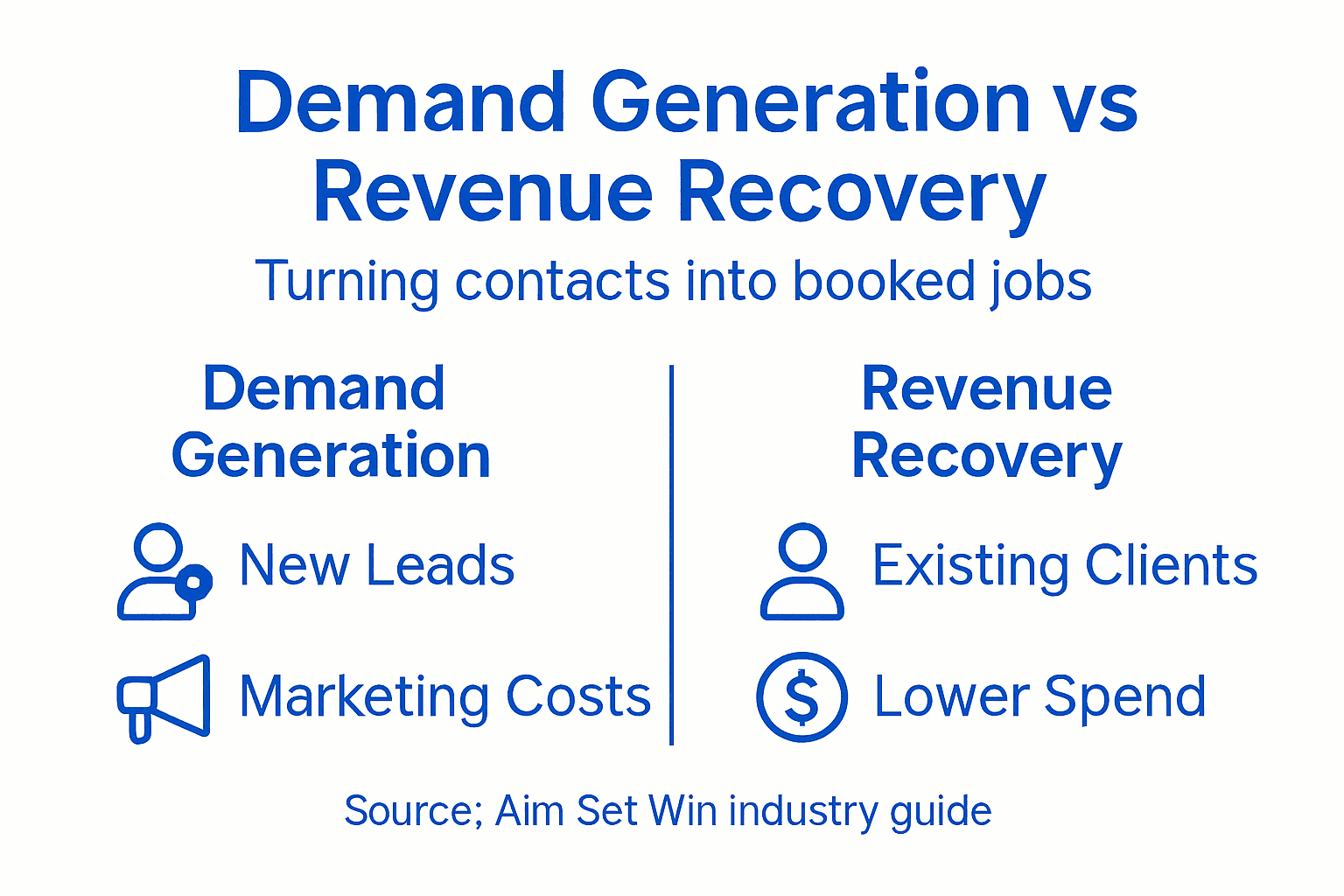
- Revenue Recovery Vs. New Lead Acquisition
- Common Pitfalls And Costly Mistakes To Avoid
Key Takeaways
| Point | Details |
|---|---|
| Demand Generation is Crucial for Service Businesses | A strategic marketing approach is essential to convert potential interest into confirmed revenue, especially in intangible service industries like HVAC and plumbing. |
| Prioritize Existing Customer Relationships | Focus on reactivating past customers through segmentation and tailored communication strategies to boost loyalty and revenue. |
| Integrate Multiple Marketing Channels | Utilize a mix of digital and offline engagement strategies to ensure comprehensive customer interaction and effective demand generation. |
| Avoid Common Pitfalls | Regularly audit data quality and communication strategies to prevent costly mistakes that can undermine demand generation efforts. |
Demand Generation Explained For Service Businesses
Demand generation is a strategic marketing approach specifically designed to create consistent interest and engagement for service businesses. Unlike traditional product sales, service industries face unique challenges in generating demand because services are intangible and only become visible at the moment of delivery. Demand generation for services requires a nuanced understanding of customer needs and precise timing.
For HVAC and plumbing companies in Texas, demand generation involves multiple interconnected strategies aimed at transforming existing customer contacts into active, booked jobs. The core objective is building a systematic process that consistently turns potential interest into confirmed revenue. Key components of an effective demand generation strategy include:
- Targeted communication with past customers
- Strategic re-engagement campaigns
- Personalized service reminders
- Proactive maintenance outreach
- Data-driven follow-up sequences
Successful demand generation recognizes that service businesses operate differently from product-based companies. Customer relationships are paramount, and each interaction represents an opportunity to demonstrate value. By understanding customer pain points and delivering timely, relevant communications, service businesses can transform dormant contacts into recurring revenue streams.
Pro tip: Track and segment your customer database by service history, potential needs, and engagement level to create hyper-targeted demand generation campaigns.
Key Types of Demand Generation Methods
Demand generation encompasses several strategic methods designed to create and nurture potential customer interest for service businesses. Demand generation strategies typically involve multiple interconnected marketing approaches that transform passive contacts into active business opportunities. These methods go beyond traditional advertising by creating comprehensive engagement pathways.
For HVAC and plumbing service businesses, demand generation methods can be categorized into several key types:
- Digital Marketing Channels
- Targeted social media campaigns
- Search engine optimization (SEO)
- Content marketing
- Email nurture sequences
- Offline Engagement Strategies
- Community event sponsorships
- Referral program development
- Local networking
- Direct mail campaigns
- Relationship-Based Approaches
- Personalized service follow-ups
- Maintenance reminder systems
- Customer education workshops
- Seasonal service promotions
Successful demand generation requires a holistic approach that combines multiple touchpoints. Customer intelligence plays a crucial role in understanding and predicting potential service needs. By integrating data-driven insights with strategic communication, service businesses can create more meaningful and timely interactions that convert contacts into booked jobs.
The ultimate goal of these demand generation methods is to build a predictable, repeatable system that consistently turns potential interest into confirmed revenue. This requires continuous refinement of communication strategies, careful segmentation of customer databases, and a deep understanding of customer pain points and service cycles.
Pro tip: Develop a comprehensive customer tracking system that monitors interaction history, service patterns, and potential future needs to create highly targeted demand generation campaigns.
How Demand Generation Works in HVAC and Plumbing
Demand generation in HVAC and plumbing industries operates through a strategic approach that transforms potential customer interest into actionable service opportunities. Demand-side resources focus on creating targeted engagement that addresses specific customer needs while optimizing service efficiency and revenue potential.
The demand generation process for service businesses like HVAC and plumbing typically involves several critical stages:
- Customer Identification
- Segmenting existing contact databases
- Analyzing past service history
- Identifying potential service needs
- Mapping customer lifecycle stages
- Strategic Communication
- Personalized service reminders
- Predictive maintenance notifications
- Seasonal service promotions
- Targeted educational content
- Engagement Acceleration
- Proactive outreach methods
- Customized communication channels
- Value-driven service recommendations
- Timely follow-up strategies
Technological innovations play a crucial role in modern demand generation. Advanced tracking systems and data analytics enable service businesses to predict customer needs before they become urgent problems. By understanding usage patterns, maintenance cycles, and potential service requirements, HVAC and plumbing companies can create highly targeted engagement strategies that convert contacts into booked jobs.

The most successful demand generation approaches combine data intelligence with strategic communication, creating a seamless pathway from initial contact to confirmed service appointment. This requires continuous refinement of customer interaction strategies, leveraging both digital and traditional communication channels to maintain consistent engagement.
Pro tip: Implement a comprehensive customer relationship management system that tracks service history, predicts maintenance needs, and automates personalized communication touchpoints.
Revenue Recovery vs. New Lead Acquisition
For service businesses like HVAC and plumbing companies, understanding the strategic difference between revenue recovery and new lead acquisition is critical for sustainable growth. Acquisition versus retention strategies reveal that most businesses overlook the immense potential of their existing customer base.
The two primary approaches to business growth differ significantly in their methodology and cost-effectiveness:
Revenue Recovery Strategies
- Reactivating past customers
- Reducing customer churn
- Increasing service frequency
- Maximizing existing contact value
- Implementing targeted re-engagement campaigns
New Lead Acquisition Strategies
- Generating entirely new customer contacts
- Expanding market reach
- Investing in broad marketing campaigns
- Developing new customer attraction channels
- Creating awareness among previously untapped segments
Cost Comparison Insights
Here’s a comparison of revenue recovery and new lead acquisition strategies for service businesses:
| Criteria | Revenue Recovery | New Lead Acquisition |
|---|---|---|
| Target Audience | Existing customers | Prospective new clients |
| Typical Conversion Rate | 60-70% | 5-20% |
| Cost Per Contact/Lead | $25-$75 | $150-$500 |
| Speed of Revenue Generation | Fast (immediate reactivation) | Slow (build awareness first) |
| Impact on Retention | Boosts long-term loyalty | Little effect on retention |
| Marketing Focus | Segmentation, follow-up | Broad outreach, branding |
- Revenue Recovery: 5-25x less expensive than new lead acquisition
- Conversion rates for existing customers: 60-70%
- New lead conversion rates: 5-20%
- Average customer reactivation cost: $25-$75 per contact
- Average new customer acquisition cost: $150-$500 per lead
Successful service businesses recognize that strategic revenue recovery often provides a more predictable and cost-effective growth mechanism. By developing sophisticated customer tracking and re-engagement systems, HVAC and plumbing companies can unlock significant revenue potential without the hefty expenses associated with constant new lead generation.
Pro tip: Develop a systematic customer database management approach that segments contacts by service history, potential needs, and reactivation likelihood to optimize your revenue recovery efforts.
Common Pitfalls and Costly Mistakes to Avoid
Demand generation for service businesses is fraught with potential errors that can dramatically undermine revenue recovery efforts. Research reveals critical pitfalls that HVAC and plumbing companies must carefully navigate to maintain effective customer engagement and growth strategies.
The most significant demand generation mistakes typically fall into several key categories:
Data and Strategy Pitfalls
- Relying exclusively on historical customer data
- Failing to adapt to changing market conditions
- Overlooking external economic factors
- Misinterpreting customer interaction signals
- Neglecting comprehensive data validation
Communication and Execution Errors
- Generic, non-personalized marketing approaches
- Inconsistent follow-up communication
- Ignoring customer segmentation
- Excessive or irrelevant outreach
- Using outdated contact information
Technical and Operational Mistakes
- Insufficient customer database management
- Poor tracking of service interaction history
- Lack of predictive maintenance strategies
- Ineffective lead scoring mechanisms
- Minimal investment in customer intelligence systems
Financial Consequences
Below is an overview of critical demand generation pitfalls and their business impact:
| Mistake Type | Common Issue | Business Impact |
|---|---|---|
| Data Management | Incomplete customer profiles | Lost opportunities, wasted spend |
| Communication Strategy | Generic messaging | Low engagement, brand dilution |
| Operational Oversights | Ineffective tracking systems | Reduced retention, missed leads |
| Financial Planning | Poor cost allocation | Higher expenses, lower ROI |
- Wasted marketing expenditure
- Reduced customer retention rates
- Missed revenue recovery opportunities
- Increased customer acquisition costs
- Diminished brand reputation
Successful demand generation requires a sophisticated, data-driven approach that anticipates and mitigates potential errors. Service businesses must develop robust systems that continuously validate data, personalize communication, and create meaningful engagement pathways that transform contacts into consistent revenue streams.
Pro tip: Implement a quarterly audit of your demand generation processes, systematically reviewing data quality, communication effectiveness, and conversion metrics to proactively identify and address potential performance gaps.
Unlock Consistent Growth by Turning Contacts Into Booked Jobs
The challenge of demand generation lies in transforming existing contacts into confirmed revenue without the high costs and uncertainties of new lead acquisition. Many HVAC and plumbing businesses struggle with maintaining customer engagement due to inconsistent communication, incomplete data, and generic messaging. The article reveals that strategic revenue recovery is often the fastest and most cost-effective way to boost growth by reactivating past customers and increasing service frequency.
At Aim Set Win, we understand this struggle and offer a proven Revenue Recovery System designed specifically for service businesses. Our system works quietly in the background to re-engage dormant contacts and turn existing demand into booked jobs within 30 days or less without spending on new leads or ads. With a focus on precise customer segmentation, personalized outreach, and continuous execution, we eliminate guesswork and deliver measurable results. Once your revenue recovery is locked in, we help scale your growth with services like SEO, paid search, and AI call handling.
Ready to stop wasting marketing dollars and start converting your contacts into reliable booked jobs?
Take control of your demand generation today with Aim Set Win. Discover how our Revenue Recovery System can work for your HVAC or plumbing business by visiting our homepage and start recovering missed revenue now.
Frequently Asked Questions
What is demand generation for service businesses?
Demand generation for service businesses is a strategic marketing approach aimed at creating consistent interest and engagement. It involves multiple strategies to turn potential customer interest into booked jobs, with a focus on understanding customer needs.
How does demand generation differ for service businesses compared to product-based businesses?
Demand generation for service businesses differs from product-based businesses primarily because services are intangible. Service businesses rely heavily on customer relationships and interactions to demonstrate value and meet specific needs, while product businesses can showcase physical items directly.
What are some effective methods for demand generation in HVAC and plumbing?
Effective methods for demand generation in HVAC and plumbing include digital marketing channels (like SEO and social media), offline engagement strategies (such as community events), and relationship-based approaches (like personalized service follow-ups and maintenance reminders).
Why is revenue recovery important for service businesses?
Revenue recovery is crucial for service businesses because it focuses on reactivating past customers and maximizing the value of existing contacts. This strategy is often more cost-effective than acquiring new leads and can lead to higher conversion rates and faster revenue generation.
Recommended
- Home 9 – Aim Set Win
- HVAC Customer Re-Engagement Workflow for Reliable Bookings
- Home 4.0 – Aim Set Win
- HVAC Predictable Growth Process for Reliable Revenue Boost
- A Modern Guide to Attorney Lead Generation
Jean runs growth strategy at AimSetWin, a performance marketing agency specializing in local service businesses across Texas. he's helped plumbers, HVAC companies, pest control operators, and home service brands build predictable revenue systems using data-driven advertising and conversion optimization.


