
Learn essential digital marketing guidelines to grow your home service business. Proven strategies for SEO, PPC, content, and conversions.
Running a successful home service business in 2026 means mastering digital marketing. But here’s the thing: most plumbers, HVAC contractors, and electricians don’t have time to become marketing experts. They’re too busy fixing leaks, installing air conditioners, and keeping customers happy. That’s where clear digital marketing guidelines come in. When you follow proven frameworks, you can generate consistent leads without wasting money on tactics that don’t work. This guide breaks down exactly what you need to know to build a digital presence that actually drives revenue. Ready to turn your website into a lead generation machine? Let’s dive in.
Understanding the Foundation of Digital Marketing Guidelines
Digital marketing guidelines are essentially your rulebook for online growth.
They’re the proven systems that separate businesses getting 50 calls a month from those struggling to get five.
Think of them as the difference between guessing what might work and following a tested roadmap. Digital marketing encompasses everything from how you show up in Google searches to how you run paid ads and create content.
For home service businesses specifically, these guidelines need to focus on what actually matters: phone calls, service requests, and booked appointments.
Not vanity metrics like social media followers or website traffic that doesn’t convert.
Why Home Service Businesses Need Specific Guidelines
Your business is different from an e-commerce store or a software company.
You serve specific geographic areas. Your customers need you NOW when their toilet’s overflowing or their AC dies in July. Your competition is the guy with the truck parked three blocks away, not someone across the country.
That’s why generic digital marketing advice falls flat.
Home service digital marketing guidelines should prioritize:
- Local search visibility (Google Maps, local pack rankings)
- High-intent keywords (people ready to hire RIGHT NOW)
- Mobile-first everything (most emergency searches happen on phones)
- Conversion-focused design (every page should drive calls)
- Trust signals (reviews, certifications, local presence)
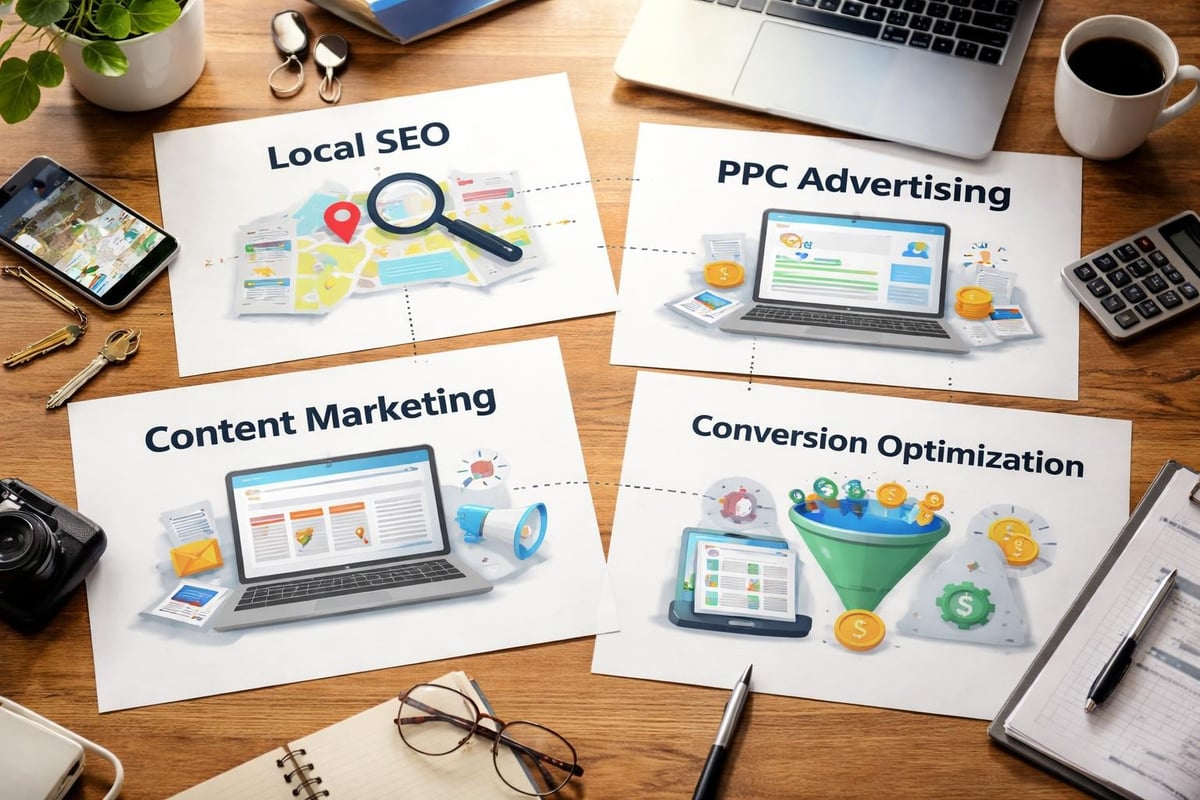
The businesses dominating their markets in Austin, Houston, San Antonio, and Dallas aren’t following cookie-cutter advice. They’re implementing strategic SEO and web design systems built specifically for service contractors.
Building Your Local SEO Framework
Local SEO is non-negotiable for home service businesses.
It’s how you show up when someone in your service area searches “emergency plumber near me” or “AC repair Dallas.”
According to digital marketing best practices, local search drives more qualified leads than any other channel for service-based businesses.
Google Business Profile Optimization
Your Google Business Profile is your digital storefront.
Most homeowners decide whether to call you based on what they see in the Google local pack before they even visit your website.
Essential optimization steps:
- Complete every single section (description, services, hours, service areas)
- Upload high-quality photos weekly (trucks, team, completed jobs)
- Respond to every review within 24 hours
- Post regular updates (special offers, seasonal tips, project showcases)
- Use Google Posts to highlight emergency availability
The goal is to give Google maximum confidence that you’re the most relevant, trustworthy business for local searches.
This isn’t set-it-and-forget-it. It’s an ongoing process that compounds over time.
Website Technical Optimization
Your website needs to be fast, mobile-friendly, and structured for local search.
Google’s algorithms prioritize user experience, which means slow-loading pages kill your rankings before customers even see them.
| Technical Element | Why It Matters | Target Benchmark |
|---|---|---|
| Page Load Speed | Affects rankings and conversions | Under 2.5 seconds |
| Mobile Responsiveness | 70%+ searches happen on mobile | Perfect on all devices |
| Schema Markup | Helps Google understand your content | LocalBusiness + Service schema |
| SSL Certificate | Security and trust signal | HTTPS everywhere |
| Core Web Vitals | Google ranking factor | Green scores across the board |
When you’re competing for Austin plumbing SEO or San Antonio HVAC rankings, these technical details separate page one from page three.
Content Strategy for Local Dominance
Content isn’t just blog posts nobody reads.
For home service businesses, content means service pages that rank, location pages that convert, and educational resources that build trust.
Your content strategy should target three types of keywords:
Emergency/High-Intent Keywords:
- “emergency plumber [city name]”
- “24 hour HVAC repair [area]”
- “same day water heater installation”
Service-Specific Keywords:
- “tankless water heater installation [city]”
- “duct cleaning services [area]”
- “commercial HVAC maintenance [location]”
Educational/Pre-Purchase Keywords:
- “how long do AC units last in Texas”
- “signs you need a new water heater”
- “cost to replace furnace [city]”
Each piece of content should have a clear conversion path. Every page should answer: What do you want the visitor to do next?
The businesses crushing it with HVAC digital marketing understand that content exists to generate calls, not win writing awards.
Pay-Per-Click Advertising Guidelines
PPC advertising gives you immediate visibility while your SEO efforts compound.
It’s expensive if you do it wrong, but incredibly profitable when you follow proven digital marketing guidelines.
The key is understanding that PPC for home services is fundamentally different from other industries. You’re not trying to get cheap clicks. You’re trying to get qualified calls from people ready to hire.
Campaign Structure That Actually Works
Most contractors waste money on poorly structured campaigns.
They target broad keywords, send traffic to generic pages, and wonder why their cost per lead is sky-high.
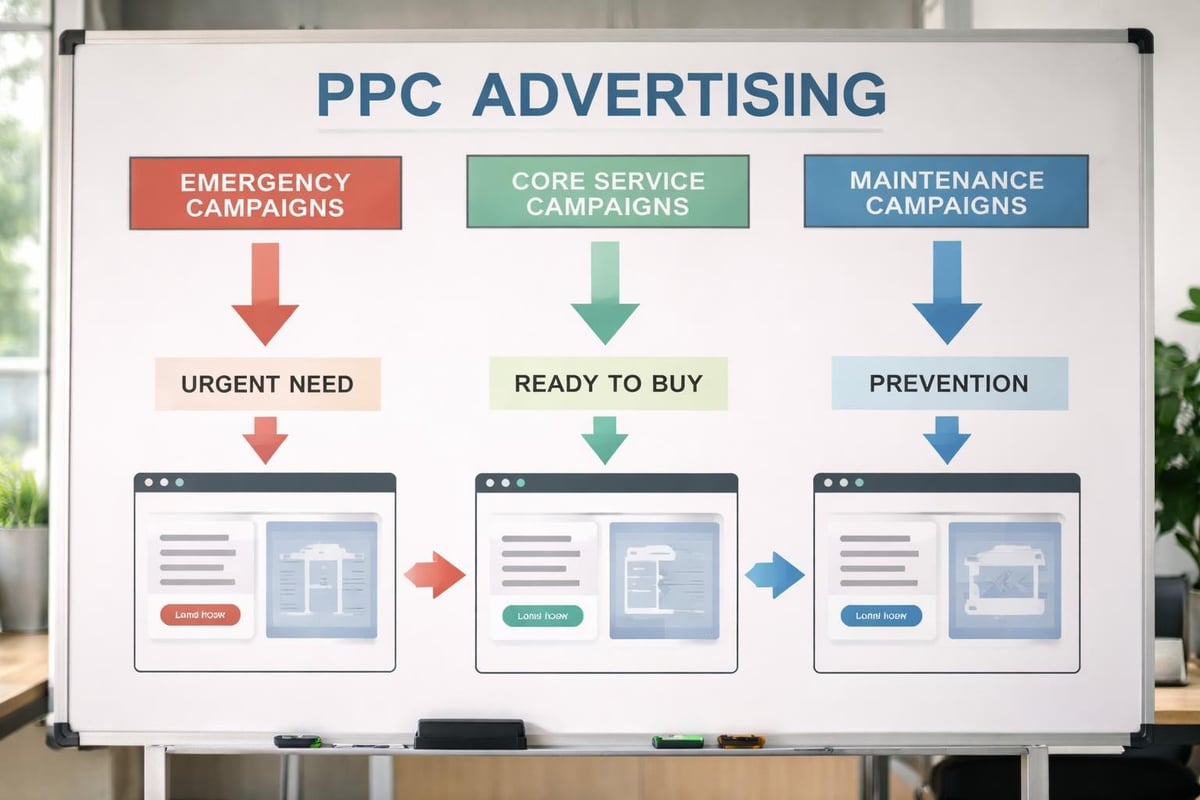
Proper campaign structure for home services:
- Emergency Services Campaign (highest budget, 24/7 scheduling)
- Core Services Campaign (installations, replacements, major work)
- Maintenance/Seasonal Campaign (tune-ups, inspections, preventive work)
- Competitor Campaign (target competitor brand searches)
- Remarketing Campaign (follow up with previous visitors)
Each campaign needs its own landing page designed specifically for that service level and customer intent.
Someone searching for “emergency AC repair” has completely different needs than someone researching “best HVAC system for 2000 sq ft home.”
Keyword Selection and Bid Strategy
The biggest mistake contractors make is bidding on keywords that don’t convert.
High search volume doesn’t equal high value. “HVAC” might get 10,000 searches a month, but “AC not cooling need repair now” gets 50 and converts at 10x the rate.
Your bid strategy should prioritize:
- Geographic modifiers (city names, neighborhoods, zip codes)
- Service + urgency combinations
- Commercial vs. residential splits
- Specific equipment brands and models
This is where Google PPC pricing becomes critical. You need to know your numbers: customer lifetime value, average job size, acceptable cost per acquisition.
If your average plumbing job is $800 and your close rate is 40%, you can afford to pay $150 per lead and still be profitable.
Website Conversion Optimization Standards
Traffic without conversions is just an expensive hobby.
Your digital marketing guidelines need to include specific standards for turning visitors into callers.
Most home service websites leak potential customers at every stage. They’re hard to navigate on mobile, bury the phone number, and don’t give visitors compelling reasons to choose them over competitors.
Above-the-Fold Requirements
The top of your homepage has one job: get people to call or fill out a form.
Non-negotiable elements:
- Click-to-call phone number (tap to dial on mobile)
- Clear value proposition (what you do, where you serve)
- Primary service categories with clear CTAs
- Trust indicators (years in business, licenses, reviews)
- Emergency availability messaging if applicable
You have about three seconds to convince someone they’re in the right place.
Everything above the fold should support that goal.
Mobile-First Design Principles
Over 70% of home service searches happen on mobile devices.
If your site isn’t built mobile-first, you’re losing the majority of potential customers before they even see what you offer.
Mobile optimization means:
- Large, easy-to-tap buttons (minimum 44×44 pixels)
- Streamlined navigation (no complex menus)
- Fast loading on cellular connections
- Forms that work perfectly on small screens
- Click-to-call prominently displayed everywhere
Testing your site on actual phones (not just desktop browser tools) reveals issues you’d never catch otherwise.
Form and Call Tracking
You can’t improve what you don’t measure.
Every lead source should be tracked back to the specific campaign, keyword, and ad that generated it.
| Metric | Why It Matters | How to Track |
|---|---|---|
| Phone Call Source | Know which campaigns drive calls | Call tracking numbers per campaign |
| Form Submission Source | Attribute leads to channels | UTM parameters + CRM integration |
| Cost Per Lead | Calculate profitability | Campaign spend / qualified leads |
| Lead-to-Customer Rate | Measure sales team performance | CRM pipeline tracking |
| Revenue Per Channel | Allocate budget effectively | Closed job value by source |
The contractors getting the best ROI from PPC campaigns track everything obsessively. They know exactly which keywords, ads, and landing pages produce $50 leads versus $250 leads.
Content Marketing and Authority Building
Content marketing isn’t about going viral on social media.
For home service businesses, it’s about establishing topical authority in your service area and appearing for every relevant search.
When you dominate search results for dozens of keywords in your market, you become the default choice.
Service Area Pages That Rank
Every city, town, and neighborhood you serve should have a dedicated page.
Not thin, duplicate content. Real pages with local information, area-specific services, and conversion optimization.
Elements of high-performing location pages:
- City/area name in title, H1, and throughout content naturally
- Specific services offered in that area
- Local landmarks and neighborhood references
- Testimonials from customers in that location
- Unique service radius and response time info
- Local phone number if available
- Embedded map showing service coverage
This is how you show up for searches like “plumber in Plano” or “HVAC repair Fort Worth” instead of just generic terms.
Businesses implementing local plumbing SEO strategies understand that geographic specificity wins.
Educational Content Strategy
Educational content serves two purposes: rankings and trust.
When someone searches “how to know if I need a new water heater,” they’re 3-6 months away from buying. If you educate them now, you’re the obvious choice when they’re ready.
High-value content types for home services:
- Cost guides (“Cost to replace AC unit in Texas 2026”)
- Buying guides (“How to choose the right HVAC system”)
- Troubleshooting articles (“Why is my toilet running constantly?”)
- Seasonal maintenance tips (“Prepare your AC for Texas summer”)
- Comparison content (“Gas vs electric water heaters”)
Each piece should naturally link to relevant service pages and include clear CTAs.
The goal isn’t just traffic. It’s pre-qualified traffic from people who already trust your expertise.
Email Marketing and Customer Retention
Most home service businesses focus entirely on new customer acquisition.
But your existing customers are your most valuable asset. They already trust you, they need ongoing service, and they refer friends.
Digital marketing guidelines for 2026 must include retention strategies, not just acquisition.
Automated Follow-Up Sequences
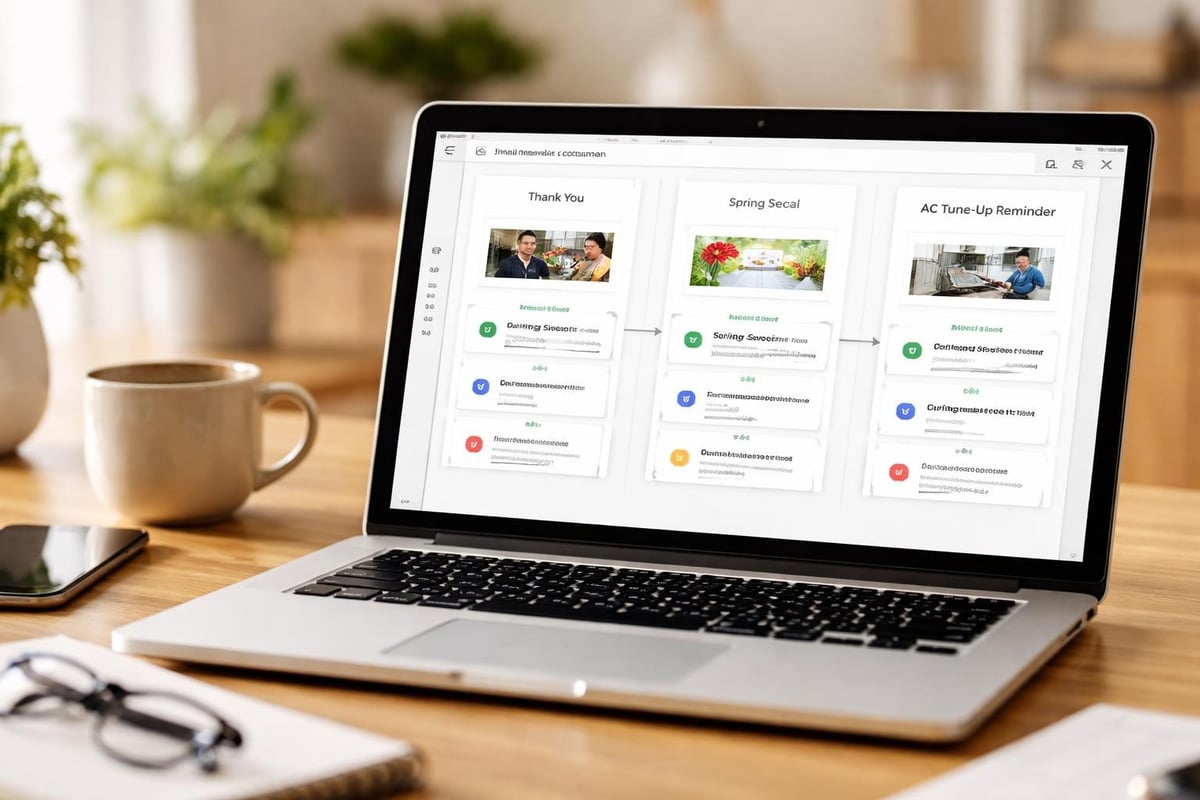
After every service call, customers should enter automated email sequences.
Post-service sequence:
- Day 1: Thank you email with review request link
- Day 7: Educational content related to completed service
- Day 30: Maintenance tips and seasonal preparation
- Day 90: Reminder for next service/inspection
- Day 180: Seasonal campaign (AC prep, furnace check, etc.)
This keeps you top-of-mind without manual effort.
When their friend asks for a plumber recommendation, your name comes up instantly.
Seasonal Campaign Planning
Home service demand is cyclical.
Your email marketing should anticipate customer needs before they arise.
| Season | HVAC Focus | Plumbing Focus | Timing |
|---|---|---|---|
| Spring | AC tune-ups, filter changes | Water heater inspection, outdoor faucets | March-April |
| Summer | Emergency repair prep, efficiency | Sewer line checks, irrigation | May-June |
| Fall | Furnace inspection, duct cleaning | Winterization, pipe insulation | September-October |
| Winter | Emergency heating service | Freeze prevention, water heater | November-December |
Sending the right message at the right time dramatically improves conversion rates.
A furnace tune-up email in October converts 3-5x better than the same email in July.
Compliance and Legal Guidelines
Digital marketing isn’t just about what works.
It’s also about what’s legal and compliant.
Legal guidelines for digital marketing cover critical areas that can result in fines or lawsuits if ignored.
Advertising Standards and Claims
Every claim you make must be substantiated.
You can’t promise “lowest prices guaranteed” unless you genuinely monitor competitor pricing. You can’t claim “best HVAC company in Dallas” without some objective ranking or award to back it up.
Safe advertising practices:
- Use customer testimonials with permission
- Specify “as low as” when quoting starting prices
- Include disclaimers on special offers (expiration, service area limits)
- Don’t make health or safety claims you can’t prove
- Follow IAB advertising guidelines for digital ads
The University of Utah’s digital marketing guidelines provide excellent frameworks for compliant practices across channels.
Data Protection and Privacy
Customer information is sacred.
Every email address, phone number, and service history in your database comes with legal obligations.
You need clear privacy policies explaining:
- What data you collect
- How you use it
- Who you share it with
- How customers can opt out
- How you secure sensitive information
GDPR might be European, but similar laws are spreading across U.S. states.
Building privacy-first practices now protects you as regulations evolve.
Review and Reputation Management
You can’t stop negative reviews, but you can respond professionally.
Never argue with customers publicly. Never offer compensation in exchange for review deletion (violates platform terms). Never post fake positive reviews.
Compliant review management:
- Request reviews from satisfied customers only
- Never offer discounts in exchange for reviews
- Respond to all reviews (positive and negative)
- Address legitimate concerns professionally
- Report genuinely fake or malicious reviews through proper channels
Your online reputation impacts both conversion rates and search rankings.
Google factors review quantity, recency, and ratings into local pack rankings.
Analytics and Performance Measurement
Digital marketing guidelines aren’t complete without measurement frameworks.
You need to know what’s working, what’s wasting money, and where to double down.
Essential KPIs for Home Service Businesses
Not all metrics matter equally.
Focus on metrics that directly correlate with revenue.
Primary KPIs:
- Total Qualified Leads (calls + forms from target service area)
- Cost Per Lead (total marketing spend / qualified leads)
- Lead-to-Customer Conversion Rate (booked jobs / total leads)
- Customer Acquisition Cost (marketing spend / new customers)
- Revenue Per Marketing Dollar (job revenue / marketing investment)
Secondary KPIs:
- Organic search rankings for target keywords
- Google Business Profile impressions and actions
- Website conversion rate by traffic source
- Average call duration (indicator of lead quality)
- Return customer rate
Tools like Google Analytics 4, Google Ads conversion tracking, and call tracking platforms give you this data in real-time.
Monthly Reporting Standards
Reports should drive decisions, not just document activity.
Every month, you should review:
- Performance vs. goals (are you hitting lead targets?)
- Channel performance (which sources deliver best ROI?)
- Keyword performance (which search terms convert?)
- Geographic performance (which areas are most profitable?)
- Competitive landscape (how are rankings shifting?)
The businesses seeing consistent growth from HVAC case studies and plumbing success stories treat monthly reviews as strategic planning sessions, not administrative tasks.
Budget Allocation and Investment Strategy
How much should you spend on digital marketing?
The answer depends on your market, competition, and growth goals.
But there are proven frameworks for allocating budgets effectively.
Industry Benchmarks for Home Services
Most successful home service businesses invest 7-12% of revenue in marketing.
If you’re in growth mode or entering new markets, that might increase to 15-20% temporarily.
Sample monthly budget allocation for $100K/month plumbing business:
| Channel | Monthly Budget | Expected Leads | Cost Per Lead | Purpose |
|---|---|---|---|---|
| Local SEO | $2,500 | 15-25 | $100-165 | Long-term organic growth |
| Google PPC | $4,000 | 20-30 | $133-200 | Immediate lead generation |
| Website/Tech | $500 | N/A | N/A | Conversion optimization |
| Email/Retention | $300 | 5-10 | $30-60 | Past customer reactivation |
| Total | $7,300 | 40-65 | $112-183 | Blended CAC |
These numbers shift based on market competitiveness.
PPC costs in major metros like Houston or Dallas run higher than smaller Texas markets.
ROI-Focused Investment Decisions
Every dollar should be accountable.
Before increasing spend on any channel, ask: “What return am I getting on the current investment?”
If you’re spending $3,000/month on SEO and generating 20 leads that close at 40% (8 customers) with an average job value of $1,200, that’s $9,600 in revenue from a $3,000 investment.
That’s 3.2X ROI, which justifies increasing investment.
If a channel isn’t hitting at least 2X ROI after 90 days (SEO takes longer), either optimize or reallocate budget.
The contractors dominating their markets with strategic digital marketing ruthlessly cut underperforming tactics and double down on what works.
Competitive Analysis and Market Positioning
Your digital marketing guidelines should include regular competitive analysis.
You’re not operating in a vacuum. Your competitors are fighting for the same customers, the same keywords, and the same Google Map spots.
What to Monitor
Track your top 5-10 competitors monthly.
Competitive intelligence checklist:
- Organic keyword rankings (are they outranking you?)
- Google Ads presence (what keywords are they bidding on?)
- Google Business Profile optimization (how do their profiles compare?)
- Review quantity and ratings (are they pulling ahead?)
- Content production (what pages are they adding?)
- Technical improvements (site speed, mobile optimization)
Tools like SEMrush, Ahrefs, and BrightLocal make this tracking systematic rather than manual guesswork.
Differentiation Strategy
You can’t just copy competitors and expect to win.
You need clear differentiation that’s communicated consistently across all channels.
Differentiation angles for home service businesses:
- Speed (same-day service, 24/7 availability)
- Specialization (high-end systems, specific brands, commercial focus)
- Warranty (lifetime guarantees, extended coverage)
- Experience (decades in business, generational expertise)
- Service area (hyperlocal focus, specific neighborhoods)
Your digital presence should reinforce this positioning everywhere: website copy, ad messaging, review responses, content topics.
Businesses that try to be everything to everyone end up being memorable to no one.
Integration Across Digital Channels
The most effective digital marketing guidelines emphasize integration, not isolation.
SEO, PPC, email, and content should work together, not compete for budget.
Cross-Channel Strategy
When channels work together, results multiply.
Example integration scenario:
- SEO ranks your blog post “Signs you need AC repair”
- Visitor reads content, isn’t ready to buy yet
- Remarketing ad follows them for next 30 days
- They click ad, land on AC repair service page
- Don’t convert, but enter email sequence
- Email offers seasonal tune-up discount
- They book service, become customer
- Retention emails keep them engaged for future work
Each channel played a role. Attributing the sale to just one would be misleading.
Consistent Messaging Across Touchpoints
Your brand voice, value proposition, and key messages should be identical everywhere.
Whether someone finds you through Google search, clicks a Facebook ad, or reads your email, they should get the same core message.
Consistency checklist:
- Service descriptions match across website, Google Business Profile, and ads
- Phone numbers are consistent (or properly tracked)
- Business name and branding identical everywhere
- Value proposition reinforced in all content
- Visual identity consistent across digital properties
Inconsistency creates confusion and erodes trust.
When your website says “serving all of Texas” but your Google profile says “Dallas only,” potential customers don’t know what to believe.
Continuous Testing and Optimization
Digital marketing guidelines aren’t set in stone.
They’re frameworks that get refined based on performance data.
The businesses getting the best results test constantly, learn quickly, and implement improvements systematically.
A/B Testing Priorities
You can’t test everything at once.
Prioritize tests based on potential impact.
High-impact tests for home services:
- Landing page headlines (value proposition testing)
- CTA button text and placement (“Call Now” vs “Get Free Quote”)
- Form length (phone-only vs multi-field forms)
- Ad copy variations (benefit-focused vs feature-focused)
- Service page structure (long-form vs concise)
Run tests for at least 100 conversions or 30 days, whichever comes first.
Statistical significance matters more than gut feelings.
Seasonal Optimization Cycles
Home service demand changes throughout the year.
Your digital marketing should adapt accordingly.
Quarterly optimization focus:
- Q1 (Jan-Mar): Prep for spring rush, update service area pages, refresh content
- Q2 (Apr-Jun): Maximize summer emergency campaigns, test new ad copy for heat-related searches
- Q3 (Jul-Sep): Prepare fall campaigns, optimize for heating/cooling transition keywords
- Q4 (Oct-Dec): Focus on emergency winter service, plan next year strategy
This rhythmic approach keeps your marketing aligned with customer behavior patterns.
The easy SEO tips for HVAC growth emphasize this seasonal alignment as critical for maximizing ROI.
Team Training and Implementation
Digital marketing guidelines only work if your team implements them.
That means everyone from the owner to the person answering phones needs to understand their role in the system.
Internal Roles and Responsibilities
Clarity prevents dropped balls.
Key responsibilities:
- Owner/Manager: Budget approval, strategic direction, performance review
- Marketing Lead: Campaign management, content planning, vendor coordination
- Sales Team: Lead follow-up, conversion tracking, customer feedback loop
- Service Techs: Review generation, upsell opportunities, customer experience
- Administrative: Phone handling, form responses, data entry accuracy
Everyone affects digital marketing performance, whether they realize it or not.
A technician who asks happy customers for reviews generates more visibility than another $1,000 in ad spend.
Vendor Selection and Management
Most home service businesses partner with agencies or specialists.
Choosing the right partner makes the difference between growth and wasted investment.
Evaluation criteria for digital marketing partners:
- Specialized experience in home services (not general marketing)
- Transparent reporting and data access
- Clear communication and responsiveness
- Proven case studies in your industry
- Alignment on goals (leads and revenue, not just traffic)
Avoid agencies that can’t explain their strategies in plain English or refuse to share performance data.
Your marketing partner should feel like an extension of your team, not a black box you send money into hoping for results.
Following comprehensive digital marketing guidelines isn’t optional anymore – it’s the difference between growing your home service business and watching competitors take your market share. The contractors winning in 2026 understand that digital marketing is a system, not a collection of random tactics. If you’re ready to build a revenue-focused digital growth system that generates consistent inbound calls and qualified leads across Texas, Aim Set Win specializes exclusively in home service businesses like yours. We combine local SEO, conversion-focused web design, and data-driven strategy to help plumbing, HVAC, and electrical contractors dominate their markets.
Jean runs growth strategy at AimSetWin, a performance marketing agency specializing in local service businesses across Texas. he's helped plumbers, HVAC companies, pest control operators, and home service brands build predictable revenue systems using data-driven advertising and conversion optimization.


