
Master digital marketing online advertising with proven strategies, platforms, and tactics that drive real results for service businesses.
If you’re running a home service business in 2026, you’ve probably noticed something. Your competitors are everywhere online. They’re showing up at the top of Google. They’re flooding Facebook with ads. They’re in front of potential customers at every turn. That’s digital marketing online advertising at work, and if you’re not playing the same game, you’re leaving money on the table. The good news? You don’t need a massive budget to compete. You just need the right strategy, the right platforms, and a clear understanding of what actually works. In this guide, you’ll learn how to build a digital marketing online advertising system that generates real calls, real leads, and real revenue for your business. Ready to get started?
What Makes Digital Marketing Online Advertising Different in 2026
Digital marketing online advertising isn’t what it used to be even two years ago.
The landscape has shifted dramatically. AI-powered ad platforms now optimize campaigns in real-time. Search engines serve personalized results based on user intent, location, and browsing history. Social media algorithms prioritize engagement over reach.
For home service businesses, this means your old “set it and forget it” approach doesn’t work anymore.
Here’s what’s changed:
- AI optimization handles bid adjustments, audience targeting, and ad creative testing automatically
- Intent-based targeting reaches people actively searching for your services right now
- Local service ads put verified businesses at the very top of search results
- Video content dominates social feeds and drives higher engagement rates
- Voice search changes how people find local service providers
The businesses winning right now understand one thing. Digital marketing is no longer just about being visible. It’s about being visible to the right people at the exact moment they need your services.
The ROI Reality Check
Let’s talk numbers because that’s what actually matters.
Traditional advertising like billboards, radio spots, and direct mail typically deliver a 1-2% response rate. You’re paying to reach everyone, hoping a tiny fraction will need your services.
Digital marketing online advertising flips this model completely.
You only pay when someone clicks your ad or calls your business. You target people actively searching for “emergency plumber near me” or “AC repair in Dallas.” The intent is already there.
| Advertising Type | Average Response Rate | Cost Control | Targeting Precision |
|---|---|---|---|
| Traditional (Radio/Billboard) | 1-2% | Low | Very Low |
| Digital Display Ads | 2-5% | High | Medium |
| Search Ads | 8-15% | Very High | Very High |
| Local Service Ads | 15-30% | High | Extremely High |
That’s why online advertising generates better ROI for most service businesses.
Core Platforms That Actually Generate Leads
Not all digital marketing online advertising platforms deliver the same results for home service businesses.
Some are great for brand awareness but terrible for lead generation. Others drive clicks but not conversions.
Here’s what actually works in 2026.
Google Search Ads
This is where high-intent customers live.
Someone searches “water heater repair Fort Worth” at 9 PM on a Tuesday. They have a problem right now. They need help immediately.
Your ad appears at the top of the search results. They click. They call. You book the job.
Key advantages:
- Captures customers with immediate need
- Pay only when someone clicks
- Full control over budget and bids
- Detailed performance tracking
- Works 24/7 even when you’re sleeping
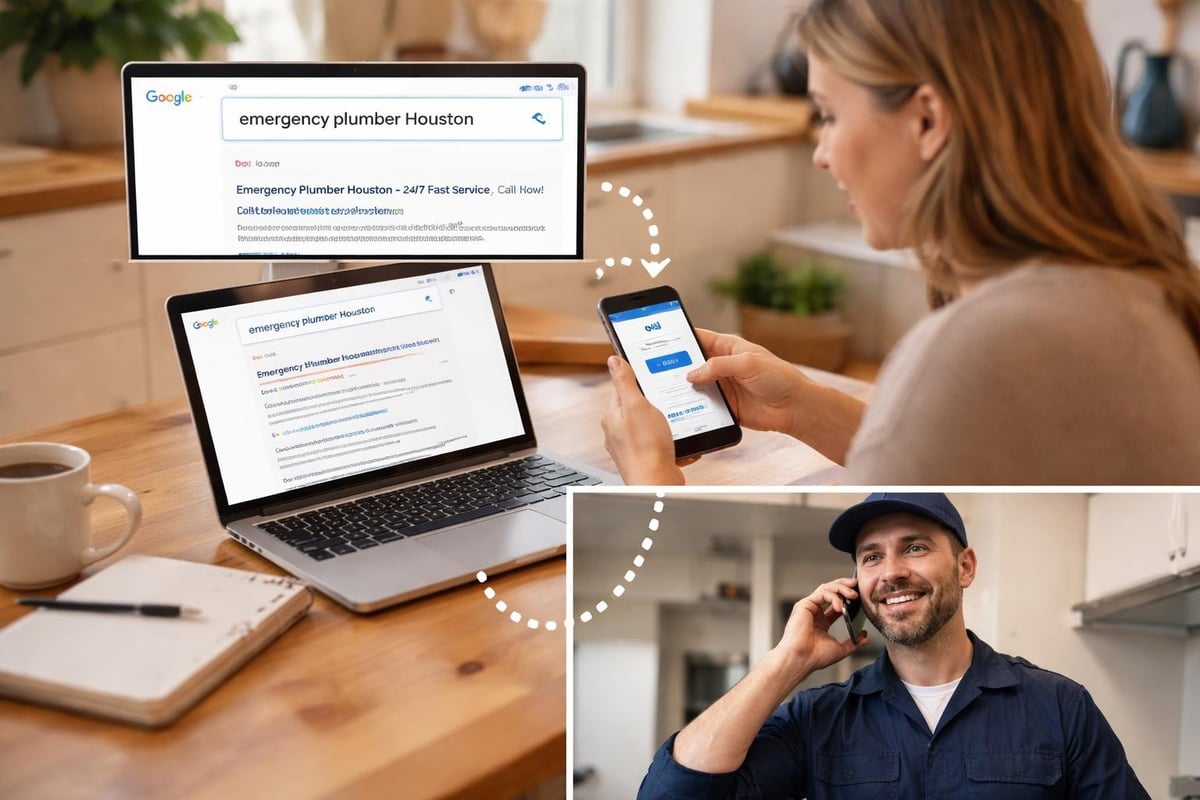
Google Search Ads work best when you target service-specific, location-specific keywords. “Emergency plumber in Houston” converts better than “plumbing services” because the intent is crystal clear.
The businesses getting the best results from paid search campaigns focus on match types, negative keywords, and ad extensions that showcase reviews, phone numbers, and service areas.
Local Service Ads (Google Guarantee)
This platform changed everything for home service businesses.
Local Service Ads appear above regular search ads. They show your Google reviews, your service area, and a Google Guaranteed badge. Customers can call you directly from the ad.
You only pay per qualified lead, not per click.
What makes LSAs different:
- Pay per lead instead of per click
- Appear at the very top of search results
- Google screens and verifies your business
- Builds immediate trust with the Google Guarantee badge
- Customers see your rating before clicking
The catch? You need proper licensing, insurance, and good reviews. Google actually verifies your credentials before approving your account.
But once you’re in, the lead quality is exceptional. These are people ready to hire someone today.
Facebook and Instagram Ads
Social media ads work differently than search ads.
People aren’t actively looking for your services when scrolling Facebook. But that doesn’t mean these platforms don’t work. They just require a different approach.
The strategy that works: retargeting and local awareness campaigns.
Someone visits your website but doesn’t call. They see your ad on Facebook the next day reminding them about your spring AC tune-up special. That’s retargeting.
Or you run a local awareness campaign targeting homeowners within 10 miles of your service area. You’re building brand recognition so when they do need a plumber, you’re the first name they remember.
Best use cases for social ads:
- Seasonal promotions (AC tune-ups, heater maintenance)
- Building brand awareness in new service areas
- Retargeting website visitors who didn’t convert
- Showcasing before/after project photos
- Video testimonials from happy customers
One Dallas HVAC company increased leads by 47% using Facebook retargeting combined with search ads.
YouTube Advertising
Video advertising is exploding in 2026.
YouTube is the second largest search engine after Google. People search for “how to fix a leaking faucet” or “why is my AC blowing warm air” every single day.
You can run ads on these videos. Or better yet, create your own helpful videos and promote them.
YouTube ad strategies that work:
- Run skippable ads on competitor videos
- Create helpful content addressing common problems
- Target by location, interests, and search history
- Use call-to-action overlays with your phone number
- Retarget people who watched your videos
The cost is often lower than search ads, and the engagement rates can be impressive when you create genuinely helpful content.
Building a Complete Digital Advertising Strategy
Here’s where most businesses mess up. They pick one platform and expect magic.
Digital marketing online advertising works best as an integrated system.
Think of it like this: different platforms catch customers at different stages of awareness.
The Customer Journey Framework
Stage 1: Awareness
Your potential customer doesn’t know you exist. They might not even know they have a problem yet.
Best platforms: Display ads, social media, YouTube
Stage 2: Consideration
They know they have a problem. They’re researching solutions and comparing options.
Best platforms: Search ads, retargeting, content marketing
Stage 3: Decision
They’re ready to hire someone today. They’re comparing specific companies.
Best platforms: Local Service Ads, search ads for branded terms, review management
A complete strategy hits customers at all three stages.
| Customer Stage | Primary Goal | Best Platforms | Example Tactics |
|---|---|---|---|
| Awareness | Introduce your brand | Facebook, Display, YouTube | Local awareness campaigns, helpful videos |
| Consideration | Educate and build trust | Search Ads, Retargeting | Service-specific landing pages, case studies |
| Decision | Capture the lead | LSAs, Search Ads | Phone call extensions, limited-time offers |
Most home service businesses should spend 60-70% of their budget on decision-stage advertising (search ads and LSAs) because that’s where the immediate revenue comes from.
The remaining 30-40% goes to awareness and consideration to fill your pipeline for the future.
Budget Allocation That Actually Works
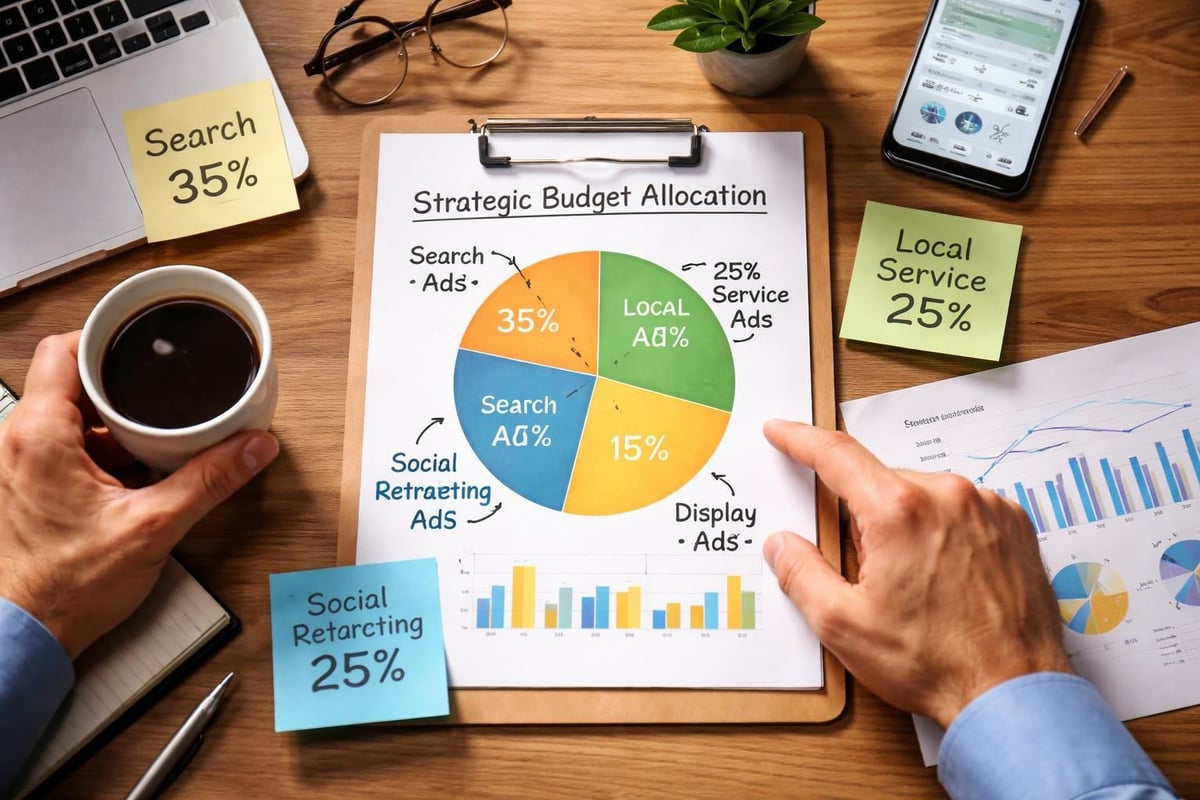
Let’s say you have $3,000 per month for digital marketing online advertising.
Here’s a proven allocation model:
- Google Search Ads: $1,500 (50%)
- Local Service Ads: $900 (30%)
- Facebook/Instagram Retargeting: $450 (15%)
- YouTube or Display Ads: $150 (5%)
This split prioritizes high-intent channels while maintaining visibility across the customer journey. You can adjust based on what’s working, but this gives you a solid starting point.
The businesses that see the best ROI track every lead source. They know exactly which platform generated which call. That data drives smarter budget decisions over time.
Advanced Targeting Strategies for Local Service Businesses
Generic targeting wastes money. Precision targeting makes money.
In 2026, the advertising networks powering digital platforms offer incredible targeting options. But most businesses barely scratch the surface.
Geographic Targeting Beyond ZIP Codes
Don’t just target your city. Get specific.
Radius targeting: Draw a circle around your location. Target only people within 15 miles if that’s your realistic service area.
Neighborhood targeting: Some platforms let you target specific neighborhoods. If you know certain areas have older homes that need frequent plumbing work, focus there.
Competitor targeting: Target areas around your competitors’ locations. When someone searches near their office, your ad appears.
A Houston plumbing company increased conversion rates by 34% simply by tightening their radius from 50 miles to 20 miles. They stopped paying for clicks from people they couldn’t realistically serve.
Demographic and Psychographic Layering
Go beyond just location.
Income level: If you offer premium services, target higher income brackets. If you compete on price, target middle-income households.
Homeownership: Only target homeowners for most services. Renters call their landlords, not HVAC companies.
Home age: Older homes need more frequent repairs. Target neighborhoods built before 1990 for certain campaigns.
Life events: People who recently bought homes are prime targets for maintenance services, inspections, and upgrades.
These targeting layers work especially well on Facebook and Google Display Network.
Device and Time-of-Day Optimization
Not all hours produce equal results.
Emergency services get calls 24/7. But routine maintenance? People search during business hours and early evenings.
Time-of-day bidding:
- Increase bids 20-30% during peak hours (7-9 AM, 4-7 PM)
- Decrease bids during slow hours (midnight-6 AM)
- Adjust based on your actual call data
Device optimization:
- Mobile users call immediately. Desktop users compare multiple companies.
- Increase mobile bids for emergency services
- Use click-to-call extensions prominently on mobile ads
- Test different ad copy for mobile vs desktop
One San Antonio HVAC company discovered that 73% of their conversions came from mobile between 5-8 PM. They shifted budget accordingly and increased leads by 28%.
Creating High-Converting Ad Campaigns
The best targeting in the world won’t save bad ads.
Digital marketing online advertising success depends heavily on your ad creative, copy, and landing pages.
Writing Ad Copy That Generates Calls
Forget clever taglines. Home service customers want three things:
- Can you solve my problem?
- Can I trust you?
- What will it cost?
Headlines that work:
- “24/7 Emergency Plumbing in Fort Worth”
- “AC Repair Starting at $79 – Same Day Service”
- “Licensed Electricians – Free Estimates”
Descriptions that convert:
- Include your unique selling proposition
- Mention guarantees or warranties
- List specific services
- Create urgency when appropriate
- Always include a clear call-to-action
Example of strong search ad copy:
Headline: Emergency Plumber Fort Worth TX
Headline 2: Licensed & Insured – 24/7 Service
Headline 3: Book Online or Call Now
Description: Same-day plumbing repairs in Fort Worth. Upfront pricing, no hidden fees. Family-owned since 2010. Call now for immediate service.
Notice how this hits all three customer concerns? Problem solving (same-day repairs), trust (licensed, family-owned), and cost clarity (upfront pricing).
Landing Page Essentials
Someone clicks your ad. Where do they land?
If you’re sending them to your homepage, you’re wasting money.
Every ad campaign needs dedicated landing pages.
Here’s what converts:
- Headline matching the ad: If the ad says “AC Repair Dallas,” the landing page headline should say “AC Repair Dallas.”
- Phone number above the fold: Make it impossible to miss. Use click-to-call on mobile.
- Trust signals: Licenses, certifications, years in business, Google reviews, Better Business Bureau rating.
- Service area clarity: Tell people exactly where you serve.
- Clear next steps: “Call now” or “Schedule online” with obvious buttons.
- Social proof: Customer reviews, before/after photos, video testimonials.
Digital display advertising research shows that landing pages matching ad messaging convert 2-3x better than generic pages.
One simple test: Create separate landing pages for each service. “Emergency Plumbing” gets its own page. “Water Heater Repair” gets its own page. “Drain Cleaning” gets its own page.
Track which pages convert best. Double down on what works.
Call Tracking and Conversion Optimization
If you can’t measure it, you can’t improve it.
Call tracking shows you exactly which ads generate phone calls. Not just clicks. Actual calls.
What to track:
- Which campaign generated the call
- Which keyword triggered the ad
- What time the call came in
- How long the conversation lasted
- Whether it converted to a booked job
Most call tracking platforms integrate with Google Ads and Facebook Ads. You can see your true ROI, not just clicks and website visits.
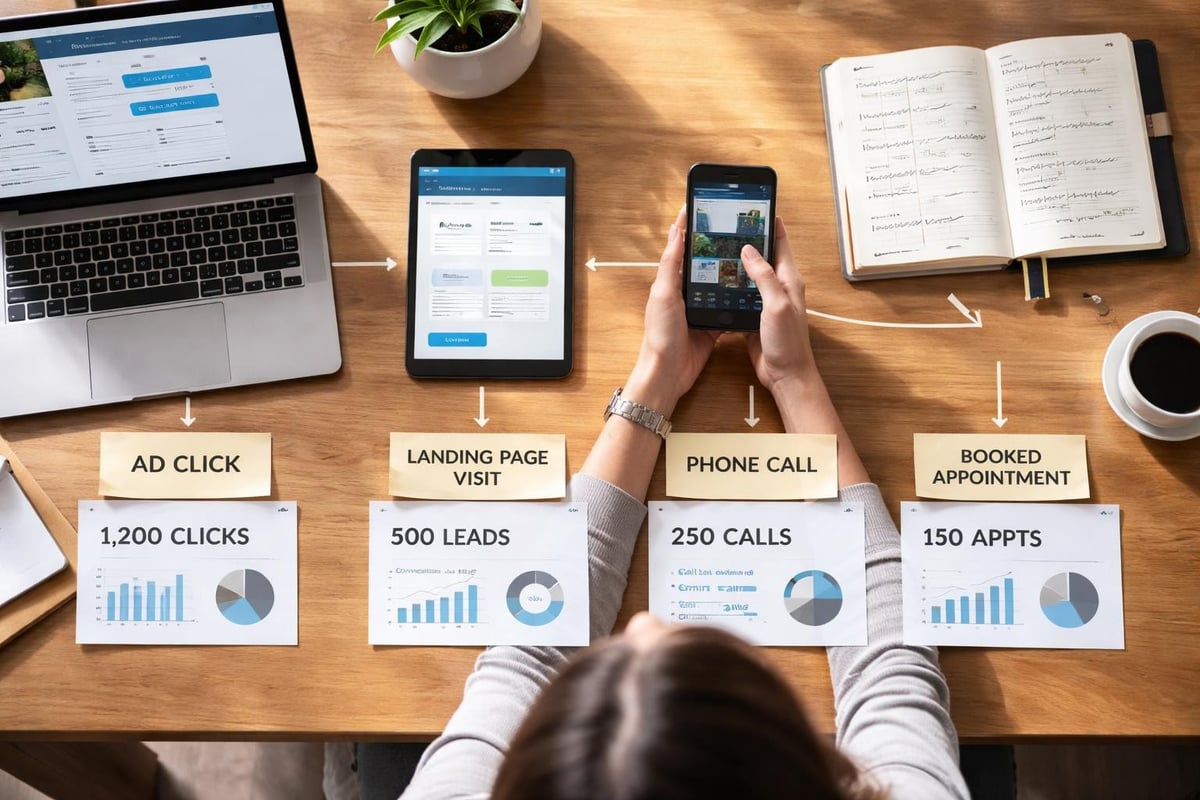
The best businesses in 2026 track the entire customer journey from first click to closed sale to customer lifetime value.
Common Mistakes That Kill Digital Marketing Online Advertising ROI
Even experienced business owners make these mistakes. They cost you thousands in wasted ad spend.
Mistake 1: Ignoring Negative Keywords
You sell high-end HVAC systems. Your ads show up for “free AC repair” and “DIY air conditioner fix.”
You pay for those clicks. Those people never call.
Negative keywords prevent your ads from showing for irrelevant searches.
Common negative keywords for home service businesses:
- DIY
- Free
- Jobs (you don’t want job seekers)
- How to
- Cheap (unless you compete on price)
- Rental (if you don’t serve renters)
Review your search terms report weekly. Add negative keywords constantly. This single tactic can reduce wasted spend by 20-30%.
Mistake 2: Sending All Traffic to Your Homepage
We covered this earlier, but it’s worth repeating because it’s so common.
Your homepage talks about your company history, lists every service you offer, and includes photos of your team.
That’s not what someone searching “emergency water heater repair” wants to see.
They want to know:
- Can you fix my water heater today?
- How much will it cost?
- What’s your phone number?
Create dedicated landing pages for every major service and major campaign. Match the message. Remove distractions. Make it easy to take action.
Mistake 3: Setting Ads and Forgetting Them
Digital marketing online advertising requires active management.
Ad platforms change constantly. Competitors adjust their bids. Seasons shift demand. Customer behavior evolves.
The campaigns that worked great in January might perform terribly in July.
Minimum maintenance schedule:
- Daily: Check budget pacing and calls generated
- Weekly: Review search terms, add negative keywords, adjust bids
- Monthly: Analyze full campaign performance, test new ad copy, optimize landing pages
- Quarterly: Review overall strategy, test new platforms, adjust budget allocation
Businesses using near me digital marketing strategies know that local search patterns change with seasons, local events, and economic conditions.
Stay active. Stay optimized.
Mistake 4: Competing on Price Alone
“Lowest prices in Dallas!”
“We beat any competitor’s quote!”
“Cheapest plumber in Houston!”
Price-focused advertising attracts price-focused customers. These are often the most demanding, least loyal, and least profitable clients.
Instead, compete on value:
- Same-day service
- Licensed and insured technicians
- Warranty on all work
- Family-owned and local
- Specialized expertise
- Exceptional reviews
You can charge more when you provide more value. Your digital marketing online advertising should reflect that positioning.
Mistake 5: Not Testing Anything
How do you know what works if you never test alternatives?
The top performers in digital advertising test constantly:
- Ad copy variations: Test different headlines, descriptions, and calls-to-action
- Landing page layouts: Test button colors, headline phrasing, image placement
- Bidding strategies: Test manual vs automated bidding
- Audience segments: Test different demographic and geographic targets
- Offer variations: Test free estimates vs percentage discounts vs flat-rate promotions
Even a 10% improvement in conversion rate can double your ROI over time.
Run A/B tests systematically. Change one variable at a time. Let tests run long enough to gather meaningful data. Implement winners. Repeat.
Integrating Organic and Paid Strategies
Digital marketing online advertising works better when combined with organic strategies.
Think of paid advertising as the accelerator. SEO is the engine. Together, they create unstoppable momentum.
Why SEO Still Matters in a Paid Ads World
Paid ads stop working the moment you stop paying.
SEO builds long-term equity. Your organic rankings keep generating leads month after month without ongoing ad costs.
The synergy:
- Paid ads generate immediate leads while you build organic rankings
- SEO data shows which keywords actually convert, informing smarter ad targeting
- Strong organic presence builds trust, making paid ads more effective
- Retargeting works better when you have consistent organic traffic
Link building strategies and local SEO optimization create the foundation that makes your paid campaigns more profitable.
Content Marketing Fuels Better Ads
Create helpful content that answers customer questions.
“How much does water heater replacement cost in Austin?”
“What size AC unit do I need for a 2,000 square foot home?”
“How to tell if your electrical panel needs replacing?”
This content serves multiple purposes:
- Ranks organically for informational searches
- Builds trust and authority
- Provides high-quality landing pages for ads
- Creates retargeting audiences of engaged prospects
You can run ads promoting your best content pieces. Someone reads your comprehensive guide to AC maintenance, then sees retargeting ads for your tune-up special. That’s targeted, effective advertising.
Content strategies that boost conversions work hand-in-hand with paid campaigns.
Local SEO and Google Business Profile Optimization
Your Google Business Profile appears in Local Service Ads, Google Maps, and organic results.
Optimizing it improves performance across all channels.
Optimization checklist:
- Complete every section of your profile
- Add professional photos of your team, trucks, and completed projects
- Post weekly updates about services, promotions, and company news
- Respond to every review within 24 hours
- Use relevant categories and attributes
- Keep your service areas and hours current
Learn more about optimizing your Google Business Profile for maximum visibility.
A well-optimized profile increases your quality score in Google Ads, lowers your cost-per-click, and improves your Local Service Ads ranking.
Everything connects.
Emerging Trends in Digital Marketing Online Advertising for 2026
The landscape never stops evolving. Here’s what’s changing right now.
AI-Powered Campaign Automation
Google’s Performance Max campaigns and Facebook’s Advantage+ use machine learning to optimize everything automatically.
You provide:
- Your budget
- Your goals (calls, form fills, bookings)
- Your assets (images, headlines, descriptions)
The AI handles:
- Audience targeting
- Bid adjustments
- Ad placement
- Creative combinations
- Performance optimization
Early results are impressive. Some campaigns show 20-30% better performance than manual optimization.
The downside? Less control and transparency. You trust the algorithm.
For busy business owners without dedicated marketing teams, these automated solutions make sophisticated digital marketing online advertising accessible.
Voice Search and Conversational Advertising
“Hey Google, find a plumber near me.”
Voice searches now account for over 30% of mobile searches. The queries are longer and more conversational.
Instead of “plumber Fort Worth,” people say “Who’s the best emergency plumber in Fort Worth that can come today?”
Optimization strategies:
- Target longer, question-based keywords
- Include natural language in ad copy
- Optimize for “near me” searches
- Ensure mobile click-to-call works flawlessly
Conducting keyword research now requires understanding both typed and spoken search patterns.
Generative Engine Optimization (GEO)
AI search engines like ChatGPT, Perplexity, and Google’s AI Overviews are changing how people find information.
These platforms don’t just show links. They answer questions directly.
Generative Engine Optimization focuses on getting your business mentioned in AI-generated responses.
How? By creating authoritative, well-structured content that AI models can reference and cite.
This trend is just beginning, but it will reshape digital marketing over the next few years. Understanding the difference between GEO and SEO helps you prepare for this shift.
Privacy Changes and First-Party Data
Third-party cookies are dying. Privacy regulations are tightening. Tracking is getting harder.
The solution? Build your own audience data.
First-party data strategies:
- Email list building from website visitors
- SMS marketing for appointment reminders and promotions
- Customer databases tracking service history
- Loyalty programs encouraging repeat business
You own this data. Platforms can’t take it away. Privacy laws don’t restrict it as heavily.
Use this data for retargeting, lookalike audiences, and personalized campaigns.
Measuring Success: KPIs That Actually Matter
Impressions and clicks don’t pay your bills. Focus on metrics tied to revenue.
Primary KPIs for Service Businesses
Cost Per Lead (CPL)
Total ad spend ÷ number of qualified leads
This shows how much you’re paying to generate each potential customer. Track CPL by platform, campaign, and even individual keywords.
Conversion Rate
(Leads ÷ clicks) × 100
A low conversion rate means your ads are attracting the wrong people or your landing pages need work.
Return on Ad Spend (ROAS)
Revenue generated ÷ ad spend
If you spend $1,000 on ads and generate $5,000 in revenue, your ROAS is 5:1. Most successful home service businesses target 3:1 or higher.
Customer Lifetime Value (CLV)
The total revenue you’ll earn from a customer over their entire relationship with your business.
This is crucial. A customer who needs one-time water heater repair might be worth $800. But if they return for annual maintenance, refer friends, and eventually replace their entire HVAC system, they’re worth $15,000.
Understanding CLV justifies spending more to acquire customers through digital marketing online advertising.
Secondary KPIs Worth Watching
| Metric | What It Measures | Why It Matters |
|---|---|---|
| Click-Through Rate | Ad appeal and relevance | Low CTR means weak ad copy or poor targeting |
| Quality Score | Ad relevance and landing page quality | Higher scores = lower costs per click |
| Impression Share | Percentage of possible impressions you’re getting | Shows if you’re missing opportunities due to budget or ranking |
| Average Position | Where your ads appear on the page | Top positions generally get more clicks |
Track everything in a dashboard you check weekly. Google Data Studio, platform-specific dashboards, or specialized marketing software all work.
The key is consistent monitoring and adjustment based on what the data reveals.
Building Your Digital Marketing Online Advertising Action Plan
You’ve absorbed a lot of information. Now it’s time to put it into action.
30-Day Implementation Roadmap
Week 1: Foundation
- Audit your current advertising efforts
- Set up call tracking
- Create dedicated landing pages for top services
- Install conversion tracking on your website
- Define your target customer and service areas
Week 2: Campaign Setup
- Build Google Search Ads campaigns for top 3-5 services
- Apply for Google Local Service Ads
- Set up Facebook/Instagram Business Manager
- Create initial ad variations
- Establish daily budget limits
Week 3: Launch and Monitor
- Launch campaigns with conservative budgets
- Monitor daily performance
- Add negative keywords
- Test call-to-action variations
- Ensure landing pages load quickly on mobile
Week 4: Optimize and Scale
- Analyze first three weeks of data
- Increase budget on best-performing campaigns
- Pause underperforming ads
- Create second round of ad variations
- Plan next month’s testing schedule
This aggressive timeline works if you’re starting from scratch and want results fast. Adjust based on your situation and resources.
Long-Term Success Strategies
Digital marketing online advertising isn’t a three-month project. It’s an ongoing business system.
Quarterly planning cycles:
- Q1 (Jan-Mar): Focus on HVAC maintenance contracts, heater issues
- Q2 (Apr-Jun): Ramp up AC repair and installation ads
- Q3 (Jul-Sep): Peak cooling season, emergency service focus
- Q4 (Oct-Dec): Heater maintenance and holiday promotions
Seasonal businesses need seasonal strategies. Local SEO strategies and paid advertising should align with demand patterns.
Continuous improvement mindset:
Every campaign teaches you something about your market. Which neighborhoods respond best? What messaging resonates? What offers convert?
Document these learnings. Build on what works. Eliminate what doesn’t.
The businesses dominating their markets in 2026 didn’t get there by accident. They invested in understanding digital marketing online advertising, applied consistent effort, and refined their approach based on real data.
You can do the same thing.
Technical Setup That Prevents Costly Mistakes
Before spending a dollar on ads, get these technical elements right.
Conversion Tracking Configuration
Platforms need to know when someone takes valuable action on your site.
Install tracking pixels and conversion events for:
- Phone calls from your website
- Contact form submissions
- Online booking completions
- Chat interactions
- Button clicks to call or email
Both Google Ads and Facebook Ads provide detailed setup guides. If you’re not technical, hire someone to set this up correctly.
Broken tracking means you’re flying blind. You can’t optimize what you can’t measure.
Website Speed and Mobile Optimization
Slow websites kill conversions. Period.
Google’s data shows that page load times over 3 seconds lose more than half of mobile visitors.
Speed optimization checklist:
- Compress images before uploading
- Use a quality hosting provider
- Enable browser caching
- Minimize unnecessary plugins and scripts
- Use a content delivery network (CDN)
Mobile optimization is non-negotiable. Over 70% of home service searches happen on phones.
Your site must:
- Load quickly on mobile networks
- Display properly on all screen sizes
- Have large, easy-to-tap buttons
- Feature click-to-call prominently
- Work perfectly on both iOS and Android
Technical SEO fundamentals directly impact your paid advertising performance.
Account Structure Best Practices
Organize your campaigns logically from day one.
Recommended structure:
- Campaign level: Service type or business objective
- Campaign 1: Emergency Plumbing
- Campaign 2: Water Heater Services
- Campaign 3: Drain Cleaning
- Ad group level: Specific services or keyword themes
- Emergency Plumbing > Burst Pipe Repair
- Emergency Plumbing > After Hours Service
- Emergency Plumbing > Weekend Emergency
- Ad level: Multiple variations to test
- Ad variant A: Focus on 24/7 availability
- Ad variant B: Focus on licensed technicians
- Ad variant C: Focus on upfront pricing
This structure makes it easy to:
- Allocate budget strategically
- Write relevant ads
- Create matching landing pages
- Analyze performance
- Make adjustments quickly
Don’t dump everything into one campaign. Granular organization gives you control and clarity.
Digital marketing online advertising has become the lifeblood of successful home service businesses in 2026, combining precision targeting, measurable results, and scalable growth in ways traditional advertising never could. When you build campaigns on a foundation of strong targeting, compelling messaging, conversion-focused landing pages, and consistent optimization, you create a lead generation system that works around the clock. Aim Set Win specializes in building exactly these kinds of revenue-focused digital growth systems for plumbing, HVAC, electrical, and other home service businesses across Texas, combining local SEO, technical optimization, and strategic paid advertising to generate consistent inbound calls and qualified leads that actually turn into booked jobs.
Jean runs growth strategy at AimSetWin, a performance marketing agency specializing in local service businesses across Texas. he's helped plumbers, HVAC companies, pest control operators, and home service brands build predictable revenue systems using data-driven advertising and conversion optimization.


