
Discover proven home improvement advertising strategies that generate qualified leads and boost revenue for contractors across Texas in 2026.
The home improvement industry is more competitive than ever in 2026. Contractors who rely on word of mouth alone are leaving serious money on the table. Homeowners are searching online before they ever pick up the phone, and if your business isn’t showing up in those critical moments, you’re invisible. Smart home improvement advertising isn’t about throwing money at every platform and hoping something sticks. It’s about building a strategic system that puts your business in front of high-intent customers exactly when they need your services. Let’s dig into what actually works and how to make every advertising dollar count. If you’re ready to stop guessing and start generating consistent leads, Aim Set Win can help you build a revenue-focused digital growth system.
Understanding the Home Improvement Advertising Landscape in 2026
The numbers tell a compelling story about where this industry is headed.
The home improvement market is projected to reach $509 billion by 2025, and consumer behavior has fundamentally shifted toward digital research before making buying decisions.
Homeowners aren’t just browsing anymore. They’re comparing contractors, reading reviews, and making decisions based on what they find online.
Here’s what that means for your advertising strategy:
- You need visibility exactly when someone searches for your services
- Your online reputation directly impacts conversion rates
- Local search dominance matters more than broad awareness
- Mobile optimization isn’t optional anymore
Traditional advertising channels like local newspapers and radio spots still have a place, but they can’t deliver the targeting precision and measurable ROI that digital channels provide.
The Shift to Intent-Based Marketing
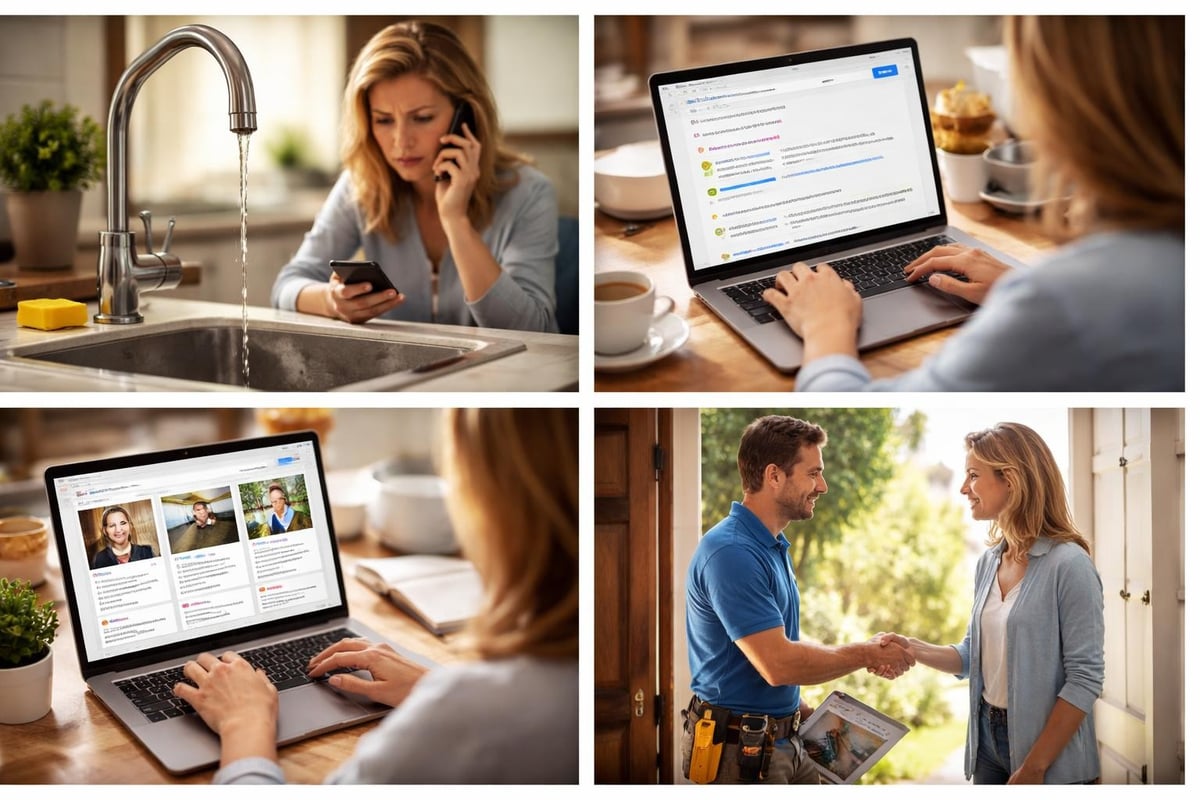
The biggest change in home improvement advertising is the move from interruption-based marketing to intent-based targeting.
You’re not trying to convince someone they need a new roof. You’re showing up when they’ve already decided they need one and are actively searching for the right contractor.
This fundamental shift changes everything about how you allocate your advertising budget.
Local SEO as Your Foundation for Home Improvement Advertising
Before you spend a dollar on paid advertising, your local SEO foundation needs to be solid.
Think of it this way: paid ads get you visibility today, but local SEO builds an asset that generates leads month after month without ongoing ad spend.
For home service businesses across Texas, dominating local map results isn’t optional. It’s the difference between your phone ringing consistently and watching leads go to competitors.
Google Business Profile Optimization
Your Google Business Profile is often the first thing potential customers see.
Here’s what you need to get right:
- Complete every section of your profile with accurate, detailed information
- Upload high-quality photos of your team, trucks, and completed projects
- Choose the most specific categories for your services
- Keep your hours updated, especially during holidays
- Respond to every review within 24 hours
The contractors who show up in the local 3-pack (the map results at the top of Google) get the lion’s share of clicks and calls.
According to research on home improvement marketing strategies, businesses that maintain active Google Business Profiles see significantly higher engagement rates than those that don’t.
Building Local Citations and Consistency
Your business name, address, and phone number need to appear consistently across every directory and platform.
Inconsistencies confuse Google and dilute your local search rankings.
| Platform Type | Priority Level | Update Frequency |
|---|---|---|
| Google Business Profile | Critical | Weekly |
| Yelp, HomeAdvisor | High | Monthly |
| Industry Directories | Medium | Quarterly |
| Social Media Profiles | Medium | As Needed |
For contractors providing services across multiple Texas cities, you need location-specific optimization for each service area. This is exactly what the right SEO company in San Antonio can help you achieve.
Pay-Per-Click Advertising for Immediate Lead Generation
While SEO builds long-term assets, PPC advertising delivers immediate visibility and lead flow.
For home improvement advertising, Google Ads is typically the most effective platform because it captures people with active buying intent.
Structuring Your Google Ads Campaigns
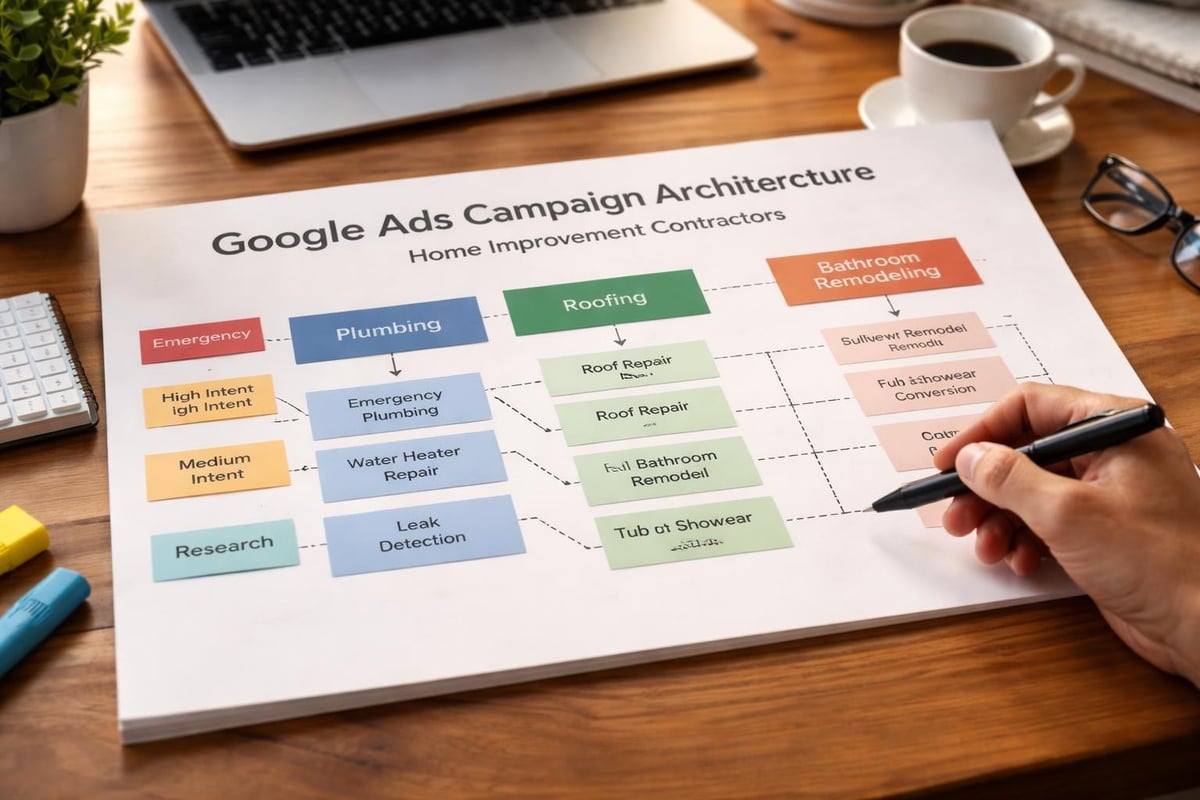
Don’t make the mistake of lumping all your services into one generic campaign.
Structure matters:
- Create separate campaigns for each major service line (roofing, HVAC, plumbing, remodeling)
- Build ad groups around specific services (roof repair, AC installation, water heater replacement)
- Use highly specific keywords that indicate purchase intent
- Write ad copy that speaks directly to the homeowner’s immediate problem
Someone searching “emergency plumber near me” has different intent than someone searching “how to fix a leaky faucet.”
Your home improvement advertising needs to distinguish between these intents and bid accordingly.
Launching Google Ads campaigns requires understanding which keywords drive qualified leads versus tire-kickers who are just price shopping.
Bid Strategies That Actually Work
Automated bidding sounds appealing, but it often wastes budget in the home service space.
Here’s what works better:
- Start with manual CPC bidding to gather data on which keywords actually convert
- Use enhanced CPC once you have conversion tracking properly set up
- Only move to automated strategies like Target CPA after you have at least 30 conversions per month
- Set bid adjustments for time of day, location, and device based on your actual call data
The cost for digital marketing varies significantly based on your market competitiveness and service mix, but PPC typically delivers the fastest ROI when managed correctly.
Content Marketing That Positions You as the Local Expert
Most contractors think content marketing means writing random blog posts and hoping for traffic.
That’s not how home improvement advertising works when you do it strategically.
Your content should accomplish three specific goals:
- Capture search traffic for high-intent service keywords
- Answer the questions homeowners ask before they hire
- Demonstrate your expertise in a way that builds trust
Creating Service-Specific Landing Pages
Every service you offer should have its own dedicated landing page optimized for local search.
This isn’t just about SEO. It’s about giving potential customers exactly the information they need to choose you.
What to include on each service page:
- Clear headline that includes the service and location
- Detailed explanation of what the service includes
- Pricing transparency (even if it’s ranges or starting prices)
- Before and after photos or case studies
- Clear call-to-action with phone number prominently displayed
- FAQ section addressing common concerns
For example, if you provide plumbing services in Austin, you need separate pages for “Austin emergency plumbing,” “water heater installation Austin,” “drain cleaning Austin,” and every other specific service.
This level of detail is what makes Austin plumbing SEO effective at generating qualified leads.
Building Authority Through Educational Content
Blog content serves a different purpose than service pages.
You’re capturing people earlier in their decision process and building trust before they’re ready to buy.
Write about topics like:
- How to choose the right contractor for specific projects
- What homeowners should expect during common jobs
- Seasonal maintenance tips that prevent bigger problems
- Cost breakdowns and factors that affect pricing
- How to spot warning signs that require professional help
The key is balancing helpful information with clear paths to contact you when they’re ready.
According to statistics on marketing in the home improvement industry, content marketing drives three times as many leads as traditional outbound marketing while costing 62% less.
Leveraging Online Reviews as Social Proof
Your reputation online directly impacts conversion rates from every advertising channel.
Think about your own behavior. When you’re comparing contractors, you’re looking at reviews before you call anyone.
Building a Review Generation System
You can’t just hope customers leave reviews. You need a system that makes it easy and reminds them.
Here’s what works:
- Send review requests within 24 hours of job completion
- Make it simple with direct links to your Google Business Profile
- Ask via text message (email gets ignored)
- Follow up once if they don’t respond within a week
- Never incentivize reviews (it violates platform policies)
The contractors who consistently generate 4-10 reviews per month dominate local search results.
Responding to Reviews (Especially Negative Ones)
Every review deserves a response, but negative reviews are actually opportunities.
How you handle a complaint publicly shows potential customers how you’ll treat them if something goes wrong.
| Review Type | Response Timeline | Key Elements |
|---|---|---|
| Positive | Within 24 hours | Thank customer, mention specific details, invite them back |
| Neutral | Within 12 hours | Thank them, address any concerns, offer to discuss further |
| Negative | Within 4 hours | Apologize, take responsibility, offer to make it right offline |
Potential customers read your responses as much as the reviews themselves.
As discussed in practical marketing tips for home improvement businesses, collecting and managing online reviews directly impacts your visibility and credibility in local search.
Social Media Advertising for Brand Building and Retargeting
Social media isn’t where most home improvement leads originate, but it plays a crucial supporting role in your advertising mix.
Facebook and Instagram work best for:
- Retargeting people who visited your website but didn’t convert
- Showcasing before-and-after transformations visually
- Building brand awareness in your local service areas
- Promoting seasonal offers and time-sensitive services
The key difference from Google Ads is that social media users aren’t actively searching for your services. You’re interrupting their feed, so your creative needs to stop the scroll.
Creating Scroll-Stopping Visual Content
Photos of completed projects outperform generic stock images every single time.
Video performs even better, especially short clips showing transformations or explaining common problems homeowners face.
Your best performing content typically includes:
- Time-lapse videos of project completion
- Before and after photo carousels
- Customer testimonials on video
- Behind-the-scenes content showing your team’s expertise
- Educational content addressing common homeowner questions
For home improvement advertising on social platforms, authenticity beats polish. Homeowners want to see real projects and real people, not overly produced marketing materials.
Retargeting Strategies That Convert
Most website visitors leave without calling. That’s normal.
Retargeting brings them back when they’re ready to make a decision.
Set up audiences based on:
- People who visited specific service pages
- Website visitors who spent more than 2 minutes browsing
- People who visited your contact page but didn’t submit a form
- Past customers (for seasonal services or additional work)
Your retargeting ads should remind them why they were interested and make it easy to take the next step.
The social media ads pricing is typically lower than Google Ads on a cost-per-click basis, but the conversion rates are also lower because the intent is different.
Measuring What Matters in Home Improvement Advertising
Vanity metrics like website traffic and social media followers don’t pay your bills.
You need to track metrics that directly connect to revenue.
Setting Up Proper Conversion Tracking
Before you spend another dollar on advertising, make sure you can track what’s working.
Essential tracking to implement:
- Call tracking numbers for each advertising channel
- Form submission tracking in Google Analytics
- Conversion tracking in Google Ads and Facebook Ads
- CRM integration to track leads from first contact through closed jobs
- Revenue attribution back to specific campaigns
Most contractors are flying blind because they can’t tell which advertising channels produce profitable jobs versus endless tire-kickers.
Key Performance Indicators to Monitor
Different advertising channels have different benchmarks for success.
| Channel | Primary KPI | Secondary KPI | Target Range |
|---|---|---|---|
| Google Ads | Cost Per Lead | Conversion Rate | $50-150 CPL, 5-10% CVR |
| Local SEO | Calls from GMB | GMB Views | 30+ calls/month |
| Social Media | Cost Per Click | Click-Through Rate | $1-3 CPC, 1-3% CTR |
| Content Marketing | Organic Sessions | Time on Page | 20%+ monthly growth |
Track these weekly, not monthly. Waiting 30 days to see if something’s working wastes budget and opportunity.
According to home improvement marketing insights, contractors who implement proper tracking and optimization see 40-60% better ROI from their advertising spend.
Building Landing Pages That Convert
Your advertising is only as good as the page it sends people to.
A brilliant ad campaign sending traffic to a terrible landing page is just expensive disappointment.
Essential Elements of High-Converting Landing Pages
Every landing page for home improvement advertising needs these components:
- Clear headline that matches the ad promise
- Prominent phone number (click-to-call on mobile)
- Trust signals (years in business, certifications, awards)
- Social proof (reviews, testimonials, project counts)
- Clear service description with benefits, not just features
- Visual proof (photos of real projects, not stock images)
- Simple contact form (name, phone, email, brief description)
- Urgency element (limited availability, seasonal offers)
Remove anything that doesn’t directly support the conversion goal. Every additional link or distraction reduces conversion rates.
Mobile Optimization is Non-Negotiable
Over 60% of local service searches happen on mobile devices.
If your landing pages don’t load fast and look great on phones, you’re wasting the majority of your advertising budget.
Mobile optimization checklist:
- Page loads in under 3 seconds
- Click-to-call button is prominent and easy to tap
- Forms are simple (5 fields maximum)
- No tiny text that requires zooming
- Images are compressed for fast loading
- Contact information is visible without scrolling
The conversion-focused web design approach treats your website as a lead generation tool, not a digital brochure.
Seasonal Strategies for Home Improvement Advertising
Demand for home services isn’t consistent throughout the year.
Your advertising strategy needs to adapt to seasonal patterns in your specific trades.
Understanding Your Service Seasonality
Different home improvement services peak at different times:
- HVAC: AC service peaks May-August, heating service peaks November-February
- Roofing: Spring and fall are busiest, post-storm surges happen year-round
- Plumbing: Frozen pipes in winter, water heaters in fall/winter
- Remodeling: Spring and summer for outdoor projects, winter for indoor
- Pressure washing: Spring and early summer
Increase advertising spend 4-6 weeks before your peak season starts. That’s when homeowners begin researching and booking services.
Counter-Seasonal Strategies
Don’t go dark during slow seasons. Adjust your strategy instead.
During off-peak times:
- Reduce PPC budgets but maintain presence
- Focus on content creation to build SEO authority
- Offer seasonal promotions to generate counter-seasonal demand
- Target maintenance services instead of emergency work
- Build your review base when you have more time for follow-up
Smart contractors use slow seasons to strengthen their marketing foundation so they dominate when demand picks up.
According to home remodeling statistics and trends, understanding seasonal patterns and market growth helps contractors plan advertising budgets more effectively.
Budget Allocation Across Advertising Channels
Most contractors either spread their budget too thin across every platform or put all their eggs in one basket.
Neither approach works well.
The 70-20-10 Rule for Marketing Budgets
Here’s a proven framework:
- 70% on proven channels that consistently deliver positive ROI (usually Google Ads and local SEO)
- 20% on growth channels that show promise but need optimization (retargeting, social media)
- 10% on experimental channels to test new opportunities (new platforms, content types, tactics)
This ensures you’re maximizing current revenue while building future opportunities.
Calculating Your Advertising Budget
Work backward from your revenue goals.
- Determine your revenue target for the year
- Calculate how many jobs you need to hit that target
- Divide by your average close rate to find required leads
- Multiply by your cost per lead to determine budget needed
Example calculation:
- Revenue goal: $2,000,000
- Average job value: $5,000
- Jobs needed: 400
- Close rate: 25%
- Leads needed: 1,600
- Cost per lead: $100
- Annual marketing budget: $160,000 (8% of revenue)
For most home service businesses, 6-12% of revenue is a healthy marketing budget, with newer businesses at the higher end and established ones at the lower end.
The Google PPC pricing varies by market and competition, but understanding your numbers helps you make informed decisions.
Common Home Improvement Advertising Mistakes to Avoid
Let’s talk about what doesn’t work, so you can avoid wasting money on these common mistakes.
Mistake 1: Generic Messaging That Could Apply to Anyone
“Quality work at affordable prices” and “family-owned and operated” don’t differentiate you from anyone.
Every contractor says exactly the same things.
Instead, be specific:
- “We’ve installed 847 water heaters in San Antonio since 2018”
- “Our plumbers average 12 years of experience”
- “We guarantee a 2-hour response time for emergencies or you get $50 off”
Specificity builds credibility. Vague claims sound like everyone else.
Mistake 2: Ignoring Mobile Users
If your phone number isn’t clickable on mobile or your contact form doesn’t work well on a phone, you’re losing leads.
Test everything on an actual phone, not just a desktop browser resized smaller.
Mistake 3: Not Tracking Phone Calls
Form fills are easy to track, but most home service leads come through phone calls.
If you’re not using call tracking, you have no idea which advertising channels are actually working.
Mistake 4: Targeting Too Broad a Geographic Area
Just because you’ll travel 50 miles for a job doesn’t mean you should advertise 50 miles from your location.
Focus your advertising on areas where:
- You can respond quickly
- You have existing customers (for reviews and referrals)
- The demographics match your ideal customer
- You can be competitive on pricing due to lower drive time
The near me digital marketing agency approach focuses on hyperlocal targeting for maximum efficiency.
Mistake 5: Set It and Forget It
Digital advertising requires ongoing optimization.
Markets change, competitors adjust, costs fluctuate, and seasons shift.
What worked great last quarter might be wasting money this quarter if you’re not actively managing and optimizing.
As outlined in marketing strategies for home improvement companies, continuous optimization and testing separate successful campaigns from wasteful spending.
Advanced Tactics for Competitive Markets
If you’re in a highly competitive market like Dallas, Houston, or San Antonio, basic tactics aren’t enough.
You need advanced strategies to break through the noise.
Hyperlocal Targeting and Geo-Fencing
Instead of targeting entire cities, focus on specific neighborhoods where your ideal customers live.
Advanced location tactics:
- Create separate campaigns for high-value ZIP codes
- Increase bids during peak times in areas with higher average job values
- Exclude areas with historically low conversion rates
- Use geo-fencing around competitor locations (ethically)
- Target specific neighborhoods with relevant social media ads
Competitor Conquest Campaigns
Bidding on competitor names in Google Ads is aggressive but effective when done correctly.
When someone searches for your competitor, your ad can appear offering a comparison or alternative.
Rules for conquest campaigns:
- Never disparage competitors in ad copy
- Highlight your unique differentiators
- Offer something valuable (free estimate, faster service, better warranty)
- Send traffic to a comparison landing page, not a generic homepage
- Monitor carefully as CPCs are typically higher
Partnership and Co-Marketing Strategies
Home improvement advertising doesn’t have to be solo.
Partner with complementary businesses that serve the same customers:
- Real estate agents can refer clients who just purchased homes
- Home inspectors find issues that need contractors
- Interior designers work with remodeling contractors
- Insurance adjusters need restoration contractors
- Property managers need reliable service providers
Build formal referral programs with tracking and incentives for both parties.
Looking at sales data from home improvement retailers helps you understand broader market trends and opportunities for strategic partnerships.
Integration: Making All Your Marketing Work Together
The biggest mistake contractors make is treating each advertising channel as separate and disconnected.
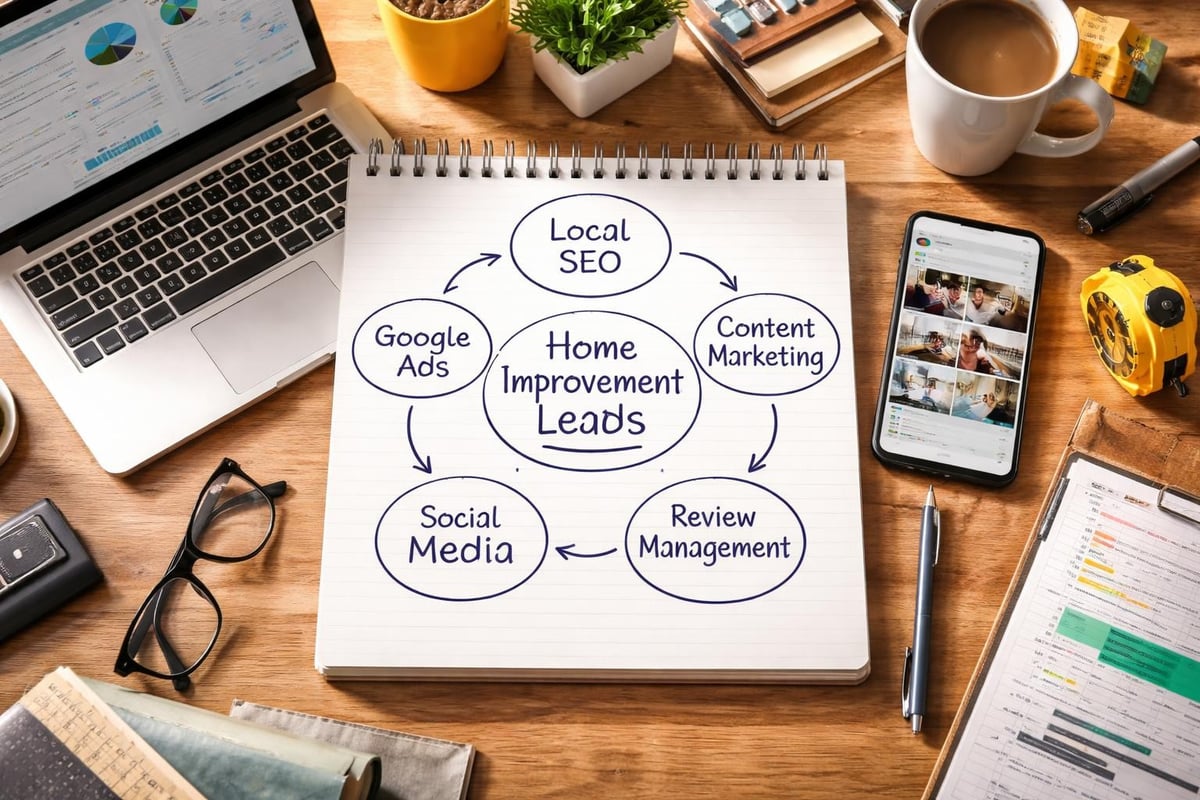
Your Google Ads, SEO, social media, and content should all reinforce each other.
Creating a Unified Customer Journey
Map out how customers typically find and choose contractors in your market.
A typical journey might look like:
- Homeowner notices problem (leaky faucet, broken AC, damaged roof)
- Searches on Google for solution
- Clicks on your Google Ad or organic listing
- Browses your website and service pages
- Reads reviews on Google and Facebook
- Leaves to compare with competitors
- Sees your retargeting ad on social media
- Returns to your website
- Calls or submits contact form
- You follow up and book estimate
Your home improvement advertising needs touchpoints at every stage of this journey.
Cross-Channel Attribution
When someone calls after seeing your Google Ad, reading your blog post, checking your reviews, and seeing a retargeting ad, which channel gets credit?
Most basic analytics give all credit to the last click, which undervalues earlier touchpoints.
Better approach:
- Use assisted conversion tracking in Google Analytics
- Implement first-touch and last-touch attribution
- Ask every caller how they heard about you
- Track customer journey through your CRM
- Give partial credit to all meaningful touchpoints
This reveals which channels are generating awareness versus which ones close the deal.
Many contractors discover their organic content and local SEO drive initial interest, while retargeting ads bring people back to convert.
The comprehensive approach discussed in the home improvement marketing guide emphasizes integration across multiple channels for maximum effectiveness.
Staying Ahead: 2026 Trends in Home Improvement Advertising
The digital advertising landscape keeps evolving. Here’s what’s working now and what’s coming next.
AI and Automation in Ad Management
Artificial intelligence is changing how campaigns are managed and optimized.
Where AI helps:
- Automated bid adjustments based on conversion probability
- Dynamic ad creation that tests multiple variations
- Predictive analytics for budget allocation
- Chatbots for initial lead qualification
- Sentiment analysis of customer reviews
But don’t let automation replace strategy. AI optimizes tactics within the framework you provide, but it can’t replace human understanding of your market and customers.
Voice Search Optimization
More homeowners are using voice assistants to find contractors.
“Hey Siri, find a plumber near me” generates different results than typing in a search box.
Optimize for voice search by:
- Using natural, conversational language in your content
- Answering specific questions in FAQ format
- Claiming your business on voice assistant platforms
- Focusing on local SEO and Google Business Profile
- Including long-tail, question-based keywords
Video-First Content Strategy
Video continues to dominate engagement across all platforms.
Short-form video (60 seconds or less) works best for social media, while longer educational videos perform well on YouTube and your website.
Video content that generates leads:
- Common problem diagnosis tutorials
- Before-and-after project walkthroughs
- Customer testimonial interviews
- Seasonal maintenance tips
- FAQ videos answering common questions
You don’t need expensive production. Smartphone video with good lighting and clear audio outperforms highly produced content that feels inauthentic.
Privacy Changes and First-Party Data
As platforms restrict tracking and third-party cookies disappear, first-party data becomes more valuable.
Build your owned audience:
- Email lists of past customers and prospects
- SMS marketing databases (with permission)
- Social media followers on your business pages
- YouTube subscribers to your channel
- Review platform followers
The contractors who own their audience relationships will weather platform changes better than those dependent on ad platforms alone.
For specialized services, HVAC digital marketing requires understanding these evolving trends while maintaining consistent execution of fundamentals.
Home improvement advertising in 2026 requires a strategic blend of foundational tactics like local SEO and proven channels like Google Ads, combined with newer opportunities in social media retargeting and video content. The contractors who win consistently are those who track their numbers, optimize relentlessly, and build integrated systems rather than random tactics. If you’re ready to stop guessing and start generating predictable lead flow, Aim Set Win specializes in building revenue-focused digital growth systems exclusively for home service businesses across Texas, combining local SEO, conversion-focused web design, and data-driven strategy to fill your calendar with qualified leads.
Jean runs growth strategy at AimSetWin, a performance marketing agency specializing in local service businesses across Texas. he's helped plumbers, HVAC companies, pest control operators, and home service brands build predictable revenue systems using data-driven advertising and conversion optimization.


