
Learn how to scale service leads with actionable steps that turn past customers and existing demand into steady booked jobs for your business.
Many HVAC and plumbing businesses in Texas reach a plateau where consistent revenue growth seems just out of reach. For established owners generating over $30k monthly, missed opportunities from existing customers and underperforming lead channels can quietly erode profits. By focusing on a bold approach to revenue recovery performance and developing systematic strategies, you position your company to reclaim overlooked income and achieve measurable gains in service leads.
Table of Contents
- Step 1: Assess Existing Revenue Recovery Performance
- Step 2: Implement Proven Systems For Lead Capture
- Step 3: Enhance Website And Conversion Processes
- Step 4: Leverage Paid Search And Seo For Expansion
- Step 5: Monitor Lead Quality And System Performance
Quick Summary
| Key Insight | Explanation |
|---|---|
| 1. Assess Revenue Recovery | Analyze past customer interactions to identify lost revenue opportunities and inform re-engagement strategies. |
| 2. Implement Lead Capture Systems | Establish structured processes that convert inquiries into qualified service leads through touchpoints and CRM tracking. |
| 3. Optimize Website Conversion | Improve website performance with clear calls-to-action and fast loading speeds for better lead generation. |
| 4. Leverage SEO and Paid Search | Combine organic search tactics and targeted ads to maximize visibility and attract high-quality leads. |
| 5. Monitor Lead Quality | Regularly review performance metrics and adjust strategies to refine lead generation and conversion processes. |
Step 1: Assess existing revenue recovery performance
To effectively scale service leads, you must first understand your current revenue recovery performance. This step involves conducting a comprehensive analysis of your past customer interactions, revenue streams, and potential missed opportunities.
The first critical task is establishing a clear baseline of existing revenue performance. This means diving deep into your historical financial data and tracking key metrics. Longitudinal revenue tracking provides insights into how your revenue streams have evolved over time, helping you identify consistent patterns and potential gaps.
Here are the specific actions you’ll take to assess your revenue recovery performance:
- Review your customer database for past service interactions
- Analyze repeat customer rates and frequency of service calls
- Identify dormant customer segments who haven’t engaged recently
- Calculate your current customer retention percentage
- Determine the average lifetime value of your existing customers
Tracking these metrics allows you to understand where revenue recovery opportunities exist. By mapping out your current performance landscape, you can develop targeted strategies to re-engage past customers and maximize existing demand.
Here’s how monitoring key revenue recovery metrics can impact your business:
| Metric Tracked | Business Insight Gained | Typical Action Enabled |
|---|---|---|
| Repeat Customer Rate | Identifies customer loyalty trends | Tailor retention campaigns |
| Dormant Segment Analysis | Reveals disengaged customers | Launch re-engagement initiatives |
| Average Customer Lifetime Value | Assesses revenue potential | Prioritize high-value relationships |
| Retention Percentage | Measures satisfaction and loyalty | Address customer experience gaps |
Your goal isn’t just tracking numbers, but uncovering actionable insights that transform dormant relationships into consistent revenue streams.
Pro tip: Create a standardized monthly dashboard that tracks key revenue recovery metrics, allowing you to quickly identify trends and opportunities for improvement.
Step 2: Implement proven systems for lead capture
Scaling service leads requires a strategic approach to capturing potential customer interest through systematic and repeatable processes. Your goal is to create a robust mechanism that consistently transforms casual inquiries into qualified service opportunities.

To build an effective lead capture system, you need to focus on multiple strategic touchpoints. Community-based detection strategies demonstrate how targeted outreach and education can dramatically improve engagement. This means developing multiple channels that make it easy for potential customers to connect with your business.
Here are key components of a proven lead capture system:
- Implement a user-friendly website contact form
- Create dedicated landing pages for specific service offerings
- Develop an automated lead response protocol
- Set up comprehensive customer relationship management (CRM) tracking
- Establish clear follow-up procedures within 24 hours of initial contact
Each touchpoint should be designed to reduce friction and make connecting with your business as seamless as possible. Streamline communication channels to ensure no potential lead falls through the cracks.
The most successful lead capture systems transform casual interest into committed customer relationships through responsive, personalized engagement.
Pro tip: Regularly audit and optimize your lead capture processes, testing different contact methods and tracking conversion rates to continuously improve your system’s effectiveness.
Step 3: Enhance website and conversion processes
Transforming your website into a powerful lead generation machine requires strategic optimization that goes beyond simple design. Your goal is to create a seamless digital experience that actively converts visitor interest into booked services.
User interaction analysis reveals critical insights into improving website performance and conversion rates. This means carefully examining every element of your digital presence to remove friction and guide potential customers smoothly through their decision-making process.
Key strategies for enhancing website conversion include:
- Optimize website loading speed across all devices
- Design clear and compelling call-to-action buttons
- Implement mobile-responsive design
- Create service-specific landing pages
- Use trust signals like customer testimonials and certifications
- Integrate live chat or instant contact options
- Develop intuitive navigation with minimal clicks
Streamline the customer journey by reducing steps between initial interest and service booking. Your website should feel like a helpful guide, not an obstacle course. This means anticipating customer questions and providing immediate, accessible answers.
Successful conversion optimization transforms your website from a digital brochure into an active sales partner that works 24/7 to generate leads.
Pro tip: Conduct monthly website performance audits, using analytics to identify and eliminate conversion barriers, ensuring your digital presence continuously evolves to meet customer needs.
Step 4: Leverage paid search and SEO for expansion
Expanding your service business requires a strategic approach to online visibility that combines organic search optimization with targeted paid advertising. Your ultimate goal is creating a comprehensive digital marketing strategy that attracts high-quality leads consistently.
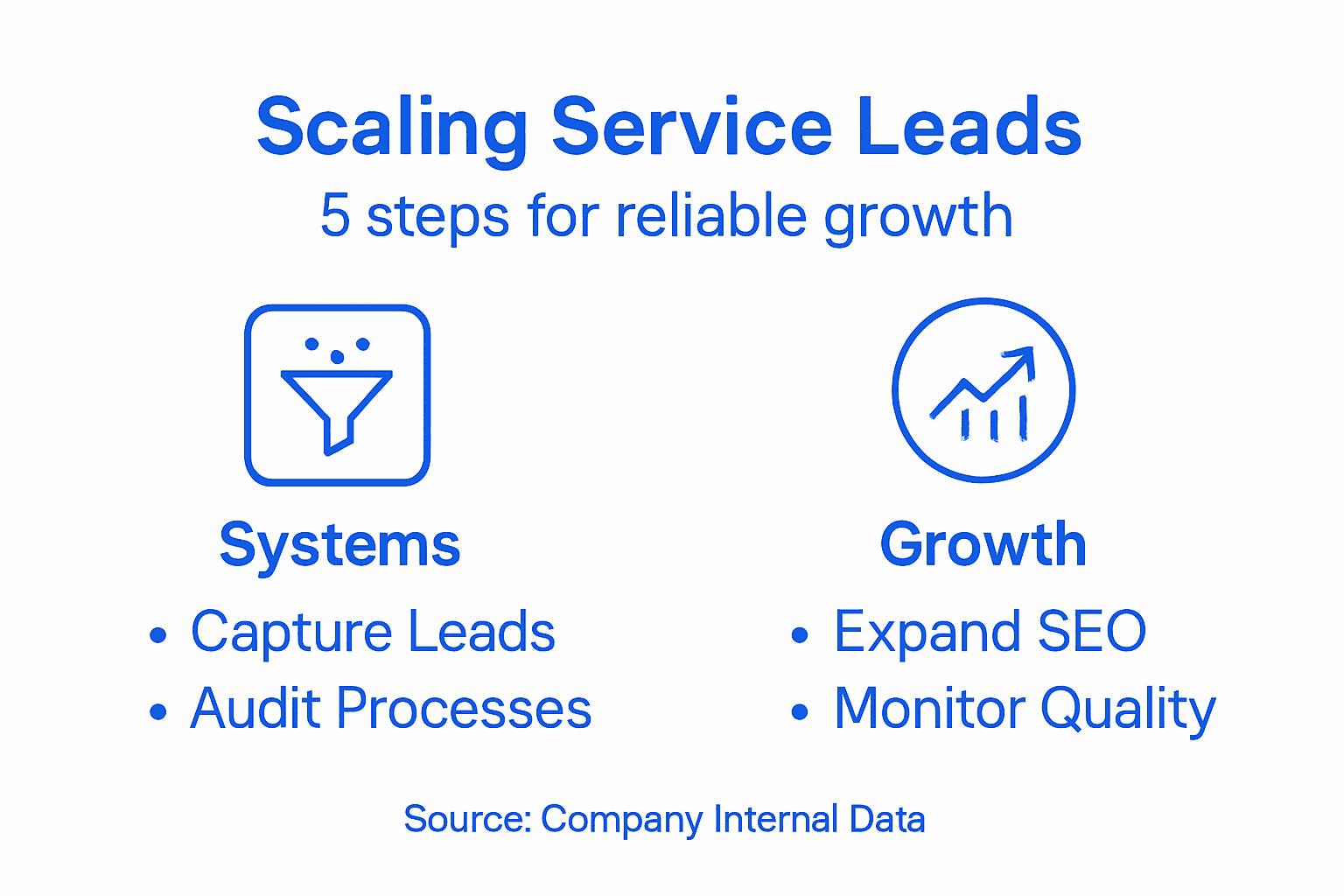
Search engine marketing strategies reveal the power of integrating organic and paid search techniques to maximize your digital reach. This means developing a multi-layered approach that captures potential customers at different stages of their decision-making process.
Key tactics for effective search expansion include:
- Conduct thorough keyword research specific to your service area
- Develop content-rich service pages targeting local search intent
- Create geographically targeted Google Ads campaigns
- Optimize website metadata and local business listings
- Build high-quality backlinks from reputable local sources
- Implement schema markup for enhanced search visibility
- Track and analyze conversion rates across organic and paid channels
Target non-brand keywords strategically to capture new customer segments. By understanding the nuanced differences between SEO and paid search, you can create a comprehensive approach that generates immediate results while building long-term organic visibility.
Comparing organic SEO and paid search for service business growth:
| Approach | Strengths | Limitations |
|---|---|---|
| Organic SEO | Long-term visibility, cost-effective | Slow results, algorithm changes |
| Paid Search | Immediate traffic, targeted reach | Ongoing budget required |
Successful digital marketing isn’t about choosing between SEO and paid search—it’s about creating a synergistic strategy that amplifies your overall online presence.
Pro tip: Allocate at least 20% of your marketing budget to ongoing testing and optimization, ensuring your search strategies continuously evolve with market dynamics.
Step 5: Monitor lead quality and system performance
Ensuring the ongoing effectiveness of your lead generation system requires a disciplined approach to tracking, analyzing, and continuously improving your performance metrics. Your goal is to transform raw data into actionable insights that drive consistent business growth.
Quality management tools provide a structured framework for systematically evaluating your lead capture and conversion processes. This means implementing a comprehensive monitoring system that goes beyond surface-level metrics to understand the true health of your revenue generation pipeline.
Key performance monitoring strategies include:
- Set up advanced analytics tracking in your CRM
- Define clear lead qualification criteria
- Calculate conversion rates at each funnel stage
- Track customer acquisition cost
- Monitor lead source performance
- Evaluate lead-to-customer conversion timelines
- Compare actual results against predefined benchmarks
Implement regular performance reviews to identify system bottlenecks and optimization opportunities. By establishing a data-driven approach, you can continuously refine your lead generation strategy and improve overall business performance.
Effective lead monitoring isn’t about collecting data—it’s about transforming that data into strategic decisions that drive sustainable growth.
Pro tip: Create a monthly dashboard that visualizes key performance indicators, allowing you to quickly identify trends and make informed strategic adjustments.
Unlock Predictable Growth by Scaling Your Service Leads
Struggling to turn existing demand into reliable booked jobs? This article lays out the challenge of tracking revenue recovery while building proven lead capture and conversion systems. If you are aiming to re-engage dormant customers and boost your service leads without wasting budget on untested ads or complex experiments Aim Set Win offers the exact solutions you need. Our Revenue Recovery System quietly recovers missed revenue and converts interest into booked jobs within 30 days or less. Then we amplify results by layering in SEO content strategies and website conversion improvements tailored for local service businesses.
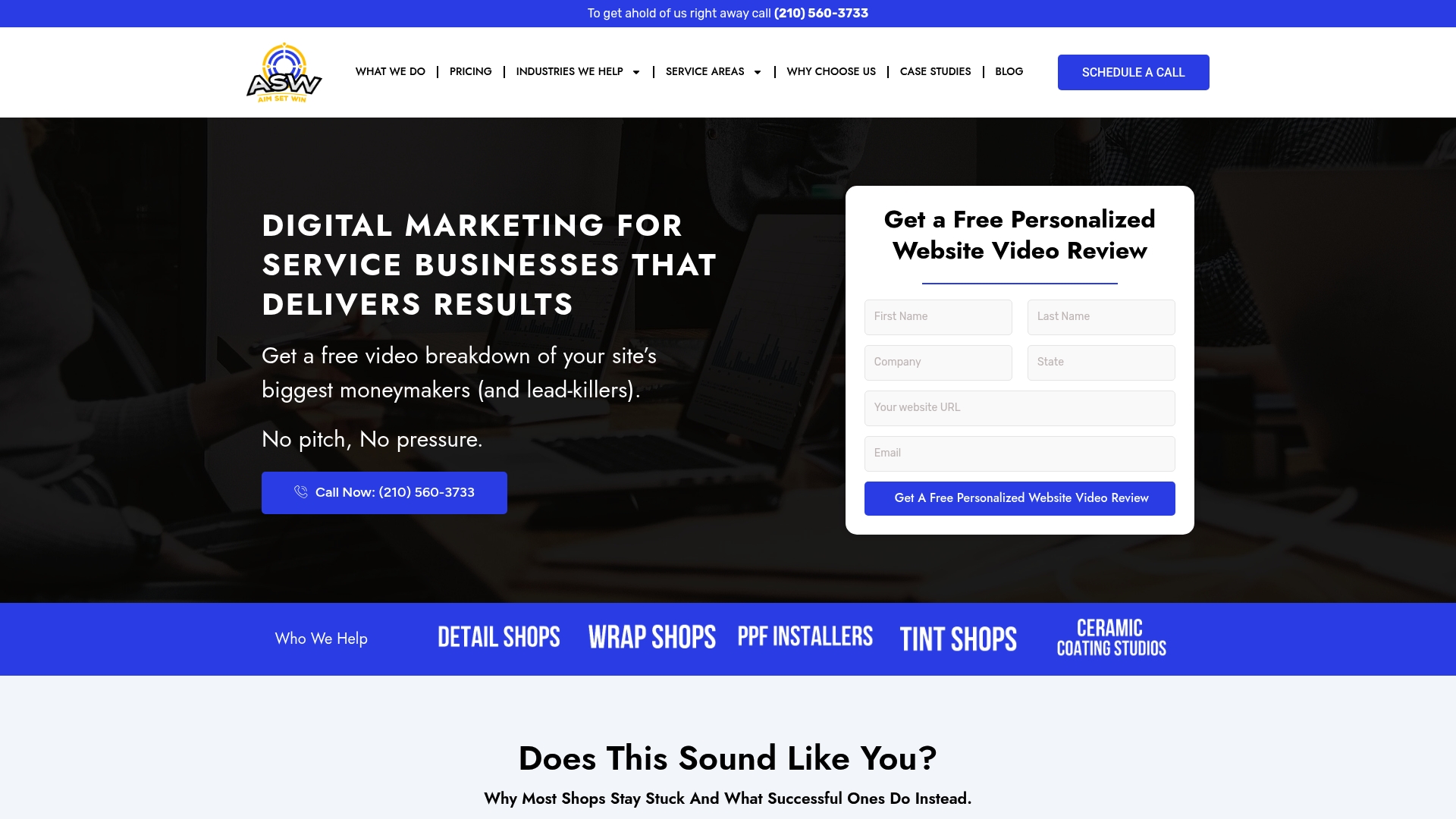
Ready to stop guessing and start scaling with systems designed for tight execution and measurable revenue? Discover how we help HVAC and plumbing businesses grow predictably with no unnecessary complexity. Explore our proven approach at Aim Set Win and check out insights for local service pros in our Uncategorized Archives – Aim Set Win. Take control of your growth journey today by visiting Aim Set Win and making next level lead generation your reality.
Frequently Asked Questions
How can I assess my current revenue recovery performance?
To assess your current revenue recovery performance, conduct an analysis of past customer interactions and revenue streams. Review key metrics like repeat customer rates and calculate your current retention percentage within the last year.
What steps should I take to implement a lead capture system?
To implement a lead capture system, create user-friendly contact forms on your website and establish dedicated landing pages for your services. Set up automated responses to inquiries and ensure clear follow-up procedures within 24 hours.
How can I optimize my website for better conversion rates?
You can optimize your website for better conversion rates by improving loading speed and designing clear call-to-action buttons. Regularly audit your website for performance issues and use customer testimonials to build trust.
What are effective strategies for combining SEO and paid search?
To effectively combine SEO and paid search, conduct thorough keyword research and develop content targeting local search intent. Allocate at least 20% of your marketing budget to testing new strategies to continuously improve results.
How do I monitor lead quality and performance?
To monitor lead quality and performance, set up advanced analytics in your customer relationship management system and define clear lead qualification criteria. Review your metrics monthly to identify trends and adjust your strategies accordingly.
Recommended
- Lead Re-Engagement Tools for Texas Plumbers – 2026
- Demand Generation: Turning Contacts Into Booked Jobs
- Effective Ways to Get Plumbing Leads in 2025 | Aim Set Win
- HVAC Predictable Growth Process for Reliable Revenue Boost
Jean runs growth strategy at AimSetWin, a performance marketing agency specializing in local service businesses across Texas. he's helped plumbers, HVAC companies, pest control operators, and home service brands build predictable revenue systems using data-driven advertising and conversion optimization.


