
Follow this HVAC customer re-engagement guide to systematically recover missed revenue using proven steps that convert past clients into booked jobs.
Every Texas HVAC business owner knows the value hidden in an existing customer list. When service requests slow down, reactivating past clients becomes a smarter path to revenue than chasing new leads. By focusing on a well-organized database and targeted outreach strategies, you can uncover high-potential customer segments, spark renewed interest, and turn dormant accounts back into booked jobs—all while maximizing return from the customers who already trust your service.
Table of Contents
- Step 1: Organize Your Customer Database For Targeted Outreach
- Step 2: Segment Past Clients By Service History And Value
- Step 3: Craft Compelling Re-Engagement Messages
- Step 4: Launch Automated Campaigns To Past Customers
- Step 5: Track Engagement And Verify Booked Jobs
Quick Summary
| Key Takeaway | Explanation |
|---|---|
| 1. Centralize Customer Data | Consolidate all customer information into a centralized system for better organization and targeted outreach. |
| 2. Segment Customers Effectively | Categorize clients by service history and value to identify high-potential reengagement opportunities. |
| 3. Personalize Re-engagement Messages | Craft tailored communication that references past interactions and addresses specific customer needs and concerns. |
| 4. Utilize Automated Marketing Campaigns | Implement automated sequences that trigger messaging based on customer segments and service history. |
| 5. Track Engagement Metrics | Establish a comprehensive tracking system to monitor response rates and job bookings for continuous improvement. |
Step 1: Organize your customer database for targeted outreach
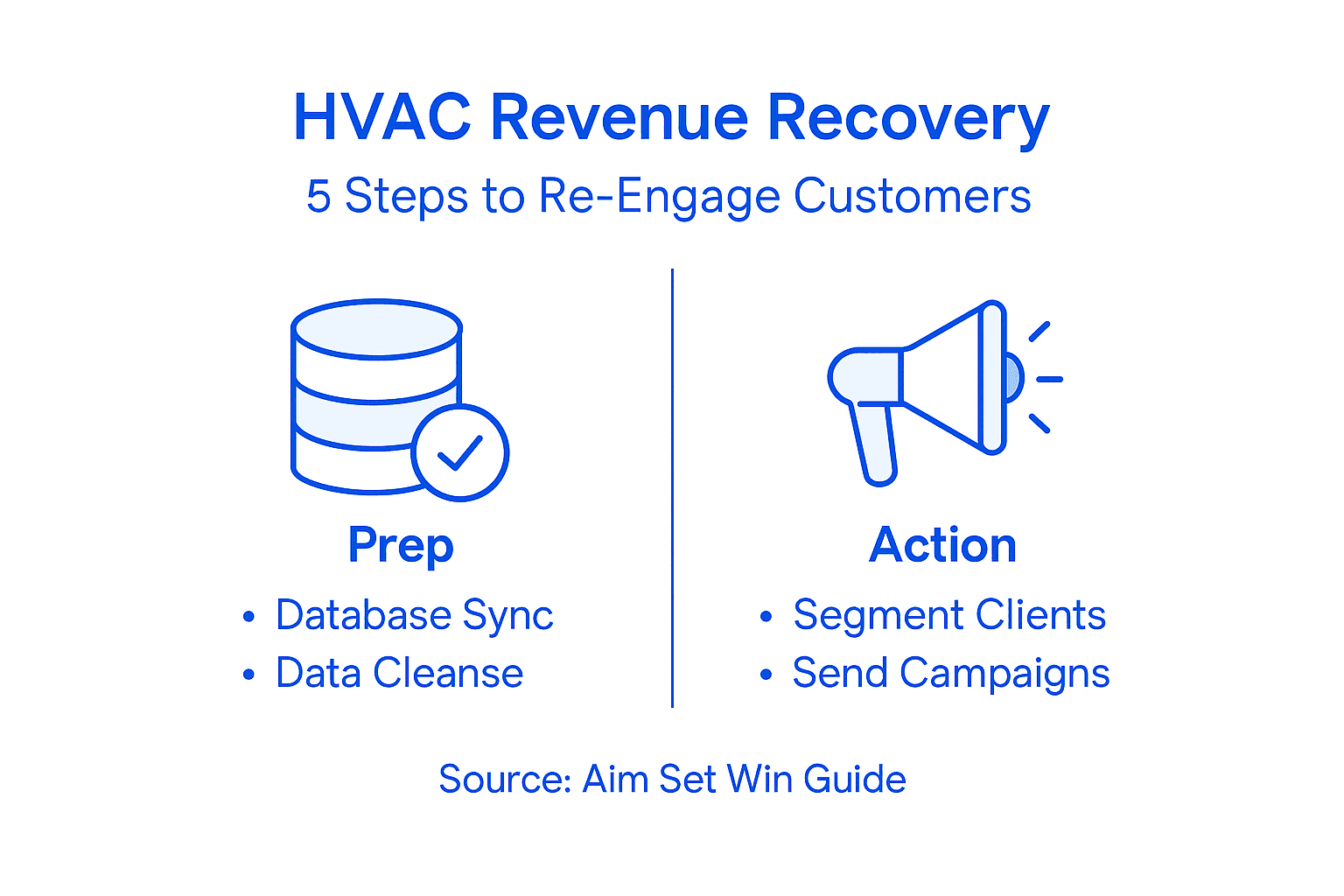
Successfully rebuilding revenue requires a strategic approach to customer database organization. Your goal is transforming raw customer information into a powerful outreach tool that identifies high-potential reengagement opportunities for your HVAC business.
Begin by consolidating all existing customer records into a centralized system. This means pulling data from service invoices, maintenance logs, previous work orders, and contact management platforms. Database design for customer support systems suggests categorizing customers based on key attributes like service history, equipment type, last service date, and contact preferences. Create distinct segments such as residential customers, commercial clients, maintenance contract holders, and one-time service customers.
Prioritize data cleansing by removing duplicate entries, updating outdated contact information, and verifying email addresses and phone numbers. Implement a standardized tagging system that allows quick filtering and targeted communication. For instance, tag customers by equipment age, previous service issues, or potential upgrade opportunities. This granular organization enables precise marketing efforts and personalized outreach strategies.
Here’s a summary of key customer segmentation types for targeted outreach:
| Segment Type | Main Characteristics | Typical Outreach Opportunity |
|---|---|---|
| Residential Customers | Homeowners, varied equipment | Seasonal maintenance, upgrade offers |
| Commercial Clients | Business locations, complex systems | Contract renewals, bulk services |
| Maintenance Contract Holders | Ongoing agreements, repeat interaction | Upsell higher-tier plans, new technology |
| One-Time Service Customers | Single repair or installation history | Invite for checkups, future contracts |
Pro tip: Invest in a customer relationship management (CRM) tool specifically designed for service businesses to automate data management and segmentation processes.
Step 2: Segment past clients by service history and value
Understanding and categorizing your customer base is crucial for targeted revenue recovery strategies in your HVAC business. Your objective is to create meaningful customer segments that reveal potential reengagement opportunities and maximize long term value.
Start by analyzing customer segmentation strategies that evaluate client value through multiple dimensions. Break down your customer database into strategic groups such as high value recurring maintenance clients, one time emergency repair customers, residential versus commercial service recipients, and equipment age categories. Calculate each segment’s lifetime value by examining total service spend, frequency of interactions, potential upgrade opportunities, and historical maintenance patterns.
Implement a scoring system that ranks customers based on their economic potential. Assign point values for factors like annual service contract likelihood, equipment replacement probability, and responsiveness to previous marketing communications. This granular approach allows you to prioritize outreach efforts toward segments with the highest revenue recovery potential while developing tailored communication strategies that address specific customer needs and preferences.
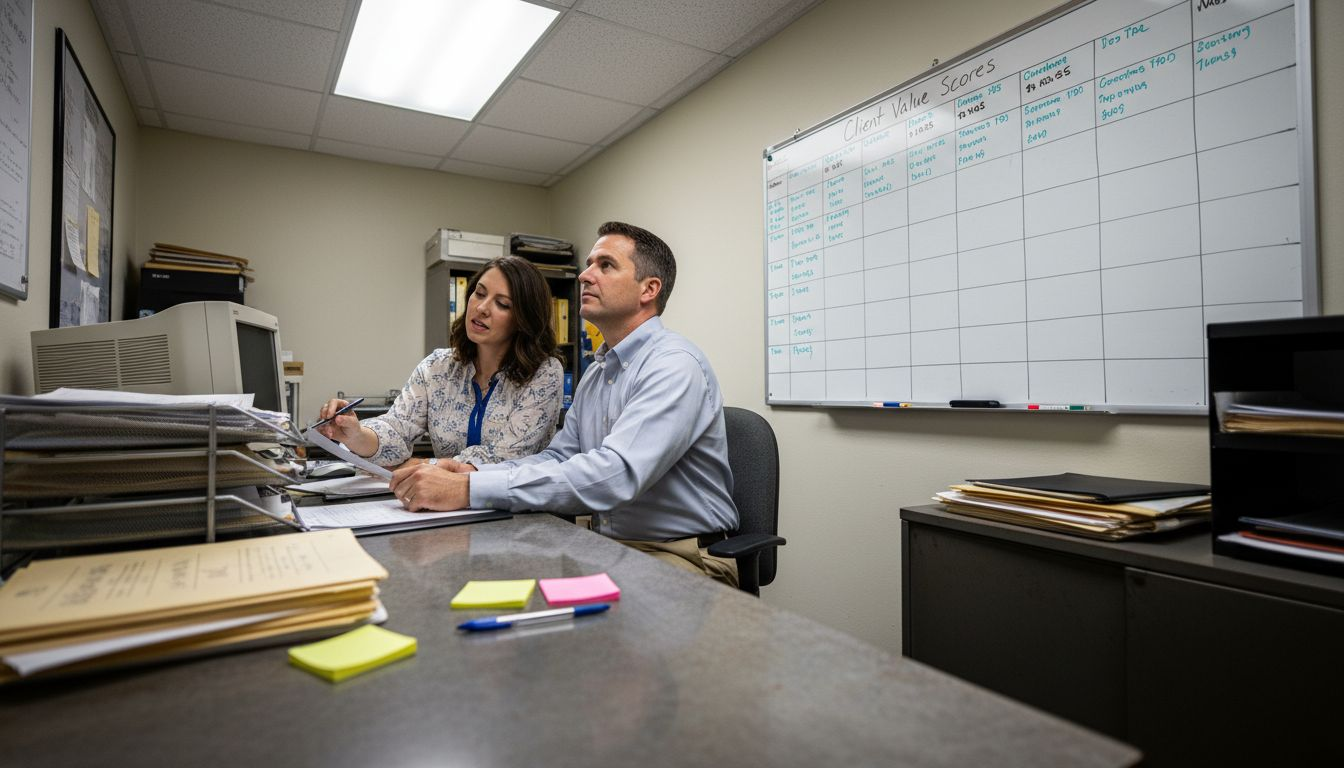
Pro tip: Create visual dashboards that dynamically update customer segment performance metrics to continuously refine your targeting approach.
Step 3: Craft compelling re-engagement messages
Re-establishing connection with past HVAC clients requires strategic communication that speaks directly to their unique needs and experiences. Your mission is to design messages that reignite interest and demonstrate genuine understanding of their service history.
Effective re-engagement strategies start with deep personalization. Develop messages that reference specific past interactions like previous equipment maintenance, emergency repairs, or seasonal service appointments. Structure your communication to address potential reasons for service interruption such as budget constraints, changing equipment needs, or unsatisfactory past experiences. Include targeted incentives that make returning to your service feel like a valuable decision personal to their specific situation.
Construct messages with empathy and precision. Use language that acknowledges their unique service history while presenting clear value propositions. Segment your messaging approach based on customer categories developed earlier such as residential clients with aging HVAC systems or commercial customers with complex maintenance requirements. Highlight specialized offerings like priority scheduling, discounted system evaluations, or exclusive maintenance packages that demonstrate your commitment to their specific needs.
Pro tip: Develop a library of templated re-engagement messages that can be quickly customized with specific customer details to streamline your outreach efforts.
Step 4: Launch automated campaigns to past customers
Automated marketing campaigns represent a powerful strategy for reconnecting with past HVAC customers efficiently and systematically. Your goal is to create intelligent communication workflows that intelligently trigger personalized interactions based on customer segments and historical service data.
Marketing automation platforms enable precise multi-channel communication strategies targeting specific customer groups. Design automated email and SMS sequences that correspond to different customer segments such as residential maintenance clients, commercial service contract holders, and one time emergency repair customers. Configure trigger points like equipment age milestones, service history intervals, or seasonal maintenance windows that automatically initiate targeted communication sequences with relevant service recommendations and personalized incentives.
Implement sophisticated tracking mechanisms that monitor customer engagement levels and automatically adjust communication frequency and messaging style. Utilize real time data insights to dynamically modify campaign parameters ensuring each automated message feels personalized and timely. Integrate your customer relationship management system to capture response rates behavioral signals and continuously optimize your re-engagement approach.
Pro tip: Test and rotate multiple message variations within your automated campaigns to identify the most effective communication strategies for different customer segments.
Compare core benefits of CRM and automation platforms for HVAC businesses:
| Platform Type | Key Function | Business Impact |
|---|---|---|
| CRM Systems | Centralize customer records | Streamlines data access and segmentation |
| Automation Platforms | Triggered messaging workflows | Boosts engagement and saves labor time |
Step 5: Track engagement and verify booked jobs
Measuring the success of your customer reengagement strategy requires precise tracking mechanisms that transform initial interactions into confirmed service appointments. Your objective is to develop a robust system that monitors customer response rates and converts potential leads into actual booked jobs.
Utilize HVAC industry certification standards to establish performance verification protocols. Create a comprehensive tracking dashboard that captures key metrics including initial contact response rates, scheduling conversion percentages, and final job completion confirmation. Configure multi stage verification checkpoints that validate each step of customer interaction from initial outreach to service scheduling and ultimate job completion.
Implement real time reporting systems that provide immediate insights into campaign performance. Design automated follow up sequences triggered by specific customer interaction signals such as email opens, link clicks, appointment request initiations, and confirmed service bookings. Develop a scoring mechanism that assigns value to different engagement levels allowing you to quickly identify and prioritize high potential customer segments most likely to convert into active service contracts.
Pro tip: Create visual lead progression charts that allow instant identification of bottlenecks in your customer reengagement conversion funnel.
Unlock Reliable Revenue Growth Through Proven HVAC Customer Re-Engagement
The challenge highlighted in the HVAC Customer Re-Engagement Guide for Reliable Revenue centers on turning past customer data into a dependable source of booked jobs without spending on new leads or ads. You face obstacles like organizing customer databases, segmenting clientele by value, crafting personalized re-engagement messages, and automating outreach campaigns—all to recover missed revenue efficiently. Your goal is to build a repeatable system that delivers measurable, predictable growth while eliminating costly guesswork and ineffective labor.
Aim Set Win is designed to solve these exact pain points. Our HVAC solutions begin with implementing a Revenue Recovery System that quietly works in the background to reconnect you with high-value past clients, converting their existing demand into booked service jobs within 30 days or less. We help you build clear processes and tight execution around segmentation, messaging, and automation, just like the strategies detailed in the guide. Once revenue recovery is proven, we layer on advanced tactics such as SEO, paid search, and AI call handling to help scale your HVAC business without unnecessary complexity.
Take control of your HVAC customer re-engagement now. Visit Aim Set Win to discover how our proven systems bring your past customers back on your schedule—without new advertising costs. See how we turn dormant demand into dependable revenue so you can focus on what you do best. Begin your transformation today by exploring our HVAC archives and start winning consistent jobs again.
Frequently Asked Questions
How can I organize my HVAC customer database for effective outreach?
To organize your HVAC customer database for outreach, consolidate all customer records into a single system and categorize them based on attributes like service history and contact preferences. Start by creating segments such as residential or commercial clients, which allows for targeted communications.
What are the key customer segments I should focus on for re-engagement?
Focus on segments like residential customers, commercial clients, maintenance contract holders, and one-time service customers. Categorizing clients based on their service history and equipment type helps identify re-engagement opportunities.
How do I craft personalized messages for re-engaging past HVAC clients?
To craft personalized messages, reference specific past interactions and address potential reasons for service interruption. Include tailored incentives that resonate with the customer’s unique service history, encouraging them to reconnect with your business.
What tools can help automate my marketing campaigns for customer re-engagement?
Utilize marketing automation platforms to create intelligent communication workflows that trigger personalized messages based on customer segments and service data. Automating these campaigns allows for efficient and timely outreach, increasing engagement rates.
How can I measure the success of my HVAC customer re-engagement efforts?
Measure the success by tracking key metrics such as response rates, appointment bookings, and job completions. Create a robust reporting system to monitor customer interactions and adjust your strategy based on the performance results.
Recommended
- HVAC Predictable Growth Process for Reliable Revenue Boost
- Home Service Business Systems: Unlocking Revenue
- Lead Re-Engagement Tools for Texas Plumbers – 2026
- HVAC SEO Services | Top Rankings & Local Leads
- Customer Journey Mapping for CRO Marketers in 2025
Jean runs growth strategy at AimSetWin, a performance marketing agency specializing in local service businesses across Texas. he's helped plumbers, HVAC companies, pest control operators, and home service brands build predictable revenue systems using data-driven advertising and conversion optimization.


