
Discover key HVAC industry trends for 2026 in Texas, including AI, sustainability, SEER2 standards, and tactics for profitable revenue recovery.
Profit margins do not grow on autopilot as the HVAC market shifts into 2026. Texas contractors face a split market where residential demand rises slowly while commercial upgrades surge, driven by new efficiency standards and the transition to low-GWP refrigerants. Staying ahead means understanding how regulatory pressure and smart technologies are reshaping service calls, pricing, and long-term revenue. This guide outlines actionable strategies so your business captures the opportunities emerging from sustainability mandates and evolving customer expectations.
Table of Contents
- Defining 2026 HVAC Industry Trends
- Types of Emerging HVAC Technologies
- New Sustainability Standards and Regulations
- Role of AI in HVAC Performance and Sales
- Financial Impacts: Costs, Revenue, and Risks
- Common Pitfalls and Competitive Strategies
Key Takeaways
| Point | Details |
|---|---|
| Market Divergence | The HVAC market is expected to see a split, with residential growth being cautious and commercial growth accelerating significantly. |
| Technological Adaptation | Technologies such as smart controls, electrification, and air quality solutions will become essential, impacting service offerings and pricing strategies. |
| Sustainability Regulations | Understanding and adapting to stricter sustainability regulations will be crucial for capturing demand and ensuring compliance. |
| AI Integration | Implementing AI tools for diagnostics and performance monitoring can significantly enhance competitive advantage and customer trust. |
Defining 2026 HVAC Industry Trends
The HVAC industry entering 2026 isn’t heading in one direction. You’re seeing a split market where residential activity starts cautiously while commercial work accelerates. Ongoing refrigerant transitions and evolving efficiency standards are reshaping how you bid jobs and stock inventory. This matters to your operation because regulatory compliance directly impacts your service calls and equipment pricing.
Residential demand is climbing, but mortgage rates and economic uncertainty are keeping homeowners cautious about big HVAC replacements early in the year. The growth you’ll see is modest—low single digits—but it represents real market recovery. By spring and summer, you’ll notice momentum building as consumers prioritize comfort and energy efficiency.
Commercial HVAC growth is where the real action is for 2026. Building owners are upgrading systems for electrification and efficiency. Energy-efficient cooling solutions are becoming baseline expectations, not premium options. This shift means commercial contracts are larger, longer, and more profitable than they’ve been in years.
The trend you can’t ignore is the push toward sustainable systems. Regulatory support for efficient equipment means incentives are flowing. Homeowners and businesses alike are getting help paying for upgrades. This creates opportunity if you’re positioned to capture it, but it also means pricing pressure from contractors who don’t understand the value they’re delivering.
Staying competitive in 2026 requires understanding where your revenue actually comes from. Effective marketing strategies for HVAC growth help you target the right customer segments and communicate your value during shifting market conditions.
Pro tip: Start tracking which customer segments are responding to efficiency messaging now—this tells you where to focus your effort as 2026 demand accelerates and separates winners from competitors still pushing generic service calls.
Types of Emerging HVAC Technologies
The technologies reshaping HVAC in 2026 fall into three distinct categories, and understanding each one matters for your service strategy and pricing. Smart controls, electrification, and refrigerant transitions aren’t optional upgrades anymore. They’re becoming baseline expectations that directly affect your job pipeline and profit margins.
Smart thermostats and building management systems are the first major shift. Smart controls with IoT integration allow property owners to monitor system performance remotely, detect faults before they become emergencies, and reduce energy consumption significantly. For you, this means customers are getting visibility into their HVAC performance they never had before. They’ll call you when they see problems on their phone, not when their comfort fails.
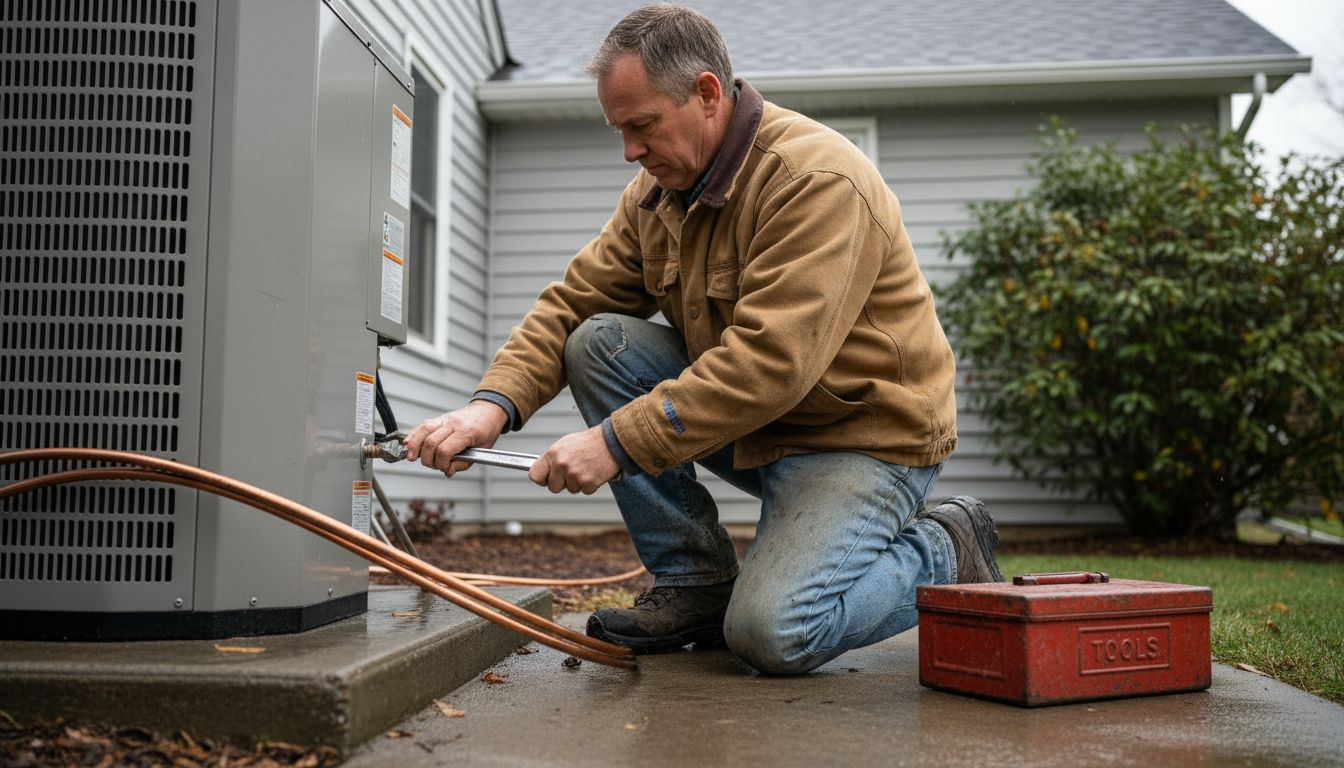
Electrification is the second wave hitting your market. Heat pumps, particularly air-source and cold-climate models, are replacing gas furnaces at an accelerating pace. Low-GWP refrigerants like R32 and CO2 are now regulatory requirements, not premium options. This shift creates service opportunities because heat pump installations require different technical knowledge than traditional furnace replacements. Your team needs training on these systems or you’re leaving money on the table.
Indoor air quality technologies round out the third category. UV-C purification, energy recovery ventilators (ERVs), and advanced filtration systems are becoming standard requests. Homeowners and business owners now understand that HVAC isn’t just about temperature control. It’s about breathing cleaner air, and they’ll pay for systems that deliver it.
The real opportunity for you is in positioning expertise. Most contractors treat these technologies as afterthoughts, but they’re the gateway to higher-value contracts and customer loyalty. Strategic marketing positioning for your HVAC business helps you communicate this expertise to customers who are actively seeking it.
Pro tip: Start offering heat pump evaluations and indoor air quality assessments as separate service offerings now, before your competitors catch up and commoditize the market.
Here’s a summary showing how key 2026 HVAC technologies shape contractor strategy and revenue:
| Technology Category | Main Benefit | Required Expertise | Business Impact |
|---|---|---|---|
| Smart Controls & IoT | Remote monitoring, fault alerts | System integration, data handling | Repeat service calls, increased trust |
| Electrification & Heat Pumps | Energy savings, emissions reduction | Heat pump sizing, low-GWP refrigerants | Access to incentives, higher install margins |
| Indoor Air Quality | Healthier indoor air | UV-C/filtration, ventilation knowledge | Bundle sales, customer retention |
New Sustainability Standards and Regulations
Regulations are no longer a background concern for your business. Federal and state sustainability mandates are now the primary driver of customer decisions and your service mix in 2026. Understanding what’s changing and when it changes directly impacts your ability to capitalize on demand.
Federal, state, and local sustainability regulations are pushing stricter energy efficiency requirements across residential and commercial properties. These aren’t vague guidelines. They’re specific mandates about refrigerant types, system efficiency ratings, and heat pump adoption timelines. Texas businesses face particular pressure because of the state’s climate and growing population. Your customers will be forced to upgrade systems whether they want to or not.
Low-GWP refrigerants are now mandatory in most jurisdictions. R32 and CO2 alternatives are replacing traditional refrigerants with higher global warming potential. This transition affects your inventory, your technician training, and your pricing models. Equipment using compliant refrigerants costs more upfront, but customers can offset that cost through tax credits and rebates.
Tax credits and rebate programs are flowing directly to your customers right now. This is the hidden advantage in the 2026 market. When a homeowner can get a rebate that covers 30 to 50 percent of a heat pump installation, the decision to upgrade becomes easy. Your job is positioning yourself as the contractor who helps customers navigate these incentives and close the deal faster.
Heat pump mandates are coming hard and fast. New construction in some jurisdictions can no longer use gas furnaces. Existing buildings are being pushed toward electrification through efficiency standards tied to energy usage. This creates a multi-year surge in heat pump installations, and contractors who master this technology will capture disproportionate market share.
Compliance isn’t optional, but it’s also not a burden if you prepare now. The contractors winning in 2026 will be those who understand the regulatory timeline and position themselves as the solution.
Pro tip: Create a simple regulatory checklist for your service area that tracks which efficiency standards and incentive programs apply to your customers, then reference it during every consultation to identify upgrade opportunities before customers ask.
Role of AI in HVAC Performance and Sales
AI isn’t a future technology for HVAC anymore. It’s reshaping how systems operate, how you diagnose problems, and how you sell upgrades in 2026. The contractors adopting AI tools now are capturing competitive advantages that will compound throughout the year.
Predictive maintenance and fault detection diagnostics powered by AI catch problems before they become emergencies. Instead of waiting for a system to fail at 2 AM on a Sunday, your technicians get alerts about developing issues days or weeks in advance. This means you’re fixing problems proactively, reducing unplanned downtime for your customers and increasing their trust in your business.
Machine learning systems analyze real-time data from connected HVAC equipment to optimize energy use automatically. Cloud analytics give you visibility into system performance across all your customer accounts simultaneously. You can spot patterns, identify which customers are spending too much on energy, and position energy optimization as a premium service offering.
The sales impact is immediate and measurable. When you can show a customer that their system is operating at 65 percent efficiency and a new AI-optimized system runs at 92 percent, the upgrade becomes obvious. Remote diagnostics and data analytics capabilities transform you from a reactive repair technician into a proactive efficiency consultant.
Dynamic zoning controlled by AI learns occupancy patterns and adjusts heating and cooling by zone automatically. Your customers get better comfort at lower costs. Demand-response participation lets them help balance the electrical grid during peak hours and earn credits on their energy bills. These are compelling value propositions that justify higher service prices.
The contractors winning revenue in 2026 are those positioning AI-powered systems as complete solutions, not just equipment upgrades. AI-driven local search optimization ensures your messaging reaches customers actively searching for smart HVAC solutions in your service area.
Pro tip: Start documenting the energy savings and downtime reductions you achieve with AI-enabled systems for current customers, then use these real case studies in sales conversations with prospects considering upgrades.
Financial Impacts: Costs, Revenue, and Risks
Your bottom line in 2026 depends on understanding three financial realities: where revenue is growing, what costs are rising, and which risks can derail profitability. The HVAC market is expanding, but not equally across all business models. Being on the right side of these shifts determines whether you’re growing revenue or just working harder.
Steady revenue growth is driven by equipment replacements, retrofit projects, and energy efficiency upgrades. Preventive maintenance and energy management services are growing fastest. For a Texas HVAC business with over 30k monthly revenue, this means the high-margin service work is where your growth opportunity lives. The contractors positioning themselves as efficiency consultants, not just repair technicians, are pulling significantly higher service prices.
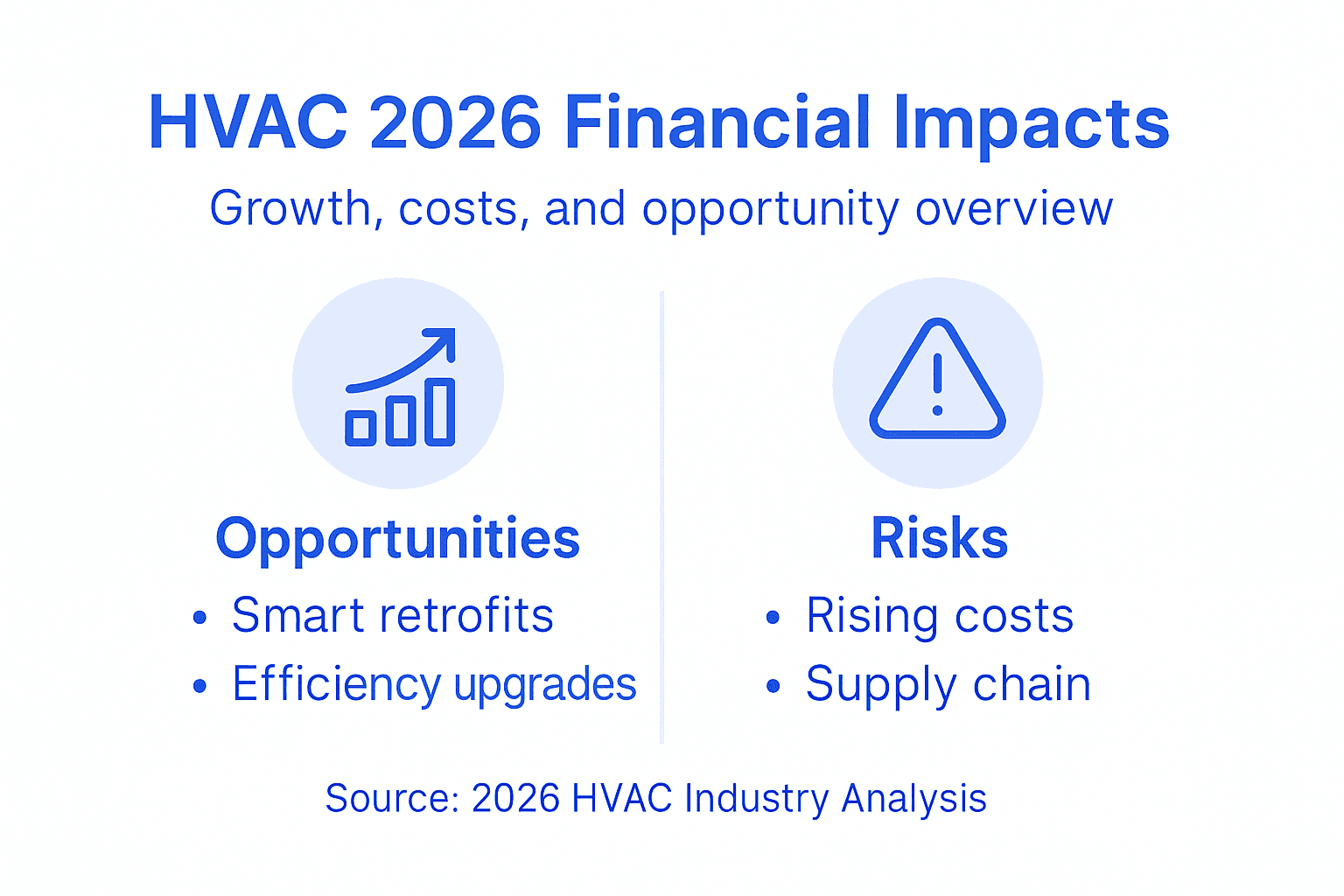
Costs are rising faster than revenue in many cases. High upfront investments in energy-efficient technologies and labor shortages elevate wages. Skilled technician shortages mean you’re competing for experienced staff with higher wages. Equipment costs for compliant systems are increasing. These pressures squeeze margins unless you’re aggressive about pricing and operational efficiency.
Market consolidation is accelerating. Larger firms with capital resources can absorb rising costs better than smaller operations. They’re buying up regional competitors and investing in AI-driven operations. This doesn’t mean you can’t compete, but it means competing requires strategic advantage, not just hustle.
Revenue opportunities exist in smart system retrofits and compliance-driven replacements. Customers installing heat pumps and efficient systems to meet regulations need installation expertise and ongoing service. That’s recurring revenue if you own the relationship.
Risks are real but manageable. Supply chain disruptions can delay jobs. Regulatory changes can shift demand suddenly. Customer hesitancy about installation costs means you need financing partnerships or creative bundling strategies. Market volatility is a constant.
Pro tip: Track your labor costs as a percentage of service revenue monthly and set a target that accounts for 2026 wage inflation, then price jobs to hit that target consistently instead of reacting to cost overruns after the fact.
The following table contrasts the main financial drivers and risks HVAC contractors face in 2026:
| Financial Area | Key Opportunity | Main Challenge | Strategic Focus |
|---|---|---|---|
| Revenue | Efficiency upgrades | Customer hesitation | Position as energy expert |
| Costs | Higher-margin services | Rising labor & equipment | Operational efficiency |
| Risks | Recurring maintenance work | Supply & regulatory shifts | Proactive risk management |
Common Pitfalls and Competitive Strategies
Contractors are making the same mistakes repeatedly in 2026, and these mistakes are costing them market share. The gap between winners and everyone else isn’t talent or luck. It’s strategy execution and avoiding predictable traps that derail profitability.
The biggest pitfall is underinvestment in skilled labor while demand accelerates. You’re trying to save on payroll costs exactly when experienced technicians are scarce and customers demand expertise. This creates a vicious cycle: lower pay means losing staff, which means turning away jobs, which means losing revenue. The contractors winning are investing aggressively in technician training and paying competitively for expertise.
Misalignments between system design and actual performance waste money and destroy customer satisfaction. You’re installing systems without validating that they’ll perform as promised. Data-driven design validation catches problems before installation, not after. This is where your competitive advantage lives.
Adapting slowly to regulatory changes is another trap. Regulations shift the market, and contractors who understand changes first capture the easiest opportunities. By the time everyone knows about a new regulation, margins are already compressed. You need systems tracking regulatory timelines and flagging what changes affect your service area.
Technology acquisition and workforce talent investment are the competitive strategies separating leaders from followers. AI and smart HVAC solutions are becoming baseline expectations. Companies securing engineering talent and intellectual property early are positioning themselves for next-generation cooling markets. You don’t need to build everything yourself, but you need to understand AI capabilities and integrate them into your service offerings.
Sustainability messaging matters more than you think. Customers increasingly expect contractors to speak knowledgeably about environmental impact. If your competitors are positioning as sustainability experts and you’re not, you’re losing deals. Consistent marketing messaging and strategic positioning that emphasize your expertise in efficient, compliant systems separates you from generic repair shops.
Integrated project delivery approaches that align your team, your customers, and your suppliers throughout the project lifecycle improve outcomes measurably. Instead of siloed teams, you’re coordinating closely to catch problems early and deliver better results.
Pro tip: Audit your last 10 service jobs and identify which ones had design-to-performance gaps, then build a simple checklist that forces validation before any future installation to eliminate this profit killer.
Stay Ahead in HVAC Growth and AI Integration with Proven Revenue Systems
The 2026 HVAC landscape demands more than technical skill. Facing challenges like increasing labor costs, evolving sustainability regulations, and the rising importance of AI-driven solutions, your business needs a reliable way to capture missed revenue and convert efficiency upgrades into booked jobs fast. If you are struggling to keep up with the fast shift toward electrification, smart controls, and proactive maintenance, the time to act is now.
Discover how Aim Set Win’s industry-focused solutions can help HVAC professionals like you recover lost revenue and build predictable growth systems tailored to the modern market. Start with our Revenue Recovery System that re-engages past customers and turns existing demand into jobs within 30 days or less without spending on new leads. Then scale easily with systems designed around paid search, SEO, and AI call handling to maximize every opportunity. Learn how to position your expertise on energy efficiency and AI-powered HVAC to win more business this year. Visit HVAC Archives – Aim Set Win and explore Aim Set Win today to turn 2026 trends into your competitive advantage.
Frequently Asked Questions
What are the key HVAC industry trends expected in 2026?
The HVAC industry in 2026 is characterized by cautious residential activity while commercial projects are accelerating, ongoing refrigerant transitions, a push for energy-efficient systems, and the increased use of smart technologies. The demand for sustainable HVAC solutions is on the rise, influenced by new regulations and customer preferences.
How is AI impacting HVAC performance and sales in 2026?
AI is significantly enhancing HVAC performance by enabling predictive maintenance and fault detection, optimizing energy use through real-time data analysis, and transforming selling techniques into proactive efficiency consulting. Contractors using AI tools gain advantages in customer trust and service pricing.
What types of technologies should HVAC contractors focus on for long-term growth?
Contractors should focus on smart controls, electrification technologies like heat pumps, and indoor air quality enhancements. These technologies not only improve system efficiency but also meet rising customer expectations regarding energy savings and healthier indoor environments.
What financial challenges do HVAC businesses face in 2026?
HVAC contractors face rising costs due to inflation and labor shortages, challenges in maintaining profitability, and the need to adapt to market changes driven by regulations. Strategic investments in skilled labor and efficient operations are essential to overcome these obstacles.
Recommended
- 7 Types of HVAC Marketing Strategies for Reliable Growth
- 7-Step HVAC Marketing Checklist for Booking High-Value Jobs
- Top 5 HVAC Customer Re-Engagement Platforms in 2026
- HVAC Customer Re-Engagement Guide for Reliable Revenue
- Ventilación Mecánica Controlada: La solución para la condensación
Jean runs growth strategy at AimSetWin, a performance marketing agency specializing in local service businesses across Texas. he's helped plumbers, HVAC companies, pest control operators, and home service brands build predictable revenue systems using data-driven advertising and conversion optimization.


