
Unlock more booked jobs with this HVAC website conversion guide. Follow actionable steps to turn existing traffic into conversions—no extra ad spend required.
For many Texas HVAC business owners, the toughest challenge is not bringing in more leads but actually turning those leads into booked jobs. With growing competition and the rising cost of online advertising, getting more from your existing website traffic matters more than ever. This guide reveals practical strategies to assess your digital presence, refine your most important web elements, and use systematic performance evaluation to drive measurable increases in appointments—all without spending extra on ads.
Table of Contents
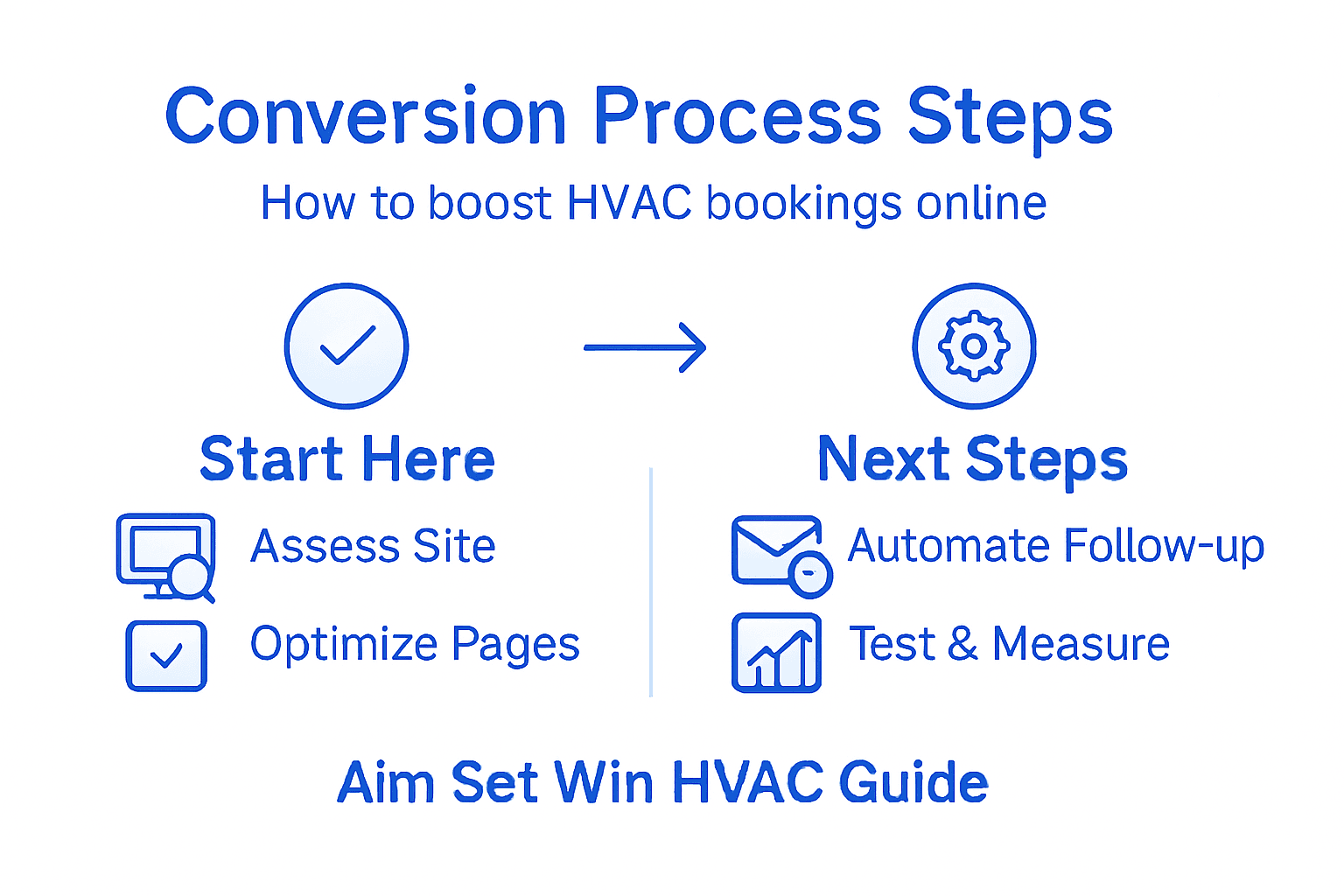
- Step 1: Assess Existing Website Performance
- Step 2: Optimize Key Conversion Elements
- Step 3: Implement Automated Follow-Up Systems
- Step 4: Test and Measure Conversion Improvements
Quick Summary
| Key Insight | Explanation |
|---|---|
| 1. Assess Website Performance | Evaluate page load speed and conversion rates to enhance user experience and drive bookings. |
| 2. Optimize Conversion Elements | Create clear calls to action and streamline forms to boost customer engagement and service requests. |
| 3. Automate Follow-Up Systems | Implement automated emails and reminders to nurture leads and maintain customer awareness effectively. |
| 4. Test Conversion Improvements | Conduct regular A/B testing on website elements to discern effective strategies and improve conversion rates. |
Step 1: Assess Existing Website Performance
Understanding your current website’s performance is the critical first step in driving more HVAC service bookings. The goal is to evaluate how effectively your website converts potential customers into actual service appointments by analyzing key metrics and user experience indicators.
Start by examining your website through specific performance lenses. Review your website analytics to track crucial metrics like page load speed, bounce rate, and conversion rates. Energy efficient HVAC design principles emphasize the importance of systematic performance evaluation, which translates directly to website optimization. Utilize tools like Google Analytics to dive deep into user behavior patterns. Look for specific signals such as:
- Time spent on service pages
- Click through rates on contact forms
- Mobile responsiveness metrics
- Navigation flow and user engagement
Pay special attention to how visitors interact with your service descriptions, pricing information, and call to action buttons. The high performance HVAC systems approach teaches us that meticulous performance tracking leads to significant improvements.
Here’s a comparison of key web analytics metrics and the actionable business insights they provide:
| Metric | What It Reveals | Suggested Action |
|---|---|---|
| Page Load Speed | User patience and site performance | Optimize images and code |
| Bounce Rate | Visitor engagement quality | Improve content relevance |
| Conversion Rate | Effectiveness in generating leads | Refine calls to action |
| Mobile Responsiveness | Accessibility across devices | Update to responsive design |
| Navigation Flow | Ease of finding key information | Simplify menu structure |
Pro tip: Schedule a monthly website performance review to catch and address conversion barriers before they impact your booking rates.
Step 2: Optimize Key Conversion Elements
Improving your HVAC website’s conversion potential requires strategic optimization of key elements that guide potential customers toward booking your services. Your website needs to transform casual browsers into committed service requesters through intentional design and user experience enhancements.
Focus on creating compelling calls to action that speak directly to homeowner pain points. Energy efficient design strategies demonstrate that systematic approaches yield measurable results. Implement clear contact forms with minimal fields, use prominent phone numbers, and create service buttons that stand out visually. Ensure your website elements communicate:
- Immediate problem solving capabilities
- Transparent pricing information
- Professional credibility
- Quick response guarantees
- Service area coverage
Your website navigation should guide visitors effortlessly toward conversion points. Use straightforward menu structures, highlight most requested services, and create intuitive paths that reduce visitor friction. The HVAC system design principles underscore the importance of balancing user needs with clear informational pathways.

Pro tip: Conduct monthly A/B testing on your website buttons and contact forms to continuously refine your conversion approach and identify what resonates most with potential customers.
Step 3: Implement Automated Follow-Up Systems
Transforming potential leads into booked HVAC services requires a sophisticated automated follow-up strategy that keeps your business top of mind and nurtures customer relationships without overwhelming potential clients. Your goal is to create a seamless communication system that guides prospects smoothly through the booking journey.
AI-driven feedback mechanisms demonstrate the power of intelligent customer engagement. Implement an automated email and text message sequence that provides value at each interaction stage. This might include service reminder emails, maintenance tips, seasonal HVAC care recommendations, and personalized follow-up messages that address specific customer inquiries. Your automated system should:
- Send immediate confirmation after initial contact
- Provide educational content about HVAC services
- Offer gentle reminders about pending service requests
- Share customer testimonials and trust signals
- Include easy scheduling options
The predictive maintenance approach highlights the importance of timely and relevant communication. Configure your follow-up system to trigger based on specific customer interactions, such as website visits, form submissions, or previous service history. Use customer relationship management software that allows segmentation and personalized messaging to increase conversion potential.
The following table summarizes types of automated follow-up messages and their benefits in boosting HVAC bookings:
| Message Type | Timing | Benefit for Business |
|---|---|---|
| Immediate Confirmation | After contact form submission | Builds trust and reduces drop-off |
| Educational Tips | Post-inquiry or pre-service | Demonstrates expertise, adds value |
| Service Reminders | Regular intervals | Increases repeat bookings |
| Testimonial Links | On ongoing campaigns | Reinforces social proof |
| Personalized Offers | Post-engagement | Boosts conversions and loyalty |
Pro tip: Test and rotate different message sequences to discover which communication style generates the highest booking rates and customer engagement.
Step 4: Test and Measure Conversion Improvements
Successfully optimizing your HVAC website requires a systematic approach to testing and measuring conversion performance. Your goal is to create a data driven strategy that continuously refines your website’s ability to turn visitors into booked service appointments.
HVAC system performance monitoring demonstrates the importance of rigorous performance evaluation. Implement comprehensive tracking using tools like Google Analytics and conversion rate optimization platforms to analyze key metrics such as:
- Website visitor to lead conversion rate
- Contact form submission rates
- Phone call tracking from website sources
- Average time spent on service pages
- Bounce rates for key landing pages
The systematic testing approach requires establishing baseline metrics before implementing changes. Run controlled A/B tests on critical elements like call to action buttons, contact form designs, and service page layouts. Track incremental improvements and document specific variations that generate higher conversion rates. Focus on understanding visitor behavior patterns and identifying friction points in your booking process.
Pro tip: Schedule quarterly comprehensive website performance reviews to ensure continuous improvement and maintain a competitive edge in your local HVAC market.
Unlock Predictable HVAC Service Bookings with Proven Conversion Systems
Struggling to convert website visitors into booked HVAC service appointments is a common challenge for local businesses. This article highlights key pain points like optimizing calls to action, reducing bounce rates, and implementing automated follow-ups that build trust and engagement. If you want to stop missing revenue and create a system that reliably turns existing demand into service jobs within 30 days, then understanding how to improve website conversion is just the beginning.
At Aim Set Win, we specialize in installing a Revenue Recovery System tailored for HVAC businesses. Our approach combines clear processes and measurable outcomes without relying on new leads or costly ad spend. From improving your website’s conversion elements to layering in proven SEO strategies and AI-powered call handling, we help you build predictable growth. Explore more about transforming local HVAC marketing efforts on our HVAC Archives – Aim Set Win and boost your online presence with insights from our SEO Archives – Aim Set Win.
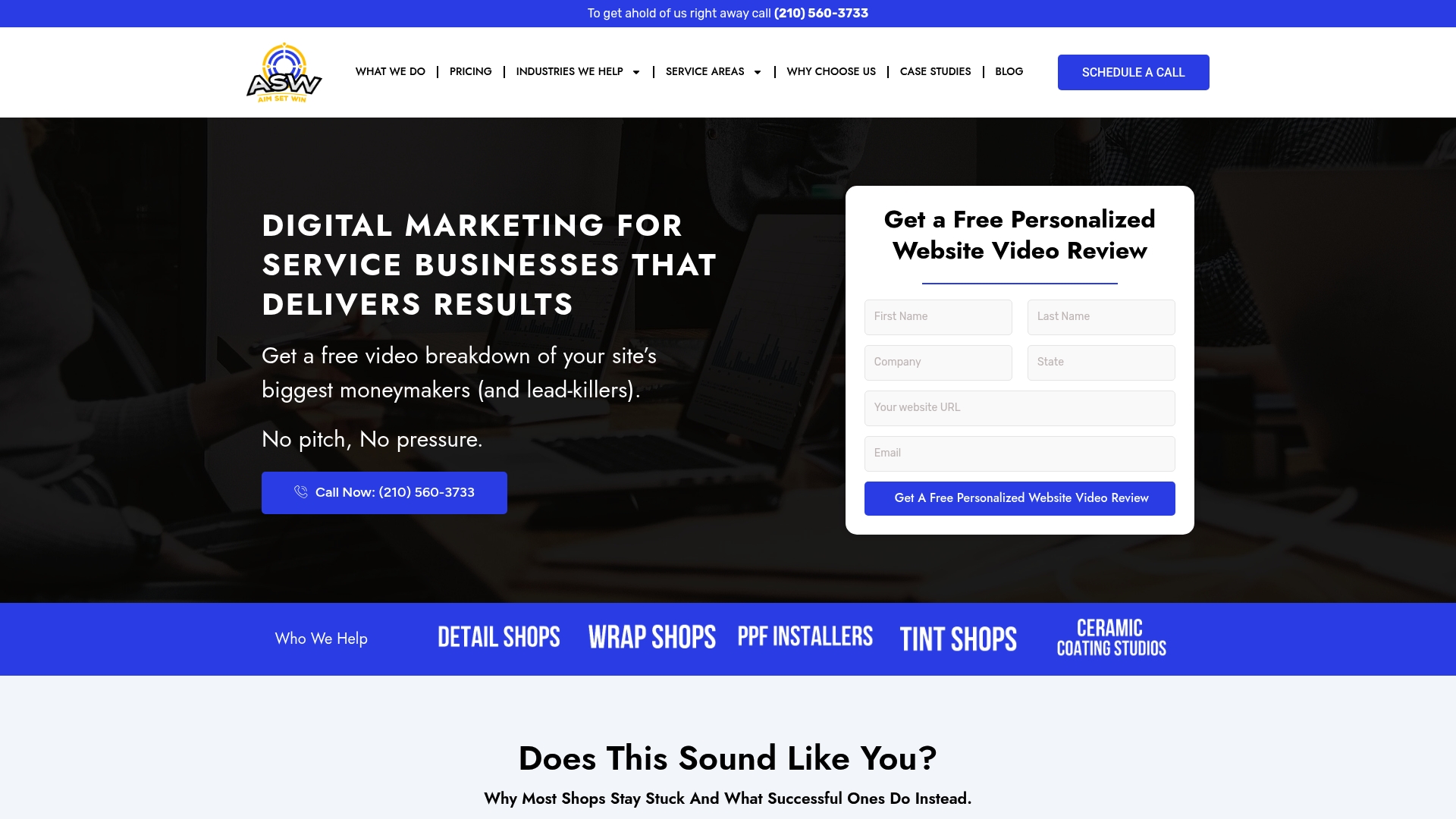
Don’t let your website traffic go to waste. Take control today by visiting Aim Set Win to discover how you can start recovering missed revenue and scale your HVAC business with systems designed to work every time.
Frequently Asked Questions
How can I assess my HVAC website’s performance?
To assess your HVAC website’s performance, analyze key metrics such as page load speed, bounce rate, and conversion rates using web analytics tools. Start by reviewing the time spent on service pages and the click-through rates on contact forms to get insights into user behavior.
What are the key elements to optimize for conversions on my HVAC website?
You should focus on optimizing calls to action, contact forms, and overall website navigation. Implement clear, visible buttons, concise fields in contact forms, and a simplified menu structure to make it easier for potential customers to book your services.
How can I implement automated follow-up systems for customer leads?
To implement automated follow-up systems, create a sequence of emails and text messages that nurture customer relationships. Start with immediate confirmations of inquiries, followed by educational content related to HVAC services and reminders about pending bookings.
What type of testing should I conduct to measure conversion improvements?
Conduct A/B testing on crucial elements like call-to-action buttons and contact forms to identify what resonates best with visitors. Schedule testing regularly, analyzing results to understand which changes lead to higher conversion rates and optimize your website accordingly.
How often should I review my website’s performance?
Aim to schedule website performance reviews monthly to catch any conversion barriers early. Regular assessments help you to identify and address issues before they significantly impact your HVAC service bookings.
Recommended
- 7 Types of HVAC Marketing Strategies for Reliable Growth
- 7-Step HVAC Marketing Checklist for Booking High-Value Jobs
- HVAC Customer Re-Engagement Workflow for Reliable Bookings
- HVAC Customer Re-Engagement Guide for Reliable Revenue
- Conversion Design Case Studies: Megabon
Jean runs growth strategy at AimSetWin, a performance marketing agency specializing in local service businesses across Texas. he's helped plumbers, HVAC companies, pest control operators, and home service brands build predictable revenue systems using data-driven advertising and conversion optimization.


