
Learn proven internet marketing for business strategies that drive leads and revenue. Expert tips for home service companies in Texas.
Internet marketing for business has become the lifeblood of growth for service companies across Texas. If you’re running an HVAC, plumbing, electrical, or roofing business in 2026, you already know the landscape has changed dramatically. Your customers aren’t flipping through the Yellow Pages anymore. They’re searching Google at 10 PM when their AC dies or their pipe bursts. The question isn’t whether you need internet marketing for business. It’s whether you’re doing it right. Most home service contractors throw money at digital marketing and hope something sticks. That’s expensive guesswork. The companies dominating their markets right now are following specific strategies that consistently generate qualified leads and phone calls. This guide breaks down exactly what works, what doesn’t, and how to build a system that actually drives revenue. Let’s get started.
Why Internet Marketing for Business Actually Matters in 2026
Your competition figured this out years ago.
While you’ve been relying on word of mouth and truck wraps, other contractors have built lead generation machines that run 24/7. They show up first on Google Maps. They dominate organic search results. They retarget people who visited their website but didn’t call.
Here’s what changed. The average homeowner researches 3-5 companies before making a call. They read reviews, compare websites, and check your Google Business Profile before you even know they exist.
If you’re not visible during that research phase, you don’t exist.
The Real Cost of Ignoring Digital Marketing
Let’s talk numbers. A plumbing company in Houston that doesn’t invest in internet marketing for business loses an average of 40-60 qualified leads per month to competitors who do. At a $300 average ticket, that’s $18,000 in monthly revenue walking out the door.
What you’re actually losing:
- First page Google rankings to competitors
- Local map pack positions that drive immediate calls
- Retargeting opportunities for website visitors
- Brand awareness in your service area
- Long term customer relationships that generate referrals
The companies winning right now understand something critical. Digital marketing isn’t an expense. It’s a revenue generating asset that compounds over time.
Understanding the Internet Marketing Ecosystem
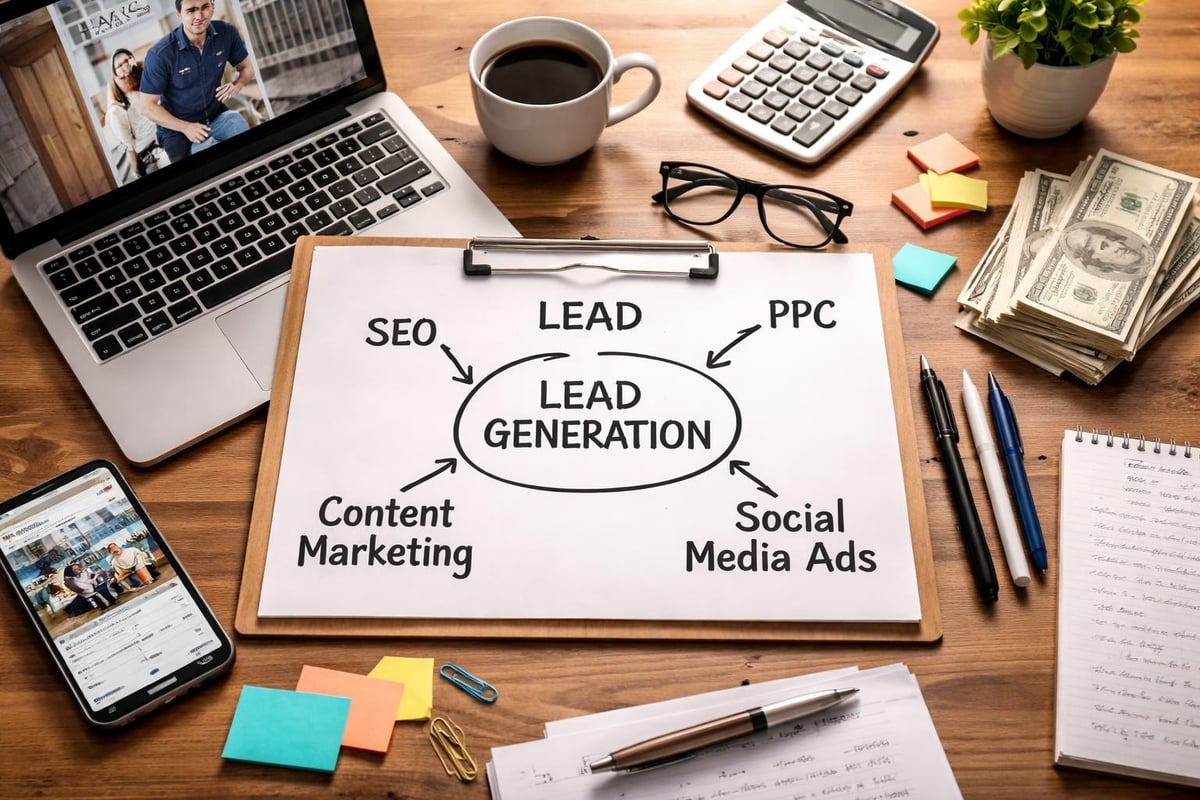
Internet marketing for business isn’t one thing. It’s a connected system of channels that work together to attract, convert, and retain customers.
Think of it like your plumbing system. You’ve got supply lines (traffic sources), fixtures (conversion points), and drainage (follow up systems). When one part fails, the whole system underperforms.
The Core Channels That Drive Results
Here’s what actually moves the needle for home service businesses:
| Channel | Primary Function | Timeline to Results | Best For |
|---|---|---|---|
| Local SEO | Organic visibility & map rankings | 3-6 months | Long term sustainable growth |
| Google PPC | Immediate qualified traffic | 1-2 weeks | Fast lead generation |
| Content Marketing | Authority building & rankings | 4-8 months | Trust and education |
| Social Media Ads | Brand awareness & retargeting | 2-4 weeks | Top of mind positioning |
| Email Marketing | Customer retention | Ongoing | Repeat business & referrals |
You don’t need all of these on day one. But you do need to understand how they work together. Building authoritative content supports your SEO. Your PPC data informs your content strategy. Your email list amplifies everything else.
The contractors who dominate their markets aren’t picking one channel. They’re building integrated systems.
Local SEO: The Foundation of Internet Marketing for Business
If you serve customers in specific cities, local SEO isn’t optional. It’s the single highest ROI channel for most home service businesses.
Here’s why. When someone searches “emergency plumber near me” or “AC repair Dallas,” they’re ready to buy. Right now. They have a problem and need it fixed today.
How Local SEO Actually Works in 2026
Google ranks local businesses based on three core factors: relevance, distance, and prominence. You need all three to win.
Relevance means your Google Business Profile and website clearly communicate what services you offer and where you serve. Not vague statements. Specific service pages for “water heater installation in Austin” or “HVAC repair in San Antonio.”
Distance is straightforward. The closer you are to the searcher, the better. But you can expand your service area by building location specific content and citations.
Prominence is where most contractors fall short. It’s your review count, review velocity, citation consistency, backlink profile, and overall authority. Identifying authoritative domains for link building becomes critical here.
Building Your Local SEO Foundation
Start with your Google Business Profile. This isn’t a set it and forget it task.
- Complete every section with keyword rich descriptions
- Upload high quality photos of your team, trucks, and completed work
- Post weekly updates about services, tips, and special offers
- Respond to every review within 24 hours
- Add service specific categories and attributes
- Keep your hours and contact information accurate
Next, optimize your website for local search. Every major city you serve needs its own dedicated page. Not thin content. Deep, helpful resources that answer real questions your customers are searching for.
A well optimized HVAC SEO service page includes service descriptions, service area information, FAQs, pricing guidance, and clear calls to action. It targets specific keywords while actually being useful to humans.
Your citation game matters too:
- Yelp, BBB, Angi, HomeAdvisor
- Industry specific directories
- Local chamber of commerce listings
- County and city business directories
- Service area specific platforms
Keep your NAP (Name, Address, Phone) consistent across every single listing. Even small variations confuse Google and hurt your rankings.
Content Marketing That Actually Drives Business
Most contractors think content marketing means blogging about random topics. That’s not how this works.
Effective internet marketing for business through content means creating resources that answer the exact questions your customers are searching for. Questions that indicate buying intent.
The Content Strategy That Generates Leads
Start with keyword research. What are people in your service area actually searching for?
Not broad terms like “plumbing tips.” Specific phrases like “how much does water heater installation cost in Houston” or “best HVAC system for Texas heat.”
These high intent keywords reveal customer problems. Your content solves those problems and positions your business as the solution.
Content types that convert for home service businesses:
- Service specific guides (furnace repair, drain cleaning, electrical panel upgrades)
- Cost breakdowns and pricing guides
- Troubleshooting articles that lead to service calls
- Comparison content (repair vs replace, system types, brands)
- Local area content targeting specific neighborhoods
The pattern here is simple. Create content that educates people through their buying journey. Make it genuinely helpful. Include clear calls to action. Track which pieces generate leads.
One of our plumbing case studies shows how a Fort Worth contractor generated 47 qualified leads in three months from just 8 well optimized blog posts. The secret wasn’t volume. It was targeting the right keywords with helpful, thorough content.
Pay Per Click Advertising for Immediate Results
SEO builds over time. PPC prints money tomorrow.
Google PPC advertising puts you at the top of search results for high intent keywords right now. When someone searches “emergency AC repair Dallas” at 2 AM, your ad can be the first thing they see.
Building Campaigns That Actually Convert
The contractors wasting money on PPC make predictable mistakes. They target broad keywords, send traffic to their homepage, and wonder why their cost per lead is $200.
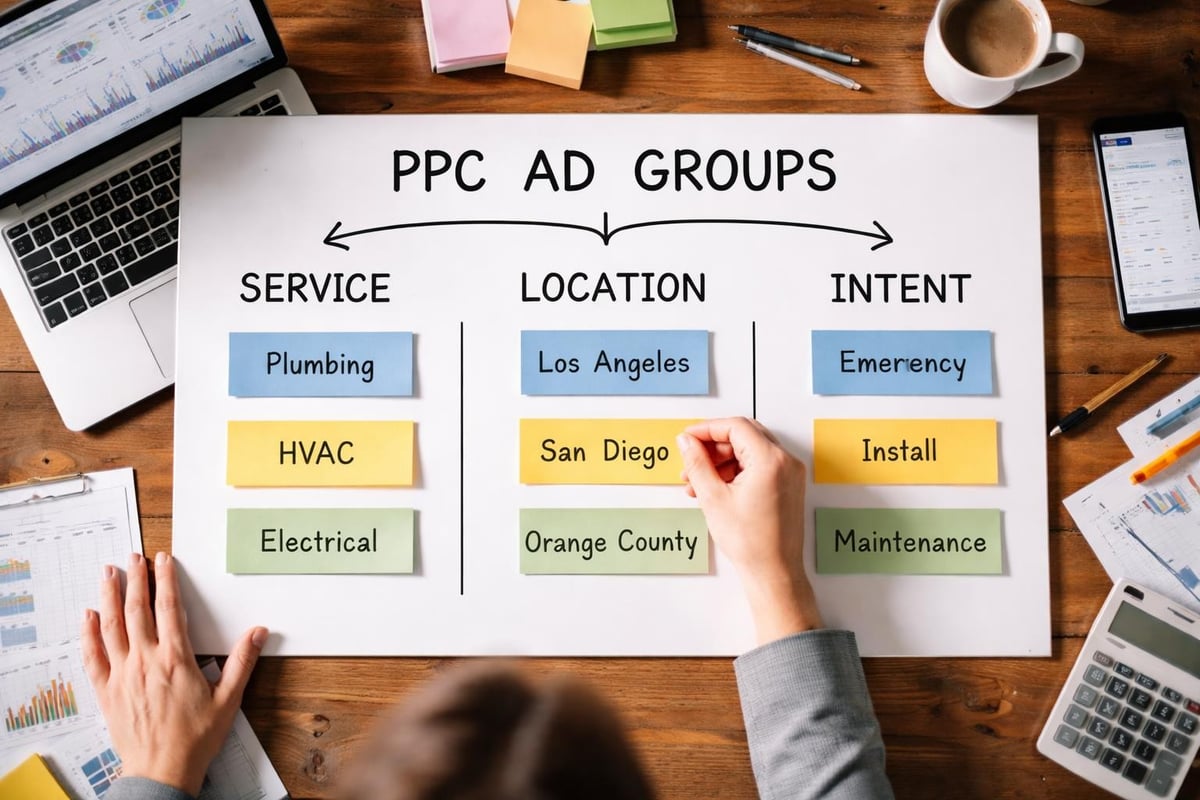
Here’s what works. Ultra targeted campaigns focused on specific services and locations. Dedicated landing pages designed for one goal: getting the phone to ring.
Campaign structure that drives results:
- Service based ad groups targeting exact match and phrase match keywords
- Location targeting limited to your actual service area (not the entire state)
- Ad copy that speaks to pain points and includes your differentiators
- Landing pages that match the search intent with clear CTAs
- Call tracking so you know exactly which keywords generate revenue
Your San Antonio HVAC company Google PPC campaign should have separate ad groups for AC repair, heating repair, installation, maintenance, and emergency service. Each targeting location specific keywords with dedicated landing pages.
Tracking What Actually Matters
Impressions don’t pay your bills. Clicks don’t either. You need to track real business metrics.
| Metric | What It Tells You | Target Range |
|---|---|---|
| Cost Per Click | Ad efficiency | $8-25 for home services |
| Click Through Rate | Ad relevance | 4-8% for branded, 2-5% for non-branded |
| Conversion Rate | Landing page effectiveness | 8-15% for service businesses |
| Cost Per Lead | Campaign profitability | $40-120 depending on service |
| Lead to Customer Rate | Lead quality | 20-40% for home services |
Don’t optimize for clicks. Optimize for phone calls and form submissions from people in your service area who need your specific services.
The difference between profitable PPC and burning cash is ruthless tracking and constant optimization. Check out this Houston plumbing company Google PPC case study to see what 90 days of optimization can do.
Social Media Advertising for Brand Building
Here’s the truth about social media for home service businesses. Organic reach is dead. Your Facebook posts about AC maintenance tips reach about 2% of your followers.
But paid social advertising? That’s a different game.
Social media ads excel at two things: building brand awareness in your service area and retargeting people who visited your website but didn’t convert.
Facebook and Instagram Ads That Work
The goal here isn’t immediate conversions. It’s staying top of mind so when someone’s AC breaks or their toilet floods, they think of you first.
Effective social ad campaigns for contractors:
- Video testimonials from happy customers
- Before and after project showcases
- Educational content about common problems
- Special offers and seasonal promotions
- Service area targeting to build local recognition
One Dallas HVAC company spent $800 monthly on Facebook ads promoting their AC tune up special. They tracked 23 direct conversions and estimated another 15-20 calls from people who saw the ads and later searched their name.
That’s brand building with measurable results.
Retargeting: Your Secret Weapon
Most website visitors don’t convert on their first visit. They’re researching, comparing, thinking it over.
Retargeting brings them back. Someone visits your water heater installation page but doesn’t call. For the next 30 days, they see your ads on Facebook, Instagram, and across the web.
This isn’t creepy. It’s smart marketing. You’ve already paid to get them to your website once. Retargeting is just reminding them you exist when they’re ready to decide.
Website Design and Conversion Optimization
Your website is your 24/7 salesperson. If it’s slow, confusing, or looks like it was built in 2010, you’re losing leads to competitors with better sites.
Internet marketing for business only works when your website converts traffic into customers. All the SEO and PPC in the world won’t help if your site sends people running.
What Actually Converts in 2026
Home service websites need to load fast, work perfectly on mobile, and make it ridiculously easy to contact you.
Non negotiable elements of high converting websites:
- Mobile responsive design that works flawlessly on phones
- Page load speed under 3 seconds
- Click to call buttons prominent on every page
- Service areas clearly listed and linked
- Real customer reviews and testimonials
- Service specific landing pages for every offering
- Clear pricing guidance (even if it’s ranges)
- Trust signals like certifications, insurance, guarantees
Your homepage should answer three questions in under 5 seconds: What do you do? Where do you serve? Why should I call you instead of your competitor?
The Technical Side That Impacts Rankings
Google cares about user experience. Sites that load slowly, aren’t mobile friendly, or have technical issues get penalized in search rankings.
Understanding authoritative sources and implementing proper technical SEO means fixing issues like broken links, improving site speed, implementing schema markup, and ensuring your site architecture makes sense.
Your website structure should mirror how customers search. If you’re an HVAC company in Dallas, you need pages for Dallas HVAC services, then service specific pages (AC repair Dallas, heating installation Dallas, etc.), then neighborhood level pages if you’re being strategic.
This isn’t just SEO. It’s user experience. People should find what they need in 2-3 clicks maximum.
Email Marketing for Customer Retention
Acquiring a new customer costs 5-7 times more than keeping an existing one. Yet most contractors never contact customers after the job is done.
That’s leaving money on the table.
Email marketing for home service businesses focuses on two goals: repeat business and referrals.
Building and Using Your Email List
Start collecting emails from every customer interaction. Service calls, estimates, website forms, social media contests. Give people a reason to share their contact information.
Email campaigns that drive revenue:
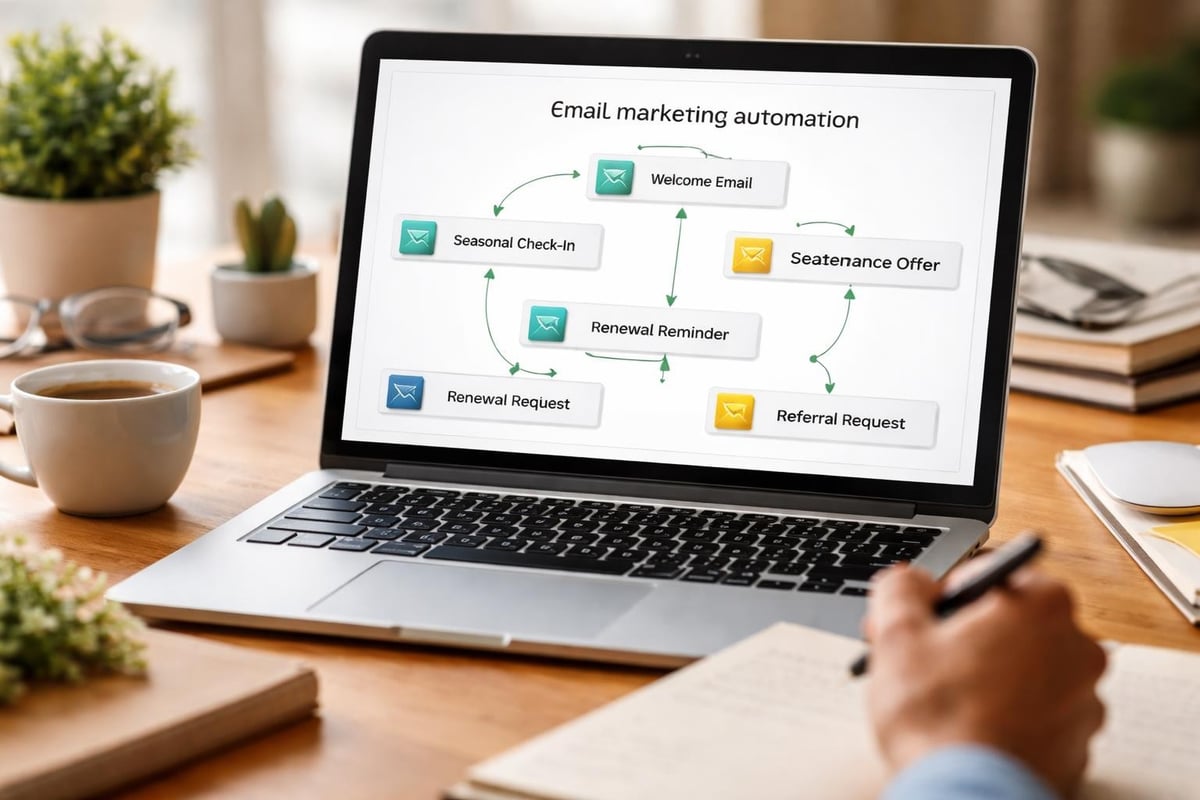
- Seasonal maintenance reminders – AC tune ups in spring, heating checks in fall
- Educational content – tips to extend equipment life, energy saving advice
- Special offers – VIP customer discounts, referral incentives
- Service area updates – new services, expanded coverage, team additions
- Emergency preparedness – what to do when systems fail, who to call
A simple automated email sequence can generate 15-20% of your annual revenue from existing customers. Set up campaigns that trigger based on service history, season, and customer segment.
Tracking and Analytics: The Data That Drives Decisions
You can’t improve what you don’t measure. Effective internet marketing for business requires tracking the right metrics and making data driven decisions.
Most contractors look at vanity metrics. Website traffic, social media followers, email open rates. Those don’t pay bills.
Metrics That Actually Matter
Track the numbers that directly impact revenue.
Essential analytics for home service businesses:
- Organic search traffic by service and location
- Conversion rate by traffic source and landing page
- Cost per lead by channel (SEO, PPC, social, etc.)
- Lead to customer conversion rate
- Customer lifetime value by acquisition source
- Return on ad spend for paid campaigns
- Local search rankings for target keywords
- Google Business Profile insights and actions
Set up call tracking so you know which marketing channels generate phone calls. Use Google Analytics 4 to track form submissions, button clicks, and user behavior. Connect everything to your CRM so you can follow leads through to closed jobs.
The contractors crushing it right now make decisions based on data, not gut feelings. They know their San Antonio SEO company efforts generated 43 leads last month. They know PPC cost $87 per lead versus $31 for organic. They allocate budget accordingly.
Building Your Internet Marketing for Business Action Plan
You can’t do everything at once. Trying to launch SEO, PPC, content marketing, social ads, and email campaigns simultaneously is a recipe for mediocre results across the board.
Here’s how to prioritize and build momentum.
90 Day Quick Start Plan
Month 1: Foundation
- Optimize your Google Business Profile completely
- Audit and fix website technical issues
- Set up proper analytics and call tracking
- Claim and optimize top 20 business listings
- Create 3 high intent service pages
Month 2: Visibility
- Launch targeted Google PPC campaigns for your top 3 services
- Create 4 in depth blog posts targeting high intent keywords
- Build 10 high quality local citations
- Implement review generation system
- Start retargeting campaigns
Month 3: Expansion
- Expand PPC to additional services and locations
- Create location specific landing pages
- Launch email marketing to existing customers
- Develop case studies and testimonials
- Build links from local and industry sources
This phased approach builds foundation, generates immediate leads through PPC, and sets up long term growth through SEO and content.
When to Bring in Expert Help
Some contractors try to DIY their digital marketing. That works if you’ve got 20 hours per week to learn SEO, PPC management, content creation, and analytics.
Most don’t. You’re running a business, managing crews, and serving customers.
The math is simple. Your time is worth $100-300 per hour running your business. Spending 20 hours per month on marketing you’re learning as you go costs $2,000-6,000 in opportunity cost. Plus the revenue you lose from ineffective campaigns.
Working with specialists who live and breathe digital marketing for home service businesses means faster results, fewer expensive mistakes, and more time running your actual business.
Look for partners who specialize in your industry. Generic marketing agencies don’t understand the buying cycle of someone with a broken water heater at midnight. Industry specialists do.
Advanced Strategies for Competitive Markets
If you’re in a major Texas market like Houston, Dallas, or Austin, basic internet marketing for business won’t cut it. Your competition is sophisticated and well funded.
You need advanced tactics to break through.
Dominating Local Map Results
The Google Map Pack (those three businesses that show up with map pins) drives 40-50% of local search clicks. Getting into the top three is game changing.
Beyond the basics, here’s what separates map pack winners from everyone else:
Advanced local SEO tactics:
- Primary category optimization (choosing the exact right GBP category)
- Service area pages targeting specific neighborhoods
- Geo tagged photos and videos
- Regular Google Posts with keyword optimization
- Review velocity and recency (fresh reviews matter more)
- Q&A section optimization on your GBP
- Citations from industry specific directories
- Local backlinks from chambers, associations, and local sites
Companies that consistently rank in the map pack aren’t just doing the basics. They’re treating their Google Business Profile like a living, breathing marketing channel that gets updated weekly.
Content Clusters and Topic Authority
Google has gotten smarter about topical authority. Creating authoritative content means becoming the definitive resource for your services.
Content cluster strategy works like this: Create a comprehensive pillar page about a broad topic (like “HVAC Systems”), then build supporting cluster content that links back to it (types of HVAC systems, HVAC maintenance, HVAC troubleshooting, etc.).
This internal linking structure tells Google you’re an authority on the topic. It also keeps users on your site longer, reduces bounce rate, and increases conversions.
One HVAC case study showed a company that built a comprehensive HVAC content cluster ranking for 89 keywords within six months, generating 240+ qualified leads from organic search.
Video Marketing and YouTube SEO
Video is massively underutilized by home service contractors. Yet it’s one of the most effective formats for building trust and demonstrating expertise.
YouTube is the second largest search engine. People search for “how to fix AC not cooling” and “should I repair or replace my water heater.” If you’ve got helpful video content answering those questions, you capture attention before they even search for a contractor.
High ROI video content for contractors:
- Common problem troubleshooting guides
- Maintenance tip demonstrations
- Behind the scenes day in the life content
- Customer testimonial interviews
- Before and after project showcases
Optimize video titles and descriptions with location keywords. Include links back to your service pages. Add your videos to your website and Google Business Profile.
Video builds trust faster than any other format. People see your face, hear your voice, and get a feel for your expertise before they call.
Common Internet Marketing Mistakes to Avoid
Let’s talk about where contractors typically screw this up. These mistakes cost thousands in wasted ad spend and lost opportunities.
Mistake 1: No Clear Conversion Path
You drive traffic to your homepage with no clear next step. Generic “Contact Us” buttons buried in the footer. No phone number visible above the fold on mobile.
Every page needs an obvious, compelling call to action. Click to call buttons on mobile. Prominent phone numbers in the header. Contact forms that work and don’t ask for 15 fields of information.
Mistake 2: Targeting the Wrong Keywords
Bidding on broad keywords that attract tire kickers instead of buyers. Going after “plumbing” instead of “emergency plumber Fort Worth” or “water heater installation Houston.”
High intent keywords indicate someone ready to buy. Focus there first. Build awareness campaigns after you’ve got reliable lead generation running.
Mistake 3: Ignoring Mobile Experience
60-70% of home service searches happen on mobile devices. If your site doesn’t work perfectly on phones, you’re losing the majority of your potential customers.
Test your site on multiple devices. Make sure pages load in under 3 seconds. Ensure forms work smoothly. Check that click to call buttons function properly.
Mistake 4: Setting and Forgetting Campaigns
You launch a PPC campaign and check it once a month. Or you publish blog posts and never update them.
Internet marketing for business requires constant optimization. Review campaign performance weekly. Update content quarterly. Test new ad copy and landing pages monthly.
The difference between 10% conversion rates and 2% is usually just testing and optimization.
Mistake 5: No Follow Up System
You generate leads and hope your receptionist captures every detail. Leads slip through cracks. Follow up happens randomly or not at all.
Implement a CRM system that tracks every lead from source through to closed job. Set up automated follow up sequences. Create accountability for contact rates and conversion rates.
Half the value of internet marketing comes from what you do with the leads after you generate them.
The Future of Internet Marketing for Home Services
The landscape keeps evolving. Here’s what’s changing in 2026 and beyond.
AI and Automation
ChatGPT and similar AI tools are changing how people search and how content gets created. Google’s Search Generative Experience means people get answers without clicking through to websites for some queries.
The response isn’t to panic. It’s to double down on expertise and trust signals. AI can write generic content. It can’t replace 20 years of HVAC experience or a stellar local reputation.
Focus on demonstrating real expertise through detailed case studies, video content, and customer success stories. Building authoritative websites becomes even more critical as AI content floods the internet.
Voice Search and Local Discovery
More searches happen through voice assistants and smart speakers. “Hey Google, find a plumber near me” is becoming the norm.
Optimize for conversational, question based keywords. Make sure your Google Business Profile is perfect because that’s what voice assistants pull from. Focus on local SEO fundamentals because proximity matters even more for voice search.
Privacy and Tracking Changes
Cookie based tracking is dying. iOS privacy features limit retargeting. Google is phasing out third party cookies.
The shift is toward first party data. Build your email list. Collect customer information directly. Use server side tracking and conversion APIs to maintain measurement capabilities.
Contractors who own their customer relationships and data will win. Those relying entirely on third party platforms will struggle.
Internet marketing for business isn’t some mysterious black box anymore. It’s a repeatable system of strategies that generate predictable results when implemented correctly. The contractors dominating their markets in 2026 aren’t getting lucky. They’re following proven frameworks that combine local SEO, targeted advertising, conversion focused websites, and smart tracking to turn digital visibility into actual revenue. If you’re ready to stop guessing and start growing, Aim Set Win specializes in building these exact systems for plumbing, HVAC, electrical, and home service businesses across Texas. We’ve helped hundreds of contractors double and triple their lead volume through data driven strategies that actually work.
Jean runs growth strategy at AimSetWin, a performance marketing agency specializing in local service businesses across Texas. he's helped plumbers, HVAC companies, pest control operators, and home service brands build predictable revenue systems using data-driven advertising and conversion optimization.


