
Learn how leads in digital marketing work for home service businesses. Discover proven strategies, tactics, and systems to generate qualified leads.
Understanding leads in digital marketing is the difference between a business that barely survives and one that thrives with consistent growth. For home service businesses like plumbing, HVAC, electrical, and roofing companies across Texas, qualified leads represent real revenue opportunities sitting in your pipeline. Every homeowner searching for emergency repairs or scheduled maintenance is a potential customer waiting to be reached. This guide breaks down everything you need to know about generating, nurturing, and converting leads in digital marketing so your business can build predictable growth in 2026. Ready to transform how your business attracts customers? Let’s dive in.
What Are Leads in Digital Marketing
A lead is anyone who shows interest in your business by sharing their contact information.
Simple as that.
In digital marketing, this usually means someone filled out a form, called your number, sent a text, or clicked to chat. They’re raising their hand saying “I might need your services.”
Not every lead is created equal, though.
Marketing Qualified Leads (MQLs) are people who’ve engaged with your content but haven’t committed to buying yet. They might have downloaded your emergency plumbing checklist or watched your HVAC maintenance video.
Sales Qualified Leads (SQLs) are further down the funnel. They’ve requested a quote, booked a consultation, or asked specific pricing questions about AC replacement.
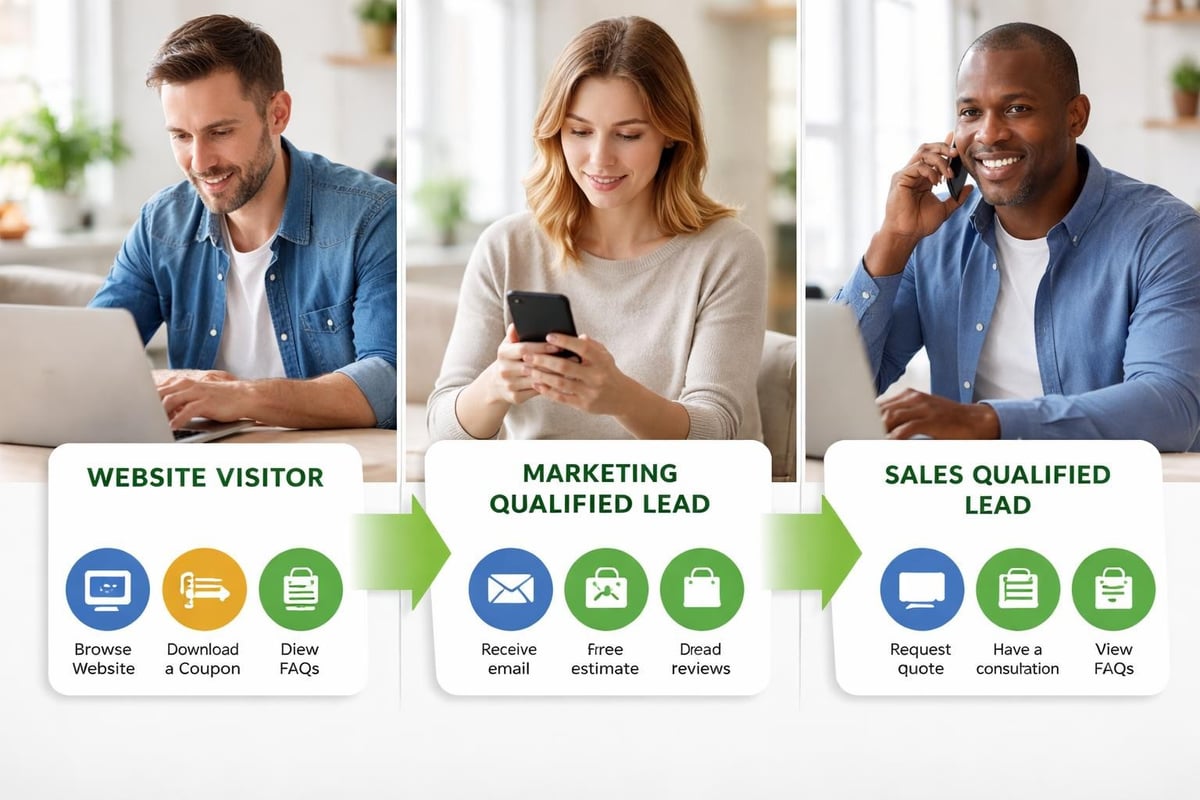
For home service companies, the best leads are people with immediate needs. Someone searching “emergency plumber near me” at 2 AM is far more valuable than someone casually browsing “how to fix a leaky faucet.”
According to recent lead quality statistics, businesses that focus on lead quality over quantity see conversion rates improve by 73%.
The goal isn’t just collecting names and emails. It’s attracting people ready to hire you.
Why Leads in Digital Marketing Matter for Home Service Businesses
Your business lives or dies based on the phone ringing.
Unlike retail stores or e-commerce sites, home service businesses need direct customer contact. You can’t sell HVAC repair through a shopping cart. You need conversations that turn into service calls.
Digital marketing leads create that connection.
When done right, they deliver consistent pipeline flow without you hunting for work. Your website becomes a 24/7 lead generation machine while you’re out on jobs.
| Traditional Marketing | Digital Marketing Leads |
|---|---|
| Limited tracking | Full attribution data |
| Broad targeting | Hyper-local precision |
| Fixed costs | Scalable budgets |
| Delayed results | Real-time conversions |
The numbers back this up. Organic lead generation statistics show that SEO leads close at 14.6%, compared to just 1.7% for outbound marketing tactics.
That’s eight times better.
For service businesses in competitive Texas markets like Houston, Dallas, Austin, and San Antonio, digital leads level the playing field. A three-person plumbing company can outrank established competitors through smart local SEO and targeted content.
Your digital presence works while you sleep, capturing leads from homeowners researching services at midnight or during lunch breaks.
Types of Leads in Digital Marketing for Home Services
Not all digital channels produce the same quality of leads.
Understanding where your best customers come from helps you invest smarter.
Organic Search Leads
These come from people finding you on Google without paid ads.
Someone types “AC repair in Austin” and your business appears in the map pack or organic results. They click through, like what they see, and call.
Organic leads convert incredibly well because they have high intent. They’re actively looking for your exact service right now.
The investment here is SEO and web design that positions your business where people are already searching.
Pay-Per-Click (PPC) Leads
Paid search ads put you at the top of Google instantly.
You bid on keywords like “emergency plumber Dallas” and your ad shows up when someone searches. You only pay when they click.
PPC works great for new businesses without organic rankings yet or during seasonal spikes when you need volume fast. Check out proven PPC strategies for plumbing leads that actually work.
The catch? Costs add up quickly in competitive markets. Average cost per lead for home services ranges from $50 to $200 depending on the service type.
Local Map Pack Leads
These leads come from Google Business Profile optimization.
When someone searches “HVAC company near me,” Google shows a map with three local businesses. That’s the map pack.
Being in those top three spots drives serious lead volume. Optimizing your Google Business Profile should be priority number one.
Social Media Leads
Facebook and Instagram ads can target homeowners in specific zip codes with specific household incomes.
You can serve ads to people who recently bought homes (hello, renovation needs) or who’ve engaged with competitor pages.
Social leads typically require more nurturing since people aren’t actively searching for services yet. But they work great for awareness and seasonal offers.
Content Marketing Leads
Educational content attracts people researching solutions.
Blog posts, videos, and guides about common problems build trust before someone needs emergency service. When their water heater fails at 11 PM, they remember your helpful article and call you first.
This plays the long game but delivers compounding returns over time.
How to Generate Quality Leads in Digital Marketing
Generating leads isn’t about tricks or hacks.
It’s about showing up where your customers are and making it stupid easy to contact you.
Build a Conversion-Focused Website
Your website is your 24/7 salesperson.
It needs to load fast (under 3 seconds), work perfectly on mobile, and make your phone number visible on every page. Add click-to-call buttons that work instantly on smartphones.
Put clear calls to action above the fold. “Schedule Your Free Estimate” or “Call Now for Same-Day Service” should be impossible to miss.
Most service business websites fail because they’re built to look pretty, not convert visitors into calls. Here’s why your website isn’t converting and exactly how to fix it.
Dominate Local SEO
Local search is where home service leads live.
You need to rank for “[your service] + [your city]” searches. Start with your Google Business Profile, then build location-specific pages for each area you serve.
Get reviews constantly. They impact rankings and conversion rates.
Build citations across local directories. Create content targeting neighborhood-specific keywords.
For Texas-based businesses, this means separate strategies for different markets. What works for Dallas plumbing SEO differs from tactics in smaller markets.
Create High-Intent Content
Write content answering questions your customers actually ask.
“How much does AC replacement cost in Austin?”
“Signs you need emergency plumbing repair.”
“Best time of year for HVAC maintenance in Texas.”
This content captures people researching services before they’re ready to buy. Then when they are ready, you’re top of mind.
Focus on content strategies that boost conversions and rankings simultaneously.
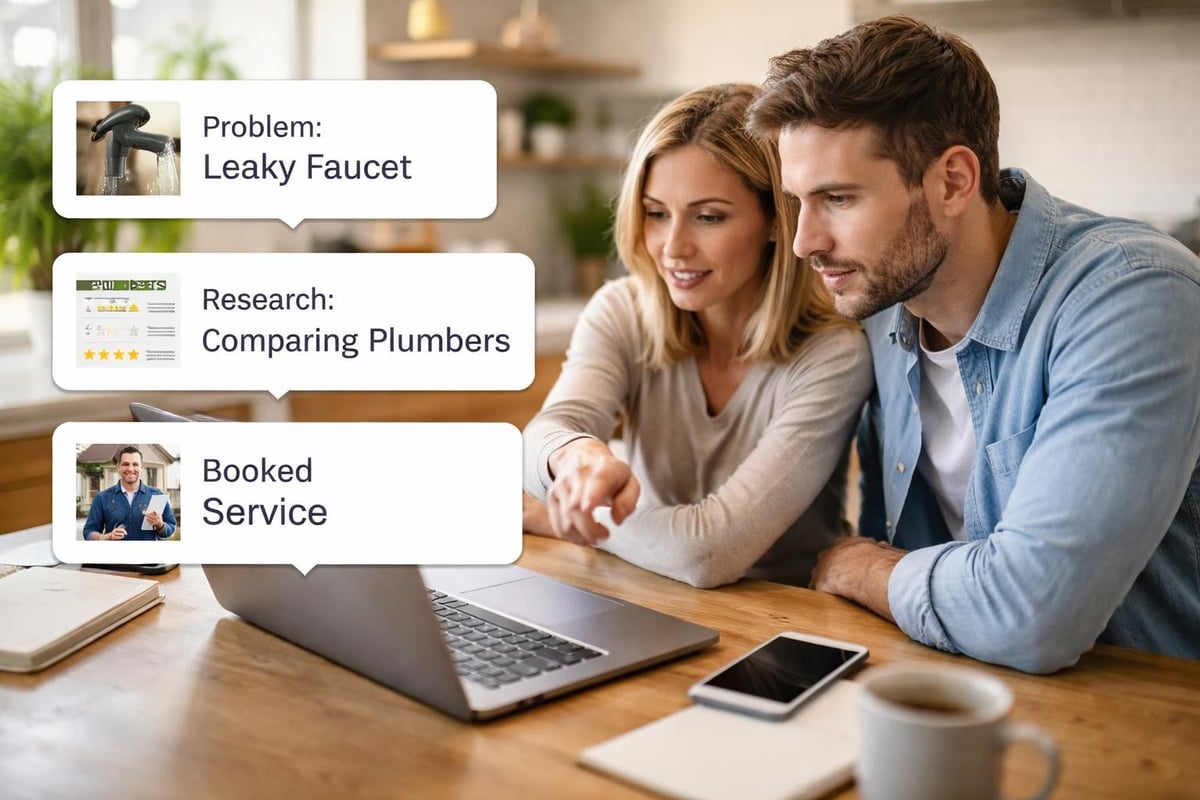
Leverage Paid Advertising Strategically
PPC works when you need leads now or want to test new markets.
Start with highly specific keywords. “Emergency water heater repair Fort Worth” converts better than broad terms like “plumbing.”
Use location targeting ruthlessly. Only show ads in your actual service area.
Create dedicated landing pages for each campaign. Someone clicking an ad for AC repair shouldn’t land on your homepage.
Test ad copy constantly. Track which messages drive actual calls, not just clicks.
Optimize for Mobile Users
Over 60% of local searches happen on mobile devices.
If your website doesn’t work flawlessly on phones, you’re losing leads every single day.
Mobile optimization means:
- Thumb-friendly buttons that are easy to tap
- Fast loading speeds even on slower connections
- Simplified forms that auto-fill when possible
- Prominent phone numbers that dial with one tap
- Streamlined navigation with minimal clicks
Test your site on actual phones, not just desktop simulators.
Lead Capture Mechanisms That Work
You can drive traffic all day, but without proper capture mechanisms, visitors just bounce.
Strategic Form Placement
Put forms where people naturally make decisions.
After explaining your emergency service, add a “Request Immediate Service” form.
Following your pricing transparency section, include a “Get Your Custom Quote” form.
Keep forms short. Name, phone, email, and service type is enough. Every extra field kills conversion rates.
Click-to-Call Functionality
This is the highest-converting action for home services.
Make your phone number a tappable button on mobile. Use call tracking numbers so you know which marketing channels drive actual calls.
Display your number in the header, footer, and throughout service pages.
Live Chat and Chatbots
Not everyone wants to call.
Some people prefer typing their question. Having live chat captures these leads that would otherwise leave.
Even basic chatbots that collect contact info and service needs work well. They qualify leads 24/7 when your team is unavailable.
Lead Magnets and Offers
Give people a reason to share their contact info now.
Free estimates work great for home services. So do seasonal promotions, maintenance checklists, or emergency service discounts.
“Download our Spring HVAC Maintenance Checklist” captures leads you can nurture later.
Multi-Channel Contact Options
Different people prefer different contact methods.
Offer phone, email, text, chat, and form submissions. Let customers choose how they want to connect.
Display all options clearly but guide people toward the highest-converting action (usually phone calls for urgent services).
Lead Qualification and Scoring
Not every lead deserves the same attention.
Smart businesses prioritize based on conversion likelihood.
Identifying High-Intent Signals
Certain behaviors scream “ready to buy”:
- Searching emergency or same-day service keywords
- Requesting specific service quotes
- Providing detailed problem descriptions
- Asking about availability today or tomorrow
- Visiting pricing pages multiple times
- Calling outside business hours
These leads should get immediate follow-up.
Creating Lead Scoring Models
Assign points based on behavior and demographics.
Someone in your service area gets 10 points. Someone outside gets 0.
Request for emergency service gets 20 points. General question gets 5.
Homeowner gets 15 points. Renter gets 5.
Leads above a certain threshold get priority contact. This ensures your best opportunities don’t slip through.
Marketing qualified lead statistics show that businesses using lead scoring see 77% higher ROI on campaigns.
Speed to Lead Matters
The first company to respond usually wins the job.
Research shows that contacting leads within 5 minutes increases conversion by 900% compared to waiting 30 minutes.
Set up instant notifications when forms are submitted. Have processes for immediate callback during business hours.
For after-hours leads, send automated confirmation texts saying when they’ll hear from you.
Nurturing Leads in Digital Marketing
Not everyone is ready to buy immediately.
That’s where nurturing comes in.
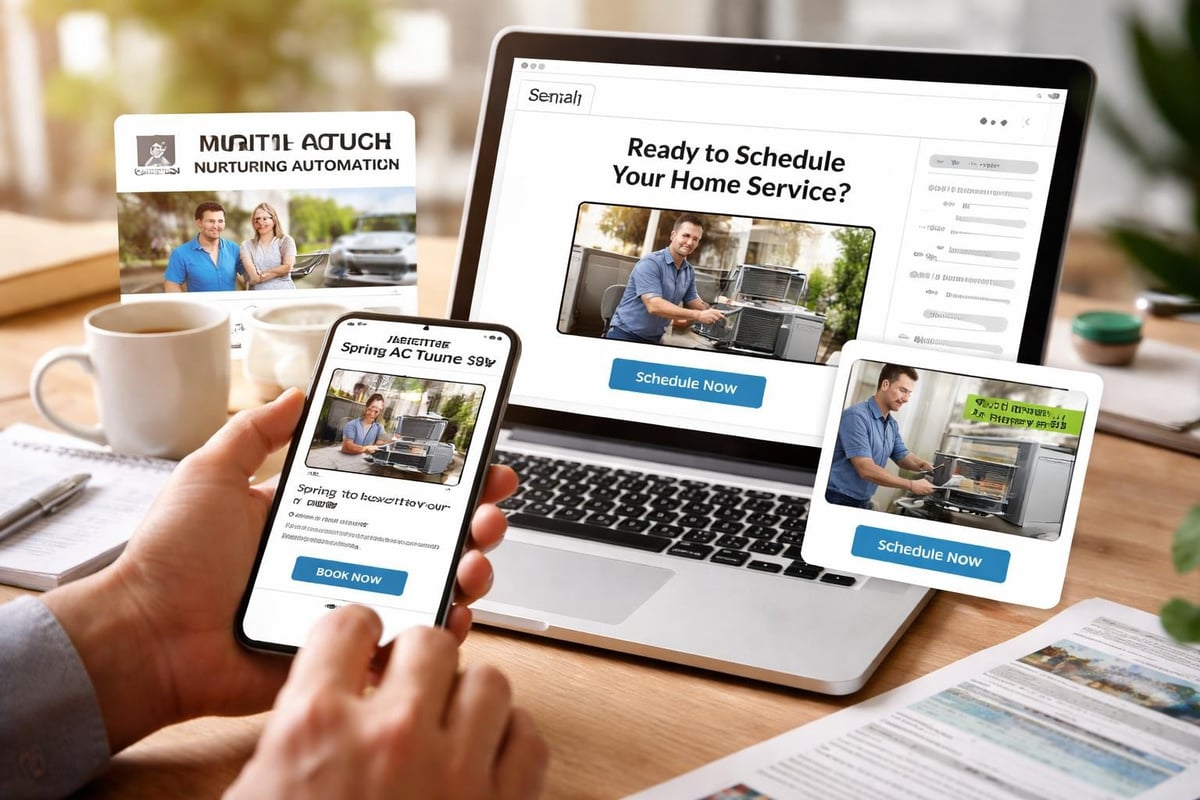
Email Follow-Up Sequences
Create automated email series for different lead types.
Someone who downloaded your maintenance checklist gets educational content about seasonal HVAC care, then a special offer for tune-ups.
Someone who requested a quote but didn’t book gets a reminder email, then a case study showing your work, then a limited-time discount.
Segment based on service interest. Plumbing leads get different content than HVAC leads.
Retargeting Campaigns
Show ads to people who visited your site but didn’t convert.
They searched for your services once. They’re still in the market.
Retargeting keeps your brand top-of-mind when they’re finally ready to book.
Use different messages based on which pages they viewed. Someone who looked at emergency services gets urgency-focused ads. Someone browsing maintenance content gets seasonal offer ads.
Educational Content Delivery
Position yourself as the helpful expert.
Send tips, how-tos, and maintenance reminders that provide genuine value. This builds trust so when they need service, you’re the obvious choice.
Monthly newsletters with seasonal tips work well. “Prepare Your Plumbing for Texas Winter” or “Beat the Heat: AC Maintenance for Summer” provide timely value.
Measuring Lead Generation Performance
You can’t improve what you don’t measure.
Key Metrics to Track
Watch these numbers religiously:
- Lead volume by source (which channels drive the most leads)
- Cost per lead (how much you’re spending per inquiry)
- Lead-to-customer conversion rate (what percentage actually book)
- Customer acquisition cost (total marketing spend divided by new customers)
- Revenue per lead source (which channels drive highest-value customers)
- Time to conversion (how long from first contact to booked job)
According to comprehensive lead generation statistics, the average conversion rate from lead to customer in home services is 12-15%, but top performers achieve 25%+.
Attribution and Tracking Setup
Use call tracking numbers for different marketing channels.
One number for your website, another for Google ads, another for your truck wrap. Now you know exactly what’s working.
Implement conversion tracking on your website. Track form submissions, phone clicks, and chat initiations.
Use UTM parameters in your URLs to track specific campaigns and content pieces.
ROI Analysis
Calculate real return, not vanity metrics.
If you spent $2,000 on Google ads, generated 40 leads, and converted 8 into customers worth $5,000 average lifetime value, that’s $40,000 in revenue from a $2,000 investment.
That’s a 20x return.
Compare this across channels. Maybe SEO costs more upfront but delivers better long-term ROI. Maybe Facebook ads cost less per lead but convert at lower rates.
Invest more heavily in what actually drives profitable customer acquisition.
Common Lead Generation Mistakes to Avoid
Even experienced businesses make these errors.
Prioritizing Quantity Over Quality
500 garbage leads won’t pay the bills.
10 qualified, ready-to-buy leads will.
Avoid the trap of celebrating lead volume metrics when half those leads are wrong service area, wrong service type, or tire kickers.
Quality beats quantity every single time.
Slow Response Times
When someone submits a form at 2 PM on Tuesday, they expect a response within minutes, not days.
Every hour you wait, your conversion rate drops.
Set up systems for immediate response. Even if it’s just a text saying “We received your request and will call within an hour,” that acknowledgment helps.
Poor Mobile Experience
Your website looks great on your desktop computer.
But 65% of your visitors are on phones.
If they can’t easily tap to call, fill out forms, or navigate your site on mobile, you’re bleeding leads.
Test everything on actual mobile devices monthly.
Ignoring Lead Source Data
You’re running Google ads, SEO, and Facebook campaigns.
But you have no idea which one actually drives customers.
Without proper tracking, you might kill your best channel and double down on your worst.
Implement thorough tracking from day one.
Weak or Missing Calls-to-Action
Your homepage has beautiful photos and nice copy.
But nowhere does it clearly tell people what to do next.
Every page needs an obvious next step. “Call Now,” “Book Online,” “Get Your Free Estimate.”
Make it impossible to miss and easy to act on.
Advanced Lead Generation Strategies for 2026
The basics work, but these advanced tactics create separation.
AI and Automation Integration
Use AI chatbots to qualify leads instantly and route them appropriately.
Implement automated scheduling so customers can book appointments directly without playing phone tag.
Use predictive analytics to identify which leads are most likely to convert based on historical data patterns.
AI is powering smarter local ads that reach exactly the right homeowners at exactly the right time.
Voice Search Optimization
More people are asking Alexa and Siri to find local services.
Optimize for conversational queries like “Who’s the best emergency plumber near me?” instead of just “emergency plumber.”
Claim and optimize voice platform listings.
Video Marketing for Lead Generation
Video builds trust faster than text.
Create service explanation videos, customer testimonials, and behind-the-scenes content showing your team’s expertise.
Host videos on your website and YouTube. Optimize titles and descriptions for local keywords.
Videos also improve time-on-site metrics, which helps SEO performance.
Hyper-Local Targeting
Go beyond city-level targeting.
Create content and campaigns for specific neighborhoods, subdivisions, or zip codes.
“Katy HVAC Services” or “Westlake Hills Plumbing” targets more precisely than “Austin plumbing.”
This works especially well in large metro markets where competition is fierce.
Partnership and Referral Programs
Build relationships with complementary businesses.
Real estate agents, home inspectors, property managers, and general contractors all interact with your ideal customers.
Create formal referral programs with tracking and incentives.
One strong referral partnership can deliver steady lead flow for years.
Building a Sustainable Lead Generation System
One-off tactics create temporary results.
Systems create sustainable growth.
Integrated Multi-Channel Approach
Don’t rely on a single source.
Build a lead generation ecosystem where SEO, PPC, social media, email, and partnerships all work together.
When Google changes its algorithm, you don’t panic because you have other channels producing leads.
Diversification creates stability.
Continuous Testing and Optimization
What works today might not work next quarter.
Constantly test:
- Different ad copy and offers
- Landing page layouts and CTAs
- Email subject lines and send times
- Form lengths and field requirements
- Targeting parameters and audiences
Small improvements compound into major results over time.
Digital lead generation requires ongoing optimization, not set-it-and-forget-it tactics.
Documentation and Process Building
Write down what works.
Create documented processes for:
- How leads are captured and recorded
- Who contacts which lead types
- What follow-up sequences are triggered
- How lead quality is measured
- When leads are marked as dead
This ensures consistency even as your team grows.
Balancing Short-Term and Long-Term Tactics
PPC delivers leads today but stops when you stop paying.
SEO takes months to build but delivers compounding returns for years.
Smart businesses invest in both. Use PPC to fund growth now while building SEO assets that reduce dependence on paid ads over time.
The most successful home service companies in Texas understand this balance. They’re not chasing quick wins at the expense of sustainable growth.
Adapting to Search Evolution in 2026
Search is changing rapidly.
AI overviews, voice assistants, and new platforms are reshaping how people find services.
Google’s Search Generative Experience (SGE) now answers questions directly without users clicking through to websites. You need to adapt or become invisible.
Ranking in AI search requires new strategies focused on structured data, authoritative content, and direct answer optimization.
The businesses investing in these emerging channels now will dominate local markets while competitors scramble to catch up.
Focus on becoming the definitive local authority in your service category. Build comprehensive content that positions your brand as the trusted expert AI platforms recommend.
Understanding GEO vs SEO differences helps you prepare for this shift while maintaining strong traditional search presence.
Leads in digital marketing will continue evolving. Your systems need flexibility to adapt as new platforms and technologies emerge.
The core principle remains constant: be present where your customers search, make it easy to contact you, and deliver exceptional service that generates referrals and reviews.
Generating consistent, qualified leads in digital marketing separates thriving home service businesses from those struggling to find their next customer. The strategies outlined above work because they focus on reaching ready-to-buy homeowners at exactly the moment they need your services. If you’re ready to build a revenue-focused digital growth system that delivers predictable inbound calls and qualified leads for your plumbing, HVAC, electrical, or roofing business across Texas, Aim Set Win specializes in exactly that. We combine local SEO dominance, conversion-focused web design, and data-driven strategy exclusively for home service businesses who want sustainable growth.
Jean runs growth strategy at AimSetWin, a performance marketing agency specializing in local service businesses across Texas. he's helped plumbers, HVAC companies, pest control operators, and home service brands build predictable revenue systems using data-driven advertising and conversion optimization.


