
Master local area marketing for home service businesses. Learn proven tactics to dominate your market, attract customers, and grow revenue.
If you’re running a home service business in 2026, competing for customers who live within a 15-mile radius of your shop, you need to master local area marketing. This isn’t about casting a wide net across the entire state or country. It’s about becoming the go-to choice in the specific neighborhoods, zip codes, and communities where your trucks can actually show up. For plumbers, HVAC techs, electricians, and other trade professionals, local area marketing is the difference between a full schedule and scrambling for leads. Let’s break down exactly how to own your local market and turn nearby homeowners into paying customers.
What Makes Local Area Marketing Different
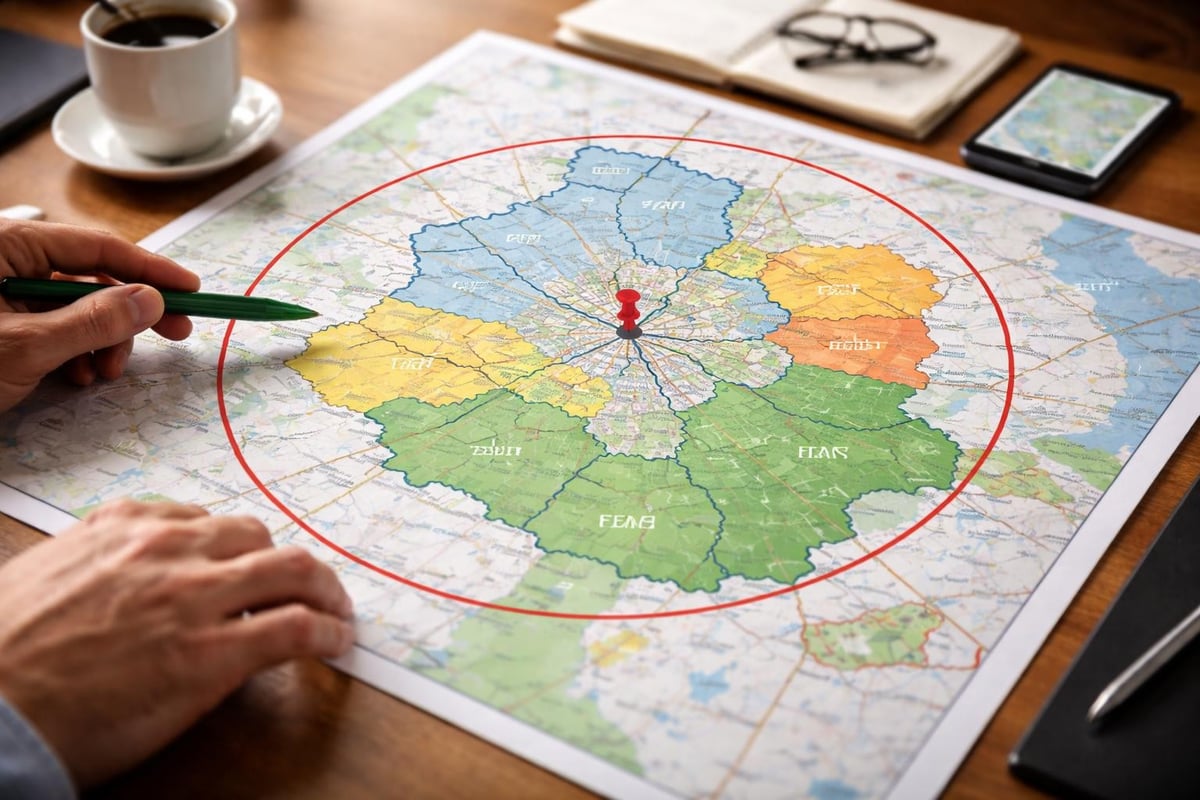
Local area marketing focuses exclusively on attracting customers within a specific geographic area.
Unlike traditional marketing that casts a wide net, this approach zeroes in on the people who can actually use your services today.
For home service businesses, this matters because a homeowner in Dallas doesn’t care about your amazing plumbing work in El Paso.
The Geography Factor
Your service area defines everything in local marketing.
Most home service companies operate within a 20 to 30-mile radius from their main location.
Some might stretch to 50 miles for emergency calls or large commercial jobs.
Key differences from broader marketing:
- Target specific neighborhoods, not entire states
- Optimize for “near me” searches and local intent
- Build relationships with community organizations
- Focus on local review platforms and directories
- Create content about local issues and events
When you’re doing local area marketing right, people recognize your trucks in their neighborhood. They see your yard signs at their neighbor’s house. They hear about you at the local hardware store.
That’s the kind of visibility that fills your schedule.
Google Business Profile Optimization
Your Google Business Profile is the single most important asset for local area marketing.
When someone searches “plumber near me” or “emergency HVAC repair,” Google shows a map with three businesses.
That’s the local pack, and you need to be in it.
Setting Up Your Profile Correctly
Start with complete, accurate information.
Essential elements:
- Business name (exactly as it appears on your storefront)
- Full address and service area
- Phone number (local number, not toll-free)
- Website URL
- Business hours (including emergency hours)
- Primary and secondary categories
- Detailed service list
- High-quality photos of your team, trucks, and completed work
Many home service businesses make the mistake of treating their Google Business Profile like a “set it and forget it” task.
That’s a huge missed opportunity according to local SEO best practices.
Active Profile Management
Post updates weekly at minimum.
Share before-and-after photos of recent jobs. Announce seasonal promotions. Highlight new services.
Google rewards active profiles with better visibility.
| Activity Type | Posting Frequency | Impact on Rankings |
|---|---|---|
| Job photos | 2-3 per week | High |
| Service updates | Weekly | Medium |
| Promotions | Monthly | Medium |
| Q&A responses | As received | High |
| Review responses | Within 24 hours | Very High |
Answer every review, positive or negative, within 24 hours.
Thank customers for five-star reviews. Address concerns in critical reviews professionally.
This shows potential customers you care about service quality.
Add new photos every week showing real work, real trucks, real team members.
Stock photos hurt more than they help because customers can spot them instantly.
Local SEO for Service Area Businesses
Local SEO goes deeper than just your Google Business Profile.
It’s about making sure search engines understand exactly where you operate and what you do.
Website Location Pages
Create dedicated pages for every city or major neighborhood you serve.
Don’t just swap out city names in a template. Make each page genuinely useful.
What to include on location pages:
- Specific services offered in that area
- Local landmarks and neighborhoods covered
- Driving directions from that city to your main office
- Photos of work done in that specific area
- Testimonials from customers in that location
- Local phone number if you have one
For example, if you’re a plumbing company serving San Antonio, don’t just create a page that says “We serve San Antonio.”
Write about common plumbing issues in older San Antonio homes. Talk about water quality challenges specific to the area. Show photos of jobs you’ve completed in Alamo Heights or Stone Oak.
Technical SEO Fundamentals
Your website needs structured data markup telling Google exactly what you do and where you do it.
This is called schema markup, and it’s not optional anymore in 2026.
Critical schema types for home service businesses:
- LocalBusiness schema
- Service schema
- Review schema
- Organization schema
- FAQ schema
Make sure your NAP (Name, Address, Phone) appears consistently across your entire website. Same format, same punctuation, every single time.
Keep your site fast. Mobile page speed directly impacts local rankings.
Most homeowners searching for emergency service are on their phones, often while standing in water or sweating in a house with no AC.
A slow site means they’ll hit the back button and call your competitor.
Review Generation Systems
Reviews are social proof and ranking signals rolled into one.
Google uses review quantity, quality, and recency as ranking factors.
Customers use reviews to decide whether to call you or the next guy.
Building a Review Funnel
You need a system, not random requests.
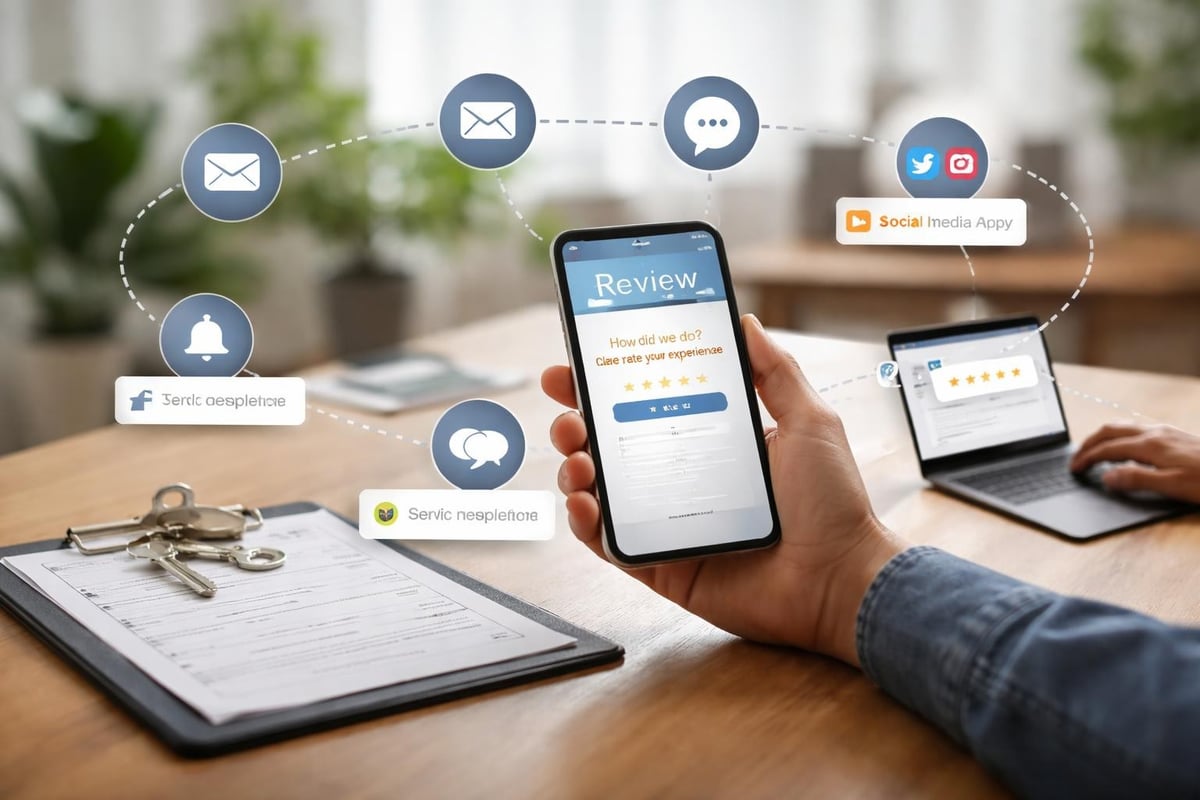
Step-by-step review generation:
- Complete the job to the customer’s satisfaction
- Send a thank-you text or email within 2 hours
- Include a direct link to your Google Business Profile review page
- Follow up 24 hours later if they haven’t left a review
- Thank reviewers publicly and privately
The best time to ask for a review is immediately after completing excellent work.
The customer is happy. The problem is solved. They’re grateful.
Wait three days, and they’ve moved on mentally.
Managing Negative Reviews
Negative reviews happen to every business.
How you respond matters more than the review itself.
Respond quickly, professionally, and publicly. Acknowledge the issue. Explain what happened if appropriate. Offer to make it right.
Then take the conversation private to resolve the actual problem.
Potential customers reading reviews aren’t looking for perfection. They’re looking for how you handle problems.
A professional response to a negative review can actually build trust as discussed in proven local marketing strategies.
Neighborhood-Level Content Marketing
Generic blog posts about “5 signs you need a new water heater” won’t move the needle for local area marketing.
You need content that speaks directly to the communities you serve.
Hyperlocal Content Topics
Write about issues specific to your service area.
Content ideas for home service businesses:
- “Common HVAC Problems in Historic [City Name] Homes”
- “How [Local Weather Pattern] Affects Your Plumbing”
- “Preparing Your [City Name] Home for [Local Weather Event]”
- “Why [Local Building Code] Matters for Your Electrical Upgrade”
- “Service Area Spotlight: What We Love About [Neighborhood]”
This type of content does two things simultaneously.
First, it helps you rank for local search terms. Second, it shows you actually know and care about the community.
Local Link Building
Get links from local sources.
High-value local links:
- Local news coverage of community involvement
- Chamber of Commerce membership directory
- Sponsorship of youth sports teams
- Local charity partnerships
- Guest posts on local business blogs
- Supplier and manufacturer partner directories
Join your local Chamber of Commerce. Sponsor a Little League team. Support local charities.
These activities build brand awareness AND create link opportunities.
For detailed guidance on execution, check out these local SEO best practices.
Community Involvement and Partnerships
Real local area marketing happens offline as much as online.
Being visible in your community builds trust that translates to phone calls.
Strategic Community Presence
Choose involvement opportunities strategically.
You can’t be everywhere, so focus on activities that put you in front of homeowners who might need your services.
High-impact community activities:
- Home and garden shows
- Local business networking groups
- Homeowner association meetings
- Real estate agent partnerships
- Property manager relationships
- New homeowner welcome programs
Partner with complementary businesses. If you’re a plumber, build relationships with remodeling contractors. If you do HVAC, connect with insulation companies.
These partnerships create referral networks that benefit everyone.
Real Estate Agent Relationships
Real estate agents are goldmines for home service referrals.
They work with homebuyers who need inspections, repairs, and upgrades constantly.
Take agents to lunch. Send them referral fees for closed business. Be their reliable “guy” for emergency situations.
When an agent trusts you, they’ll recommend you to every client with a service need in your category.
Paid Advertising for Local Markets
Organic visibility takes time to build.
Paid advertising puts you in front of local customers immediately.
Google Local Services Ads
Local Services Ads appear above even the regular paid ads for home service searches.
They’re pay-per-lead, not pay-per-click, which means you only pay when someone actually contacts you.
Benefits of Local Services Ads:
- Prime positioning in search results
- Google Guaranteed badge builds trust
- Phone calls come directly from the ad
- Pay only for valid leads
- Background check verification shows professionalism
To qualify, you need to pass background checks and maintain good reviews.
The investment is worth it because these leads convert at higher rates than standard PPC.
Geofenced Social Media Advertising
Target specific neighborhoods with Facebook and Instagram ads.
Geofencing strategy:
- Identify your highest-value service areas
- Create custom audiences within 1-5 miles of those areas
- Develop ads featuring work done in those neighborhoods
- Include strong local offers (first-time customer discounts)
- Track which areas produce the best ROI
You can literally target everyone within a half-mile radius of your best customers.
Show them photos of work you did two streets over.
That proximity creates urgency and trust simultaneously.
For businesses looking to maximize their advertising ROI, exploring comprehensive PPC strategies can provide additional revenue growth opportunities.
Direct Mail and Door Hangers
Digital marketing dominates conversations, but physical marketing still works for local area marketing.
Strategic Door Hanger Campaigns
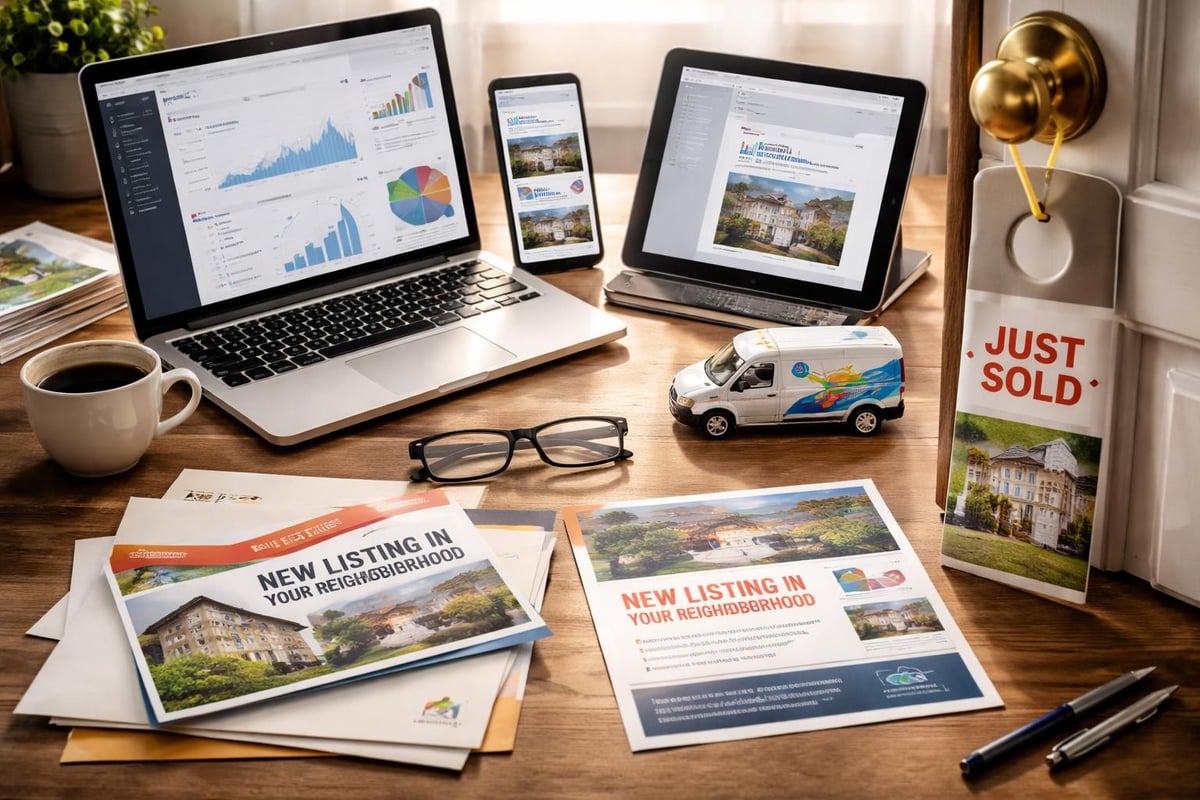
Door hangers work because they’re impossible to ignore.
When to use door hangers:
- Immediately after completing a job (hang on neighbors’ doors)
- Before peak season (AC tune-ups before summer)
- In neighborhoods where you’re already working
- After storm events that might cause damage
- In new construction areas with recent move-ins
Make your door hanger useful, not just promotional.
Include seasonal maintenance tips. Add a checklist of warning signs for common problems. Provide emergency contact information.
The goal is for them to keep it on the refrigerator, not throw it away.
Targeted Direct Mail
Mail to specific carrier routes in your best neighborhoods.
| Campaign Type | Target Audience | Typical Response Rate |
|---|---|---|
| New mover mail | Recently purchased homes | 3-5% |
| Seasonal maintenance | All homeowners in area | 1-2% |
| Emergency service | Recent storm damage areas | 5-8% |
| Referral rewards | Past customers | 8-12% |
Track response rates by neighborhood and campaign type.
Double down on what works. Cut what doesn’t.
Many successful contractors use local advertising tactics that combine traditional and digital approaches for maximum market penetration.
Vehicle Branding and Yard Signs
Your trucks are mobile billboards driving through your target market every single day.
Professional Vehicle Wraps
A wrapped truck makes you look established and professional.
Essential elements on vehicle wraps:
- Company name and logo (large and readable)
- Phone number (big enough to read from 50 feet)
- Website URL
- Primary services
- Service area cities
- Professional photos of your work
Keep designs clean and readable.
You want people to read it at a stoplight, not study it like fine art.
Include “Licensed and Insured” or certifications if they’re impressive in your market.
Strategic Yard Sign Placement
Ask every satisfied customer if you can put a yard sign in their lawn for a week.
Most will say yes, especially if you offer a small discount or referral incentive.
Yard sign best practices:
- Keep signs up for 7-10 days minimum
- Place them facing the highest-traffic street
- Use bold colors that stand out
- Include phone number and website
- Track which neighborhoods generate calls
Yard signs work because they provide social proof at the neighborhood level.
Seeing your sign at a neighbor’s house creates instant credibility.
Email Marketing for Local Customers
Build an email list of past customers and nurture it consistently.
Seasonal Maintenance Campaigns
Send reminders tied to seasons and local weather patterns.
Email campaign calendar for home services:
- February: Spring AC tune-up specials
- May: Pool equipment checks (if applicable)
- August: Furnace inspection reminders
- October: Winterization services
- November: Holiday scheduling notices
- Year-round: Monthly maintenance tips
Segment your list by service type.
HVAC customers get different emails than plumbing customers.
People who’ve had emergency service get different messaging than routine maintenance customers.
Referral Program Emails
Your best customers can become your best salespeople.
Offer meaningful incentives for referrals. Not $10 off. Make it $50-100 off their next service or a cash reward.
Send quarterly emails specifically asking for referrals to past customers who gave you five-star reviews.
These people are already fans. Give them an easy way to help their friends and earn rewards.
Tracking and Measuring Results
You can’t improve what you don’t measure.
Key Metrics for Local Area Marketing
Track these numbers monthly at minimum.
Essential local marketing KPIs:
- Google Business Profile views and actions
- Click-to-call rate from online sources
- Website traffic from local searches
- Conversion rate by traffic source
- Cost per lead by marketing channel
- Customer acquisition cost by neighborhood
- Revenue by service area
- Review quantity and average rating
- Local pack ranking for key terms
Use call tracking numbers for different marketing channels.
Different number on door hangers than on your truck than on your website.
This tells you exactly which tactics produce actual phone calls.
Geographic Performance Analysis
Not all neighborhoods are created equal for your business.
Some areas have newer homes that need less service. Others have older homes with constant issues. Some neighborhoods have higher average incomes and spend more per service call.
Analyze performance by:
- ZIP code
- Neighborhood
- City/town
- Median home age
- Median household income
- Customer lifetime value
Focus your marketing budget on areas that produce the highest revenue per marketing dollar.
You might discover that one specific neighborhood generates twice the revenue of another with the same marketing spend.
Double down on the winners.
Mobile-First Website Optimization
Most local searches happen on mobile devices.
If your website isn’t optimized for phones, you’re losing money every single day.
Mobile User Experience
Test your site on actual phones, not just a desktop browser made narrow.
Mobile optimization checklist:
- Click-to-call buttons above the fold
- Fast loading (under 3 seconds)
- Easy-to-read text without zooming
- Forms that work with phone keyboards
- Simple navigation (no complex dropdowns)
- Location and hours immediately visible
- Service area map easy to find
Your phone number should be tappable everywhere it appears.
A frustrated homeowner with a flooded basement isn’t going to copy and paste your number.
They’ll hit the back button and call the next company.
For businesses investing in their digital presence, working with specialists in home service digital marketing ensures your website converts mobile traffic effectively.
Reputation Management Across Platforms
Google isn’t the only platform that matters for local reputation.
Multi-Platform Review Strategy
Homeowners check multiple sources before making decisions.
| Platform | Importance | Primary Users |
|---|---|---|
| Critical | Everyone | |
| High | 35-65 age group | |
| Yelp | Medium | Urban markets |
| Nextdoor | High | Neighborhood-focused |
| BBB | Medium | Older demographics |
| Angi | Medium | Active researchers |
Focus most of your energy on Google and Facebook.
But don’t ignore Nextdoor, especially for neighborhood-level visibility.
Nextdoor Marketing
Nextdoor is neighborhood social media, and it’s powerful for home service businesses.
Claim your business profile. Join neighborhood groups in your service area.
Respond helpfully to questions even when people aren’t ready to hire yet.
When someone posts “Can anyone recommend a good plumber?” you want three neighbors to immediately tag your business.
That happens when you’ve built genuine relationships on the platform.
Partnership with Local Influencers
Local influencers aren’t celebrities with millions of followers.
They’re people with 1,000-10,000 followers who live in your service area and have engaged audiences.
Finding Local Influencers
Look for:
- Local mom bloggers
- Real estate agents with strong social media
- Home improvement enthusiasts
- Neighborhood association leaders
- Local news personalities
Reach out with partnership ideas that benefit both parties.
Offer free service in exchange for honest reviews and social media posts.
Sponsor their content related to home maintenance.
Create educational content together that positions you both as experts.
These partnerships expose you to highly relevant local audiences who trust the influencer’s recommendations as shown in successful local marketing case studies.
Content Distribution Strategies
Creating great content is half the battle.
Getting it in front of local audiences is the other half.
Local Content Promotion Tactics
Distribution channels for local content:
- Email newsletter to customer list
- Share in local Facebook groups
- Post on Nextdoor neighborhoods
- Submit to local news sites as expert commentary
- Share in local business networking groups
- Pin in relevant local online communities
- Include in direct mail campaigns
Repurpose one piece of content across multiple channels.
Turn a blog post into a video. Convert the video into social media clips. Pull key stats into infographics.
One well-researched piece about “Common Plumbing Issues in [Your City] Homes Built Before 1980” can generate months of content across different platforms.
Seasonal Local Marketing Campaigns
Home service needs fluctuate with seasons.
Your marketing should too.
Weather-Triggered Campaigns
Set up campaigns that activate based on local weather conditions.
Weather-based marketing triggers:
- Temperature drops below freezing: Pipe protection tips and emergency service ads
- Heat waves: AC emergency service promotion
- Heavy rain forecasts: Sump pump checks and drainage services
- Storm warnings: Emergency availability announcements
- First cold snap: Furnace inspection reminders
Use weather-triggered email campaigns and social media posts.
When a cold front is coming to Texas, send emails about protecting pipes two days before it hits.
This positions you as proactive and helpful, not just reactive.
Holiday and Event Marketing
Local events create marketing opportunities.
Local event tie-ins:
- Home and garden shows (booth presence)
- Local festivals (sponsorship)
- School fundraisers (donation matching)
- Community cleanup days (participation)
- Holiday parades (float or sponsorship)
These activities build brand awareness and create content for social media and your website.
Photos from local events show you’re invested in the community, not just trying to make money from it.
Many businesses successfully leverage local events and community connections to build lasting customer relationships.
Building Strategic Business Relationships
Local area marketing isn’t just about reaching homeowners directly.
Strategic B2B relationships can fill your schedule with steady work.
Property Management Companies
Property managers oversee dozens or hundreds of rental properties.
They need reliable contractors who respond quickly and charge fairly.
Landing property management contracts:
- Offer preferred pricing for bulk work
- Guarantee response times for emergencies
- Provide detailed digital reporting
- Bill in formats that work with their systems
- Be available for after-hours emergencies
One good property management relationship can generate consistent monthly revenue.
Real Estate Investor Networks
Real estate investors flip houses and manage rental portfolios.
They need HVAC, plumbing, electrical, and other trades constantly.
Attend local real estate investor meetups. Join their Facebook groups. Offer educational presentations about systems that affect property values.
These relationships create ongoing project work, often with less price sensitivity than retail customers.
Voice Search Optimization
Voice search continues growing in 2026.
People ask Siri, Alexa, and Google Assistant for local recommendations constantly.
Optimizing for Voice Queries
Voice searches are longer and more conversational than typed searches.
Voice search optimization tactics:
- Create FAQ pages answering specific questions
- Use natural, conversational language
- Include question-based headings in content
- Optimize for “best,” “top,” and “near me” queries
- Ensure accurate business information across all platforms
Someone typing might search “plumber Dallas.”
Someone using voice search asks “Who’s the best emergency plumber near me?”
Your content should answer these natural language questions directly.
Crisis and Emergency Marketing
Emergencies create immediate demand for home services.
Emergency Response Marketing
When local weather events cause widespread damage, your marketing should shift immediately.
Emergency marketing response plan:
- Update Google Business Profile with emergency hours
- Post emergency availability on social media
- Send email blast to customer list offering priority service
- Increase ad spend for emergency-related keywords
- Create temporary landing pages for storm/emergency services
- Distribute door hangers in affected neighborhoods
The businesses that respond fastest during emergencies build tremendous goodwill and customer loyalty.
Someone who calls you during a crisis and gets immediate help becomes a customer for life.
Automation Tools for Local Marketing
You can’t manually manage all these tactics.
Automation tools help you maintain consistency without burning out.
Essential Marketing Automation
Tools that save time while maintaining quality:
- Review request automation (text/email after service)
- Social media scheduling (post consistently without daily work)
- Email campaign automation (triggered by customer actions)
- Reporting dashboards (track all metrics in one place)
- Call tracking and recording (understand what’s working)
- CRM integration (keep customer data organized)
Set up automated review requests that go out 2 hours after job completion.
Schedule social media content a month in advance.
Create email drip campaigns for different customer segments.
This lets you maintain active marketing presence without it consuming your entire day.
For home service companies looking to streamline their marketing operations while maximizing results, partnering with specialists who understand the unique challenges of the industry makes execution significantly easier.
Local area marketing success comes down to consistent execution across multiple channels while staying genuinely connected to your community. The businesses that win in 2026 aren’t necessarily the ones with the biggest budgets, but the ones that show up consistently where their customers are looking. If you’re ready to build a revenue-focused digital growth system that combines all these local marketing tactics with technical optimization and conversion-focused strategy, Aim Set Win specializes exclusively in helping home service businesses across Texas dominate their local markets and generate consistent qualified leads.
Jean runs growth strategy at AimSetWin, a performance marketing agency specializing in local service businesses across Texas. he's helped plumbers, HVAC companies, pest control operators, and home service brands build predictable revenue systems using data-driven advertising and conversion optimization.


