
Discover 7 proven moving company marketing strategies for 2026 to increase leads, strengthen your brand, and drive predictable growth with expert digital tactics.
Competition in the moving industry is reaching new heights as 2026 approaches. To thrive, companies need more than reliable trucks and courteous crews. Success now hinges on mastering moving company marketing to attract leads and build lasting trust.
This year, the landscape is shifting rapidly. Digital tools, local outreach, and reputation management are no longer optional—they are essential for predictable business growth.
In this article, you will discover seven proven strategies tailored for movers. Explore actionable insights designed to help you stand out, drive more bookings, and future-proof your business in the evolving world of moving company marketing.
The Evolving Landscape of Moving Company Marketing in 2026
The landscape of moving company marketing is undergoing rapid transformation as we approach 2026. Companies are adapting to new digital realities, changing customer preferences, and a marketplace that demands smarter, more personalized engagement. Understanding these shifts is crucial for movers who want to compete and grow in the years ahead.
Digital Transformation and Consumer Behavior Shifts
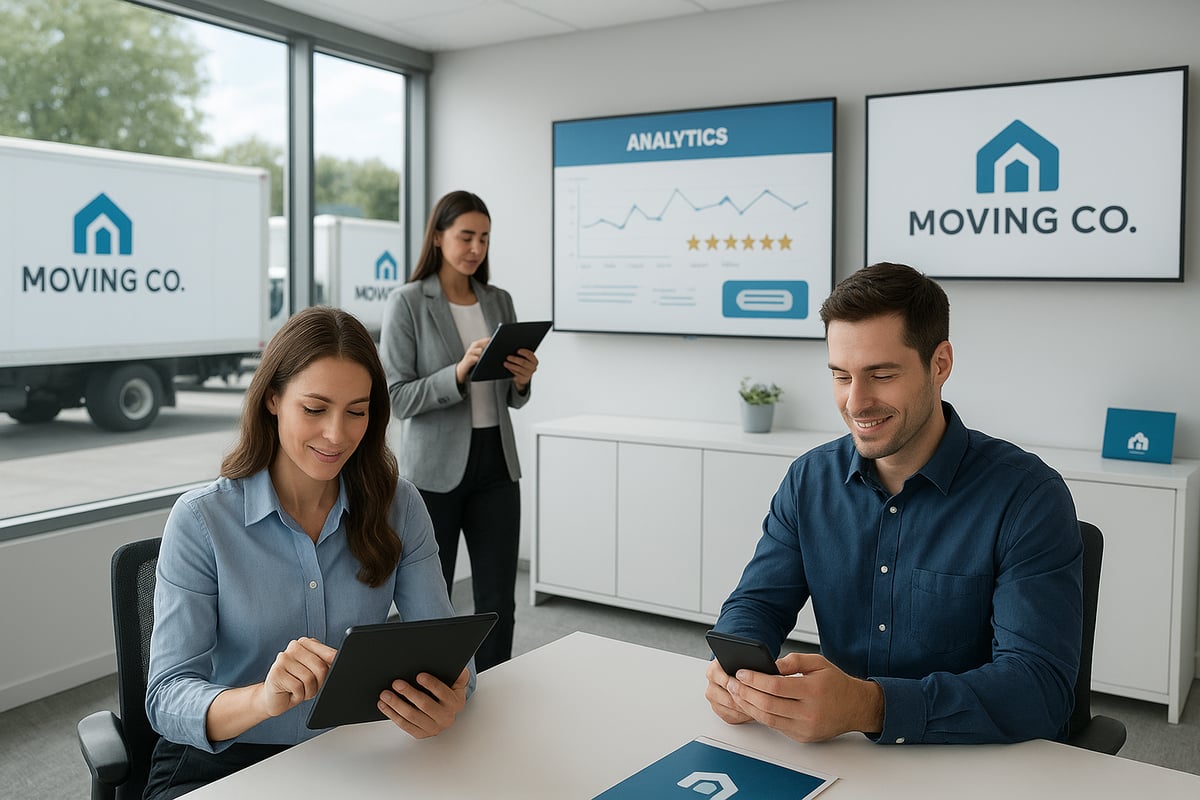
In 2026, digital-first experiences have become the standard for moving company marketing. Customers now expect to find, evaluate, and book moving services entirely online. Mobile devices play a central role, with 72% of moving service inquiries originating from smartphones. This shift means instant quotes, transparent pricing, and seamless digital interactions are no longer optional.
Consumers want convenience and clarity at every touchpoint. A strong digital reputation is often the deciding factor when choosing between providers. Companies that invest in user-friendly websites, fast response times, and clear communication will gain a competitive edge. The move toward tech-enabled service is redefining what customers expect from moving company marketing.
Competitive Pressures and Market Saturation
The moving industry is experiencing increased competition as more businesses invest in advanced moving company marketing strategies. Both national franchises and local operators are vying for the same pool of leads, making differentiation essential. AI and automation are now routine in customer service and lead generation, raising the bar for operational efficiency.
Unique value propositions, compelling branding, and local SEO are necessary for visibility. In fact, optimizing Google Business Profiles and local search is now a baseline expectation rather than a competitive advantage. For a deeper dive into the current market and trends, Moving Industry Statistics 2025 offers valuable insights into the evolving landscape. Companies that fail to innovate risk being left behind in the race for market share.
The Power of Data-Driven Marketing
Data is the engine behind effective moving company marketing in 2026. Movers are leveraging analytics to pinpoint high-intent customers and optimize every dollar spent on advertising. By analyzing performance metrics, companies can refine their campaigns for maximum ROI and reduce wasted spend.
Personalization is a key trend, with CRM platforms and email automation allowing for tailored messaging based on customer behavior. For example, businesses using data-driven pay-per-click strategies report up to 30% higher lead conversion rates. Embracing a data-centric approach ensures marketing efforts are both efficient and measurable, setting the stage for sustainable growth.
Local Branding and Reputation Management
Trust and community presence are more important than ever in moving company marketing. Positive reviews and testimonials are often the first things prospects look for. Companies must actively manage their reputations on platforms like Google and Yelp, responding to both praise and criticism with professionalism.
Local branding also extends to social media engagement and forming partnerships within the community. Businesses with 4.5-star ratings or higher receive 60% more inquiries, highlighting the direct impact of reputation management. Focusing on authentic relationships and transparent communication builds the foundation for long-term success in moving company marketing.
7 Proven Moving Company Marketing Strategies for 2026
Modern moving company marketing requires an agile, multi-channel approach to stand out. Below are seven proven strategies that will help your company attract more leads, build trust, and achieve sustainable growth in 2026.
1. Optimize for Local SEO and Google Business Profile
Local SEO is now the cornerstone of moving company marketing. Begin by claiming and fully optimizing your Google Business Profile. Ensure your address, hours, services, and high-quality images are up-to-date. This visibility helps customers find your business when searching for moving services in their area.
Target high-intent, location-based keywords such as “movers near [city].” Consistency is crucial, so keep your business name, address, and phone number identical across all directories and listings. Building local citations further strengthens your authority and improves rankings.
Customer reviews are essential for moving company marketing. Encourage every client to leave a review, and always respond to feedback promptly. Engaging with reviews not only boosts your local rankings but also demonstrates transparency and commitment to service.
Google Posts allow you to share updates, promotions, and news directly on your Business Profile. Regular updates keep your audience engaged and informed.
Example: LoadUp’s local SEO strategy led to a 40% increase in organic leads. In fact, 93% of local searches now display Google Business Profiles, making this optimization non-negotiable.
For step-by-step tactics, explore these Local SEO strategies for service businesses.
2. Build a Conversion-Focused, Mobile-First Website
A mobile-first website is a must for moving company marketing in 2026. Most potential clients will interact with your brand on their smartphones, so prioritize fast load speeds and seamless navigation. Highlight your core services, transparent pricing, service areas, and feature easy-to-use booking forms.
Trust signals are vital. Display reviews, testimonials, and industry certifications prominently to reassure visitors. Adding high-quality images and videos of your team in action further builds credibility.
Integrate live chat or instant quote tools to provide rapid responses. These features reduce friction and encourage more leads to contact you. Ensure your website is accessible, visually appealing, and aligned with your brand identity.
Example: Companies with mobile-optimized websites see conversion rates double compared to those with outdated, desktop-first designs. Modern consumers expect a frictionless digital experience, so your website must deliver.
Regular audits and updates will keep your website performing at its best, supporting long-term moving company marketing success.
3. Leverage Paid Advertising with Smart Targeting
Paid advertising remains a powerful lever for moving company marketing. Start with Google Ads, targeting keywords like “movers + [city/region]” to ensure your brand appears for high-intent searches. Use geo-targeting to focus your ad spend on the most profitable service areas.
Meta platforms (Facebook and Instagram) are excellent for retargeting and raising brand awareness. Retarget users who visited your website but did not convert, reminding them of your services and offers.
Monitor your campaigns closely, optimizing for cost-per-lead and overall ROI. Utilize ad extensions, such as call, location, and special offers, to maximize the impact of your ads.
Example: Bird Marketing clients reduced their cost-per-lead by 22% through data-driven PPC and smart targeting. Paid ads put your business at the top of search results, delivering immediate visibility.
A well-managed paid advertising strategy ensures your moving company marketing generates predictable, scalable lead flow.
4. Harness the Power of Social Media and Content Marketing
Social media is an essential pillar of moving company marketing. Build active profiles on platforms such as Facebook, Instagram, and LinkedIn. Share moving tips, showcase client success stories, and give followers a behind-the-scenes look at your operations.
Engage your local community with targeted promotions, contests, and collaborations with influencers or realtors. These partnerships can increase your reach and credibility.
Content marketing is equally important. Regularly publish SEO-optimized blog posts that answer common moving questions. This positions your company as a trusted resource and improves your organic search rankings.
Example: LoadUp’s creative social campaigns drove a 35% increase in bookings. Data shows that 68% of movers check a company’s social presence before making a decision.
A robust social and content strategy keeps your moving company marketing efforts top-of-mind with potential customers.
5. Implement Email Marketing and Lead Nurturing Campaigns
Email remains one of the most effective channels for moving company marketing. Capture email addresses through website forms, quote requests, and downloadable moving guides. Use automated follow-ups to send service reminders, special offers, and educational content.
Segmentation enhances results. Divide your list by customer type, such as residential, commercial, or repeat clients, to send more relevant messages. Educational content like moving checklists and packing tips adds value and builds trust.
Retargeting emails for abandoned quotes or incomplete bookings can recover lost leads. Personalize your communications to increase engagement and conversion rates.
Example: Companies leveraging email marketing see a 20% increase in repeat business. Email is a direct line to your customers, supporting long-term moving company marketing goals.
Regularly review your campaigns, test subject lines, and refine your approach based on performance data.
6. Build Strategic Partnerships and Local Networking
Human connections remain powerful in moving company marketing. Network with realtors, apartment managers, and home service providers to expand your referral base. Offer incentives for partners who send qualified leads your way.
Join local business associations and sponsor community events to raise your profile. Collaborate on co-branded content or offer exclusive deals to partner audiences, further strengthening your local presence.
Example: Partnerships with realtors can generate a steady stream of pre-qualified leads. According to LoadUp, 50% of moving leads now come from local referrals.
Strategic partnerships foster trust and loyalty, providing a reliable source of high-quality leads for your moving company marketing efforts.
7. Manage and Leverage Online Reputation Proactively
Your online reputation is a critical factor in moving company marketing. Request reviews from every customer using email or SMS. Respond to all feedback—both positive and negative—promptly and professionally.
Showcase your best reviews and testimonials on your website and social channels. Address any negative feedback with solutions, demonstrating your commitment to customer satisfaction.
Use review monitoring tools to track your reputation across platforms like Google and Yelp. Proactive management can result in up to 60% more inquiries, as reported by Bird Marketing.
Insight: Trust is the number one decision factor for customers choosing a moving company. Strong reputation management directly impacts your moving company marketing results.
Advanced Marketing Technologies and Trends for 2026
The digital landscape for moving company marketing is transforming rapidly. In 2026, staying ahead means embracing new technologies, automating routine tasks, and connecting with customers in smarter ways. Companies that leverage these advancements will set themselves apart in a crowded marketplace.
AI, Automation, and Personalization in Moving Marketing
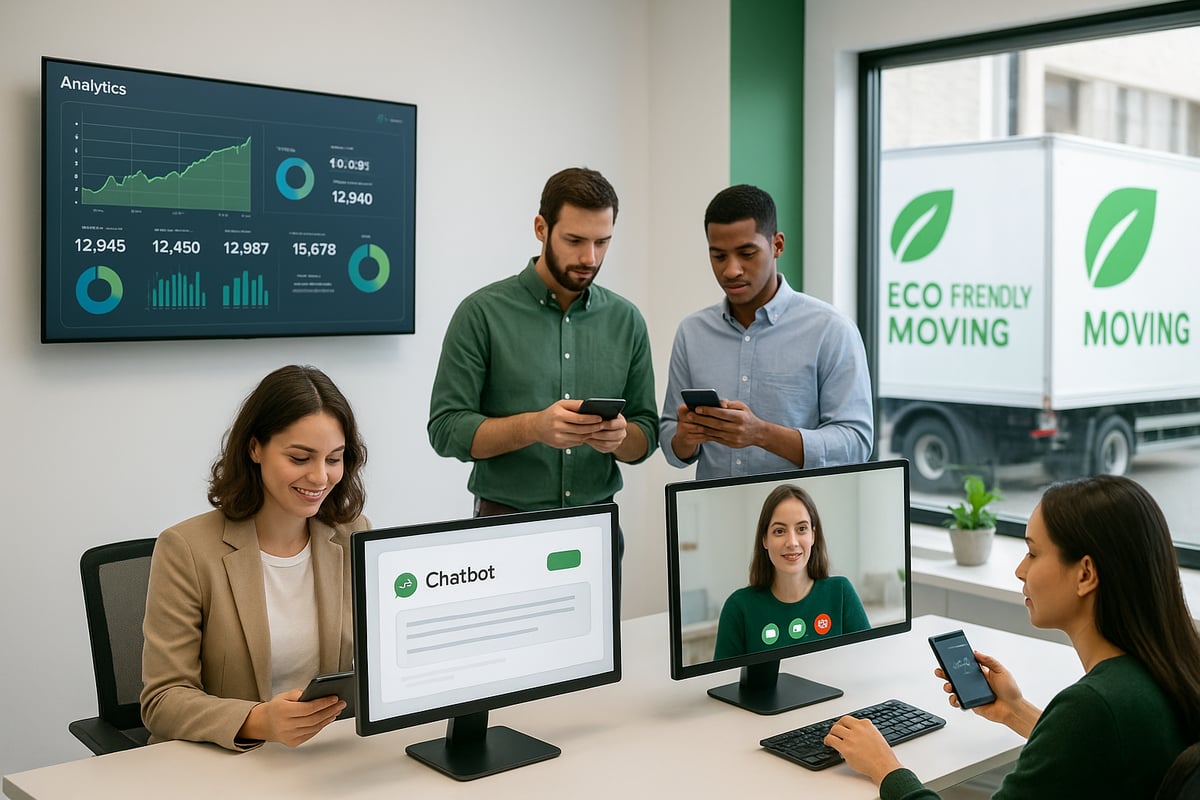
Artificial intelligence is now a cornerstone of moving company marketing. AI-driven chatbots provide instant quotes and handle customer questions around the clock, streamlining the booking process. Automation tools manage appointment scheduling and send timely follow-ups, reducing administrative workload and boosting efficiency.
Personalization is also on the rise. Companies tailor website experiences and email campaigns to each visitor, increasing engagement and conversion rates. According to industry experts, AI-powered chat can increase lead capture rates by 30 percent. To understand why innovation is essential, review Why Is the Moving Industry Still Stuck in the Past? [2025 Analysis], which explains the risks of falling behind in moving company marketing.
Video Marketing and Virtual Estimates
Video is redefining moving company marketing by making services more transparent and accessible. Offering virtual walk-throughs and video estimates allows customers to receive accurate quotes without waiting for an in-person visit. This approach reduces quote-to-booking time by up to 40 percent.
Explainer videos showcase your process, equipment, and team, helping clients feel more confident in their choice. Sharing authentic customer testimonial videos builds trust and credibility. Video content is also highly shareable on social channels, expanding your reach and attracting new leads for moving company marketing.
Data Analytics and Performance Tracking
Data-driven decision-making is essential for effective moving company marketing. Integrating CRM and analytics tools lets you track every lead source, from SEO to paid ads, and measure return on investment. Call tracking identifies which campaigns deliver the best results, ensuring your marketing budget is spent wisely.
Regular testing of landing pages and ad creatives uncovers opportunities for improvement. Companies that leverage analytics can cut wasted ad spend by 25 percent, making every marketing dollar count. Continuous monitoring and adjustment keep your moving company marketing strategy agile and focused on growth.
Sustainability and Social Responsibility Marketing
Sustainability is becoming a key differentiator in moving company marketing. Highlighting eco-friendly practices like recycled packing materials and fuel-efficient vehicles resonates with environmentally conscious consumers. Community involvement and charitable campaigns, such as tree-planting initiatives, demonstrate a commitment to social responsibility.
Consumers increasingly favor companies that prioritize positive impact. For more insights on emerging approaches, see Top 2026 Digital Marketing Trends for Moving Companies, which explores privacy-first strategies and hyper-local targeting. Embracing sustainability not only boosts your reputation but also attracts loyal customers who value ethical business practices.
Measuring Success: KPIs and Metrics for Moving Company Marketing
Tracking the right metrics is essential for moving company marketing success. Without clear measurement, it is impossible to know which strategies are working or where to make improvements. Let us break down the key performance indicators, the best tools for tracking them, and how to keep optimizing your results.

Essential Metrics to Track
Every moving company marketing campaign should focus on metrics that reflect real business growth. Core KPIs include:
- Lead volume and quality by source (SEO, PPC, referrals, social)
- Website conversion rate and average quote response time
- Cost-per-lead and cost-per-booking for each marketing channel
- Customer lifetime value and repeat booking rate
Focusing on these metrics allows teams to see which efforts drive the most profitable growth. For example, companies that consistently track and analyze these KPIs achieve higher ROI and faster expansion. Monitoring reviews and citations is also vital—learn more about why citations and reviews matter for building reputation and lead flow.
Tools and Processes for Effective Measurement
To make data-driven decisions in moving company marketing, you need reliable tools and processes. The essentials include:
- Google Analytics and Google Ads for real-time website and ad performance
- CRM dashboards for tracking leads and customer journeys
- Call tracking and form analytics to identify top-performing campaigns
- Automated reporting to monitor trends and spot opportunities
Using these tools, teams get a clearer picture of what is working. For instance, Bird Marketing leverages integrated dashboards for actionable insights, ensuring no valuable data is missed. For website performance, consider these easy ways to optimize your website and boost conversion rates.
Continuous Improvement and Optimization
The most successful moving company marketing strategies are never static. Continuous improvement is key:
- Regularly review and refine campaigns based on the latest data
- A/B test website elements, ad copy, and email sequences for better results
- Gather customer feedback to identify both service and marketing enhancements
- Stay updated on digital trends to stay ahead of competitors
Ongoing optimization leads to compounding gains over time. Companies that prioritize data-driven refinement consistently outperform their competition and see long-term growth in their moving company marketing results.
Jean runs growth strategy at AimSetWin, a performance marketing agency specializing in local service businesses across Texas. he's helped plumbers, HVAC companies, pest control operators, and home service brands build predictable revenue systems using data-driven advertising and conversion optimization.


