
Discover no bs marketing strategies for 2026 success Learn actionable tactics customer research and proven frameworks to drive real growth and measurable results
Tired of generic marketing fluff that promises the world but delivers little? In 2026, surface-level tactics are not enough. This no bs marketing guide cuts through empty claims to reveal frameworks that actually drive growth.
Here, you will find proven steps rooted in customer research, authentic messaging, and campaigns that produce measurable results. Forget hype—learn the direct marketing rules and execution plans top businesses use to lead their markets.
Ready to break free from outdated myths and get real results? Dive in for actionable, no bs marketing strategies that put your business ahead.
The No BS Marketing Mindset for 2026
Traditional marketing is struggling in 2026. Audiences are bombarded with generic messages every day, leading to widespread apathy. The endless stream of “funnels” and “hacks” may deliver quick spikes, but these tactics rarely build true, lasting growth. Listeners are flocking to podcasts about no bs marketing, with over one million downloads on authenticity-focused episodes. This trend reveals a growing hunger for real, actionable advice, not empty promises.
For example, many B2B companies have recognized that chasing vanity metrics, like likes or followers, does little for their bottom line. They are now investing in pipeline-driving content that can be measured and optimized for real impact. The lesson is clear: in today’s cluttered landscape, only marketing that is deeply rooted in customer reality and delivers measurable outcomes will survive.

Why Traditional Marketing Fails in Today’s Landscape
Why do so many campaigns fall flat? The answer lies in the overuse of generic, one-size-fits-all messaging. When every brand sounds the same, customers tune out. “Funnels” and “hacks” may deliver a short-term bump, but they can’t sustain business growth. No bs marketing is about cutting through this noise.
Consider the shift in B2B marketing. Companies are moving away from surface-level metrics and focusing on content that actually drives sales pipeline. This approach is supported by data: the most downloaded marketing podcasts now focus on authenticity and results, not hype. In a saturated market, only strategies tied directly to customer needs and measurable results stand out.
A simple table highlights the difference:
| Old Marketing Approach | No BS Marketing Approach |
|---|---|
| Focus on impressions | Focus on conversions |
| Generic messages | Direct, actionable offers |
| Measure vanity metrics | Track ROI and outcomes |
Core Principles of No BS Marketing
The foundation of no bs marketing rests on four core principles:
- Directness: Every message should include a clear and actionable offer.
- Accountability: Track, measure, and optimize every campaign for actual return.
- Authenticity: Replace corporate jargon with transparent, relatable language.
- Urgency: Give every prospect a compelling reason to act now.
Dan Kennedy’s “always an offer” philosophy is a guiding rule: every communication needs a next step. This mindset ensures that marketing efforts are never wasted. Brands that embrace these principles see more engaged prospects and higher conversion rates.
In practice, this means using tools and tactics that drive measurable growth. For those seeking practical ways to acquire customers and build pipeline, Customer Acquisition Techniques offer a wealth of actionable strategies aligned with the no bs marketing mindset.
The Results-First Approach
No bs marketing is not about chasing likes or vague “awareness.” It’s about prioritizing conversions and revenue. Every campaign should be built around split testing, data-driven decisions, and investments that can be directly tied to business growth.
Tim Ferriss famously split-tested potential book titles to maximize sales—a simple but effective example of results-first thinking. Marketers should only invest in channels that show a clear link to outcomes, cutting out anything that cannot be measured.
Remember, opinions don’t drive growth—results do. By adopting a no bs marketing mindset and letting real data guide every step, you can outpace competitors and build a system that delivers consistent, measurable success.
Customer Research: The Foundation of Real Marketing
Understanding your customers is the backbone of no bs marketing. Without real, actionable insights, even the most creative tactics fall flat. Every winning strategy in 2026 starts with deep customer research, not guesswork or outdated personas.

Deep Dive Into Audience Analysis
No bs marketing demands you move beyond assumptions and superficial demographics. Instead, use real data and direct feedback to define your ideal customer. Consider the international brides business that discovered, through interviews and purchase history, that truck drivers—not generic “men”—represented their core market.
Effective audience analysis combines:
- Surveys and interviews for firsthand feedback
- Social listening to track real conversations
- Competitive intelligence to spot gaps and opportunities
Podcasts consistently stress the need to “know your enemies” so you can stand out. B2B marketers now use cluster analysis to identify high-value segments and drive pipeline growth.
Understanding user intent is essential. For a deeper dive into why intent beats guesswork, see the Importance of User Intent in SEO.
Mapping the Customer Journey
No bs marketing is only effective when you map every step your customer takes, from first touch to loyal repeat purchase. Identify each touchpoint, then list the pain points and objections that arise.
Consider these steps:
- Awareness: Where do prospects learn about you?
- Consideration: What objections or needs must you address?
- Purchase: How can you reduce friction and make conversion easy?
- Loyalty: What keeps buyers coming back?
Behavioral economics plays a key role. Pricing psychology, for example, uses subtle cues to influence decisions. Melina Palmer’s “cookie framework” shows how even small changes in presentation can shift buying behavior.
Creating Buyer Personas That Drive Action
Forget the old way of creating buyer personas based on guesswork. No bs marketing insists on building personas from actual customer data.
Develop personas that include:
- Demographics (age, gender, location)
- Psychographics (values, interests, pain points)
- Motivations and hesitations (what drives or blocks a purchase)
Regularly update your personas as your market evolves. Data-driven personas ensure your campaigns stay relevant and effective, helping you speak directly to your target audience.
Competitive Intelligence for Differentiation
No bs marketing requires you to go beyond simple competitor monitoring. Analyze your rivals’ strengths, weaknesses, and messaging to carve out a unique position in the market.
Establish a process for ongoing competitive intelligence:
- Track competitors’ content, offers, and customer engagement
- Identify gaps in their approach you can exploit
- Adapt your messaging to highlight your unique strengths
By consistently monitoring the landscape, you maintain a real edge and avoid blending in. This approach ensures your brand remains top of mind and unmistakable in a crowded marketplace.
Crafting Authentic Messaging That Converts
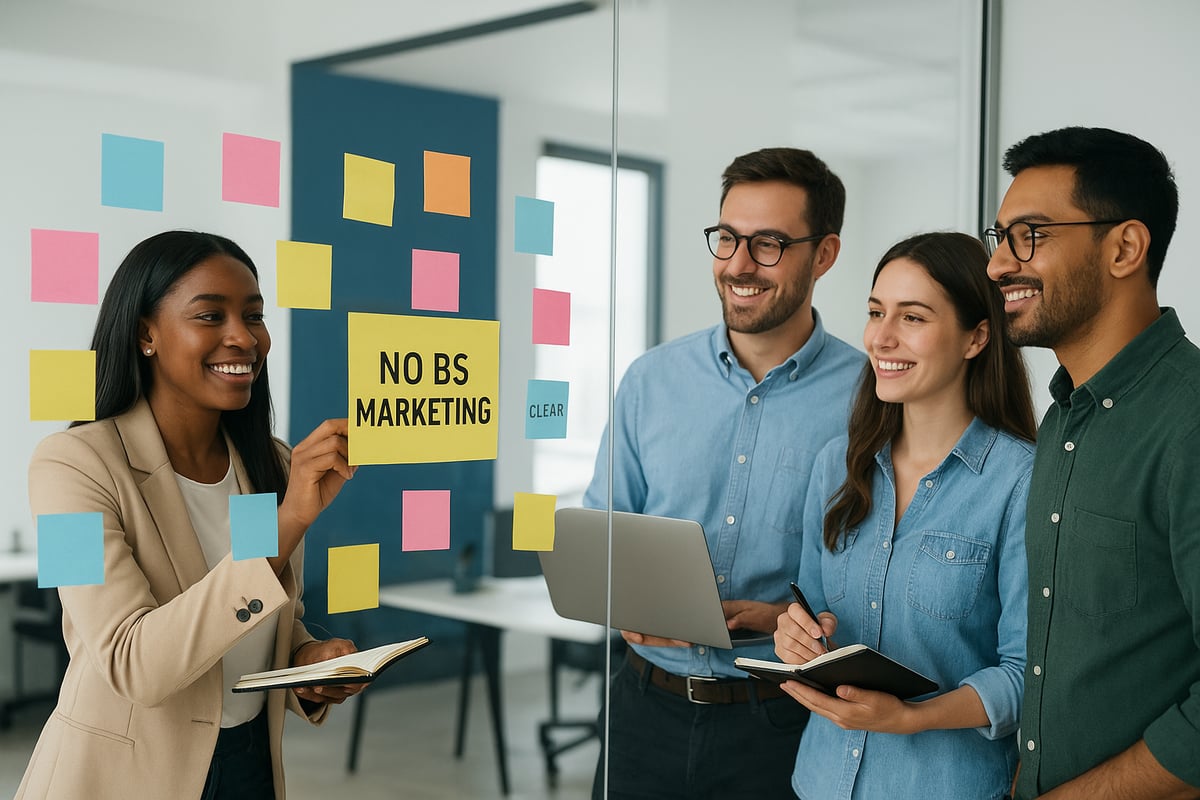
Authentic messaging is the backbone of no bs marketing. It transforms empty promises into real connections that drive business results. In a world flooded with generic ads, standing out means speaking directly, honestly, and with purpose. This section breaks down how to craft messaging that not only captures attention but also converts prospects into loyal customers.
Ditching Corporate Speak for Real Conversations
Most brands fall into the trap of corporate jargon and canned phrases. This approach does not build trust or engagement. No bs marketing flips the script by prioritizing honesty, transparency, and a conversational tone. When brands openly address mistakes or use humor and self-deprecation, they become more relatable.
For example, companies featured in the “Professionalism is Killing Your Brand” podcast episode have shown that ditching stiff language attracts audiences craving authenticity. The most effective no bs marketing uses the same language customers use in daily life. Swap “synergize cross-functional deliverables” for “let’s work together to get results.”
Consider this quick comparison:
| Corporate Speak | Real Conversations |
|---|---|
| “Leverage innovative solutions” | “Try something new with us” |
| “Optimize your business outcomes” | “We help you grow your business” |
| “Reach out for further discussion” | “Let’s talk today” |
For more actionable ideas, check out these Content Marketing Strategies that show how real conversations can transform your campaigns. Authenticity is not just a buzzword, it is the foundation of successful no bs marketing.
Developing a Unique Value Proposition
A compelling value proposition separates your business from a sea of sameness. In no bs marketing, generic claims like “best service” or “industry leader” will not cut it. Instead, focus on what truly sets you apart and use evidence to back every claim.
The “claim-proof model” is a proven method: for every bold statement, provide supporting proof. If you promise “24-hour support,” show customer testimonials or response time data. Avoid hype and focus on facts that matter to your audience.
Your unique value must be crystal clear within seconds. Test your statement on a stranger: if they do not immediately grasp how you are different, refine it. No bs marketing demands clarity and credibility at every touchpoint.
Storytelling and Emotional Resonance
Stories are powerful tools in no bs marketing. Audiences remember narratives that mirror their own experiences and pain points. Emotional, conversational copy consistently outperforms bland or overly factual messaging.
For instance, content that tackles customer objections or internal resistance resonates at a deeper level. Sharing real stories of transformation, challenges, or even failures can build trust and inspire action. Use customer testimonials, case studies, or “day-in-the-life” anecdotes to bring your brand to life.
Remember, people buy with emotion and justify with logic. Make your messaging relatable, and you will see higher engagement and conversions in your no bs marketing efforts.
Testing and Refining Your Messaging
No bs marketing is never static. The best messaging evolves through continuous testing and feedback. Run A/B tests on headlines, offers, and calls to action. Use customer surveys and analytics to learn what resonates.
Great copy is written backwards from the customer’s perspective. Start by identifying their challenges, then craft solutions they care about. Create feedback loops by encouraging responses and monitoring results. Adjust your messaging until it drives measurable improvement.
By making testing a habit, you ensure your no bs marketing stays relevant, effective, and always ahead of the competition.
The 10 Rules of No BS Direct Marketing
Forget complicated formulas and vague advice. No bs marketing means following proven, practical rules that drive tangible results. Here are the ten essential rules every marketer needs to dominate in 2026.
Rule 1: Always Include an Offer
Every piece of communication must contain a clear and actionable offer. Whether it is an email, postcard, or social media post, direct your audience toward a specific next step. For instance, a pizza shop might use a “buy one, get one free” deal, while a B2B firm could offer a free info kit. Remember, no bs marketing never leaves the prospect guessing.
Rule 2: Create Urgency to Act Now
People procrastinate, so give them a reason to act immediately. Use deadlines, limited quantities, or exclusive bonuses to nudge prospects forward. Examples include “Only 50 spots left” or “First 100 buyers receive a bonus.” With no bs marketing, urgency is always built into your messaging to convert interest into action.
Rule 3: Give Clear Instructions
Ambiguity kills conversions. Spell out exactly what you want your prospect to do next. Use direct calls to action like “Click here to order now” or “Return this form to claim your bonus.” No bs marketing removes confusion, making it simple for your audience to respond.
Rule 4: Track, Measure, and Optimize Everything
If you cannot measure it, you cannot improve it. Use tracking codes, analytics, and strict ROI calculations for every campaign. For example, track response rates from direct mail versus email. According to the 2025 Direct Mail Marketing Benchmark Report, direct mail remains highly effective, especially when combined with digital campaigns. No bs marketing relies on data, not guesswork.
Rule 5: No-Cost Brand Building Only
Never pay for “brand awareness” campaigns that cannot be tied to results. Let brand building be a byproduct of your direct response efforts. Many small businesses have failed by copying expensive big-brand tactics. No bs marketing focuses every dollar on measurable outcomes.
| Approach | No BS Marketing | Big Brand Tactics |
|---|---|---|
| Focus | Direct response | Brand awareness |
| Cost | Low or none | High |
| Measurable Results | Yes | Rare |
Rule 6: Follow Up Relentlessly
Most sales happen after the first contact. Build multi-step follow-up sequences for every lead. For instance, send weekly updates to customers and multiple reminders to prospects who have not yet responded. No bs marketing ensures opportunities are not wasted due to lack of follow-up.
Rule 7: Write Strong, Customer-Centric Copy
Speak directly to your audience’s desires, frustrations, and motivations. Use bold, specific claims and always back them up with proof. Avoid timid statements. Great no bs marketing copy sounds like a helpful conversation, not a generic brochure.
Rule 8: Make Your Ads Look Like Ads
Clever, creative designs can actually suppress response rates. Use proven ad formats that clearly present your offer and call to action. Classic mail-order layouts often outperform flashy, untested concepts. No bs marketing values effectiveness over creativity for its own sake.
Rule 9: Results Rule, Not Opinions
Let the market decide what works. Use split testing for headlines, offers, and creative elements. For example, Tim Ferriss famously tested titles before launching his book. No bs marketing is grounded in results, not personal preferences or internal opinions.
Rule 10: Be Disciplined and Resist Fads
Do not chase the latest marketing trends unless they deliver real, measurable results. Build routines for ongoing testing and optimization. Review data regularly and cut what is not working. No bs marketing is about consistent execution and avoiding shiny object syndrome.
Building a No BS Marketing System: Step-by-Step Execution
Ready to turn no bs marketing from a philosophy into a repeatable growth engine? Here is your blueprint for building a system that delivers measurable results, not just empty promises. Each step below is designed to help you cut through clutter, focus on what works, and dominate your market in 2026.
Step 1: Set Clear, Measurable Goals
Begin with clarity. Define what success means for your business—leads, revenue, or sales growth. Tie each marketing KPI directly to business outcomes, not vanity metrics.
Create a simple table to track your progress:
| Goal Type | Metric | Target | Timeframe |
|---|---|---|---|
| Lead Gen | Qualified Leads | 500/mo | 90 days |
| Sales | Closed Deals | 50/mo | 90 days |
| Revenue | ARR | $250k | 12 months |
With no bs marketing, every action must have an accountable outcome.
Step 2: Develop Offers That Convert
Craft offers your audience cannot ignore. Develop both purchase and lead generation offers. Think free trials, consultations, or irresistible bundles.
Test your offers for friction—if prospects hesitate, refine until conversion is seamless. The heart of no bs marketing is making the next step obvious and valuable.
Step 3: Choose the Right Channels
Select channels based on where your audience actually spends time. Do not fall for trends or fads. Use a blend of digital and offline approaches, such as SEO, PPC, social ads, direct mail, or events.
For practical advice on channel selection and execution, explore Digital Marketing Tips for Growth. This resource offers actionable insights to complement your no bs marketing system.
Step 4: Implement Tracking and Analytics
Set up robust tracking from day one. Use attribution models, tracking codes, and conversion measurement tools. This ensures you know exactly which efforts drive results.
Without analytics, no bs marketing loses its power. Every campaign, channel, and offer must be measured and optimized for ROI.
Step 5: Launch and Test Campaigns
Start small with MVP campaigns to validate your messaging and offers. Run split tests on headlines, calls to action, and creatives.
Iterate quickly based on real data. No bs marketing thrives on constant feedback and improvement, not opinions or guesswork.
Step 6: Follow Up and Nurture Leads
Build multi-step email and retargeting sequences. Personalize follow-ups based on lead behavior and funnel stage.
Regular, relevant follow-up is a hallmark of no bs marketing. It maximizes conversion rates and keeps your brand top-of-mind.
Step 7: Analyze Results and Iterate
Review campaign data weekly and monthly. Identify what is working and what needs to be cut.
Double down on high-performing tactics, and do not hesitate to drop what fails. In no bs marketing, results—not opinions—drive every decision.
Step 8: Scale What’s Working
Once you identify winning campaigns, increase ad spend or expand to new channels. Document your processes to ensure repeatability.
Scaling is not about doing more, but about doing more of what proves effective. This is the essence of a no bs marketing system.
Step 9: Maintain Discipline and Focus
Schedule regular reviews to ensure you stick to your proven plan. Avoid chasing new trends that lack evidence.
Document lessons learned and update your playbook. Consistency is key in no bs marketing—discipline keeps your system sharp and effective.
Advanced Strategies for Standing Out in 2026
In 2026, standing out requires more than just clever slogans or flashy ads. The no bs marketing approach demands advanced strategies that cut through noise and deliver measurable impact. Let us explore the frameworks and tactics that will keep your brand ahead in a hyper-competitive landscape.
Mastering Content That Drives Pipeline
Content is no longer about volume, but about strategic intent. High-performing no bs marketing teams build clusters of content around high-intent keywords and topics. This approach ensures every blog, video, or resource is mapped to a specific stage of the buyer’s journey.
B2B brands, for example, use content to guide prospects from awareness to decision, measuring impact at every stage. Proving ROI is crucial. Leaders use analytics to demonstrate how each asset contributes to pipeline growth. Consistent review and optimization ensure content remains a revenue driver, not just a brand asset.
Product-Led vs. Sales-Led Growth
Choosing between product-led and sales-led growth is a pivotal decision. No bs marketing means using the right model for your audience and offer. Product-led growth (PLG) leverages free trials, demos, and onboarding to drive adoption, while sales-led growth (SLG) relies on direct, relationship-based selling.
A quick comparison:
| Growth Model | Key Feature | Best For |
|---|---|---|
| PLG | Self-serve trial | SaaS, simple products |
| SLG | Sales outreach | Complex B2B, enterprise |
Leah Tharin’s case studies show B2B companies often blend both, adapting as buyer needs evolve. The no bs marketing mindset is flexible, always tracking results and adjusting the mix for maximum conversion.
Pricing Psychology and Behavioral Economics
Pricing is more than numbers, it is a psychological trigger. No bs marketing uses behavioral economics to make offers irresistible. Techniques like framing and anchoring can shift perception, while curiosity bias entices prospects to explore further.
Melina Palmer’s “cookie framework” demonstrates how small tweaks in pricing presentation can boost conversions. Marketers using these tools test different price points, bundles, and offers, optimizing for revenue rather than just clicks. Every decision is rooted in real customer behavior and measurable outcomes.
Finding “Spicy Angles” for PR and Outreach
Generic pitches get lost. The no bs marketing playbook calls for unique, newsworthy story angles that command media and customer attention. Successful brands avoid launch hype traps and instead focus on stories with lasting impact.
For instance, integrating direct mail with digital campaigns, as shown in the Direct Mail Trends Report 2024, boosts engagement and creates memorable touchpoints. The key is to find the “spicy angle” that sets your brand apart and compels action.
Building Communities That Last
Short-term signups are not enough. No bs marketing leaders invest in building communities that foster genuine engagement. This means creating spaces—online forums, user groups, mastermind sessions—where customers find value and connection.
Long-term communities weather the typical 3-month drop-off by prioritizing ongoing value, peer support, and exclusive access. Regular feedback loops and content tailored to members’ evolving needs help maintain momentum and loyalty.
Leveraging Technology Without Losing the Human Touch
Automation is essential for scale, but it should never replace authentic relationships. No bs marketing integrates CRM, email, and retargeting tools to streamline processes, while ensuring every interaction feels personal.
Advanced frameworks like the Guardrailed Uplift Targeting Framework help marketers target effectively while respecting business constraints. The result is increased revenue and retention, without sacrificing trust or relevance.
Staying Ahead of the Competition
Continuous improvement defines no bs marketing. Brands regularly update their competitive intelligence, track emerging trends, and test new tactics. However, only proven, results-driven methods make the cut.
Weekly reviews and rapid experimentation ensure you stay agile, while a disciplined focus on business outcomes keeps your strategy sharp. In 2026, standing out is not about being louder, but about being relentlessly effective.
Essential Tools and Resources for No BS Marketers
Achieving results with no bs marketing requires a reliable toolkit. The right resources help you execute strategies efficiently, measure outcomes, and stay ahead of trends. Below, you’ll find the essentials every results-driven marketer should have on their radar.
Direct Response Tools
- Lead Magnets & Sales Letters: Capture attention with compelling offers and persuasive copy.
- Follow-Up Systems: Email autoresponders and CRM tools ensure no lead slips through the cracks.
- Analytics Platforms: Use Google Analytics, HubSpot, or similar tools to track and optimize every campaign.
Research & Intelligence Resources
- Primary Market Research: For in-depth customer insights, consult guides like the Primary Market Research Guide, which outlines effective techniques for understanding your audience.
- Competitive Analysis Tools: Platforms like SEMrush or SimilarWeb help you benchmark against competitors.
Must-Read Books & Podcasts
- “No BS Direct Marketing” by Dan Kennedy
- “The Ultimate Sales Letter” by Dan Kennedy
- “Magnetic Marketing System” by Dan Kennedy
- Podcasts: “Everyone Hates Marketers,” “No-BS Marketing & Brand Strategy”
Swipe Files & Templates
- Collect examples of high-converting ads, landing pages, and email sequences to spark ideas for your own no bs marketing campaigns.
Training and Community
- Courses in copywriting, behavioral economics, and data analysis keep your skills sharp.
- Join forums, masterminds, or marketing communities for accountability and fresh perspectives.
The right mix of these tools and resources empowers you to implement no bs marketing, track real results, and continually refine your approach for sustainable growth.
Jean runs growth strategy at AimSetWin, a performance marketing agency specializing in local service businesses across Texas. he's helped plumbers, HVAC companies, pest control operators, and home service brands build predictable revenue systems using data-driven advertising and conversion optimization.


