
Discover how to optimize marketing strategies for 2026 with AI, data analytics, and omni channel tactics. Drive growth and future proof your marketing success.
The marketing world is transforming at lightning speed, and staying ahead is now vital for business growth in 2026.
In this guide, you will discover how to optimize marketing with actionable strategies designed for tomorrow’s digital landscape.
We will explore digital transformation, harnessing AI, leveraging data-driven insights, creating seamless omni-channel experiences, and future trends that will shape success.
Emerging trends and proven tactics await, sparking your interest and fueling your desire for better results.
Let’s dive in and turn expert guidance into measurable marketing gains.
The Evolving Marketing Landscape in 2026
Staying ahead in the marketing world is more challenging than ever. As we approach 2026, marketers face rapid changes in technology, consumer expectations, and regulatory environments. To optimize marketing for the future, understanding these shifts and adapting strategies is essential.
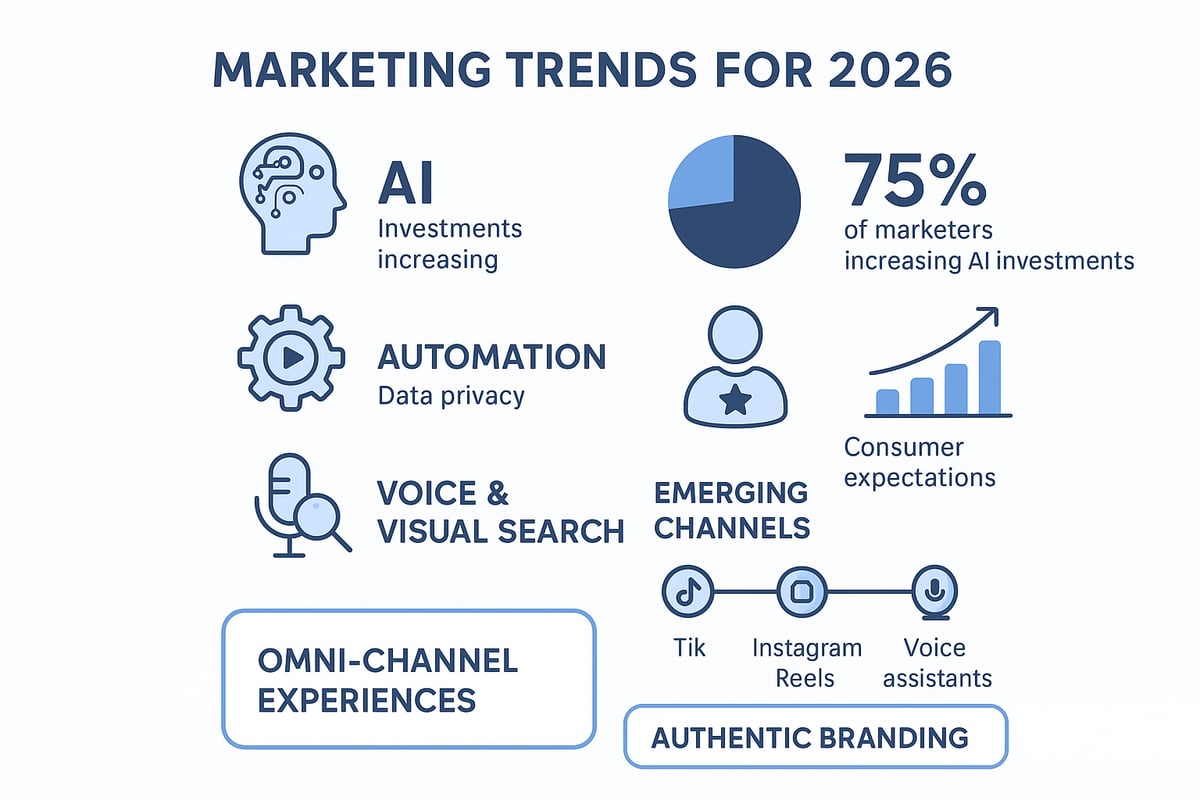
Key Trends Shaping Marketing in 2026
AI and automation are at the forefront of marketing transformation. Marketers leverage machine learning for campaign management and customer engagement, streamlining processes and improving outcomes. Personalization at scale is now possible, as big data enables brands to deliver tailored experiences across channels.
Privacy and data protection regulations are reshaping how companies collect and use information. New laws require brands to optimize marketing by prioritizing transparency and compliance, building trust with consumers. Voice search, visual search, and conversational interfaces have become mainstream, changing the way audiences interact with brands.
Competition is fierce, and digital noise is at an all-time high. To stand out, innovation is not just an advantage but a necessity. For example, AI-generated content and predictive analytics are helping companies achieve higher ROI and better campaign results. According to recent industry reports, 75% of marketers plan to increase AI investments by 2026.
Here is a summary of the most influential trends and stats:
| Trend | Impact | Stat/Example |
|---|---|---|
| AI & Automation | Efficient targeting, content, engagement | 75% plan AI investment increase |
| Personalization at Scale | Tailored customer experiences | Predictive analytics boost ROI |
| Privacy Regulations | Trust, compliance, new data strategies | GDPR, CCPA influence approaches |
| Voice/Visual/Conversational Interfaces | New engagement channels | Voice search mainstream by 2026 |
| Innovation to Beat Digital Noise | Differentiation, relevance | AI content, creative formats |
For a deeper dive into how AI is redefining marketing strategies, tools, and results, see AI’s Impact on Marketing Strategies.
To optimize marketing effectively, brands must stay agile and ready for these ongoing changes.
Adapting to Consumer Behavior Shifts
Consumer expectations are evolving quickly. People now demand seamless, omni-channel experiences. Whether interacting online or offline, customers expect unified messaging and consistent service. Optimizing marketing for 2026 means meeting audiences where they are, across every platform.
Authenticity and value-driven branding are more important than ever. Consumers want brands to reflect their values and provide real benefits, not just sales pitches. Mobile-first engagement is essential as users rely on smartphones for instant information and micro-moments. Brands that use platforms like TikTok and Instagram Reels for real-time engagement are seeing the best results.
Recent studies show that 68% of consumers expect brands to understand their unique needs and preferences. This expectation drives the need to optimize marketing efforts with advanced analytics and personalized content.
Key strategies to adapt to these shifts include:
- Creating omni-channel campaigns for consistent customer journeys
- Investing in mobile-first design and content
- Leveraging social video and real-time engagement tools
- Using data to personalize messaging and offers
As the landscape continues to evolve, brands that proactively optimize marketing for these consumer shifts will build deeper loyalty and drive sustained growth.
Building a Data-Driven Marketing Foundation
A robust data-driven foundation is the backbone for brands seeking to optimize marketing strategies in 2026. With more data than ever at your fingertips, success hinges on the ability to collect, analyze, and activate insights quickly. Companies that master this approach gain a clear edge, making smarter decisions and adapting faster to market changes.
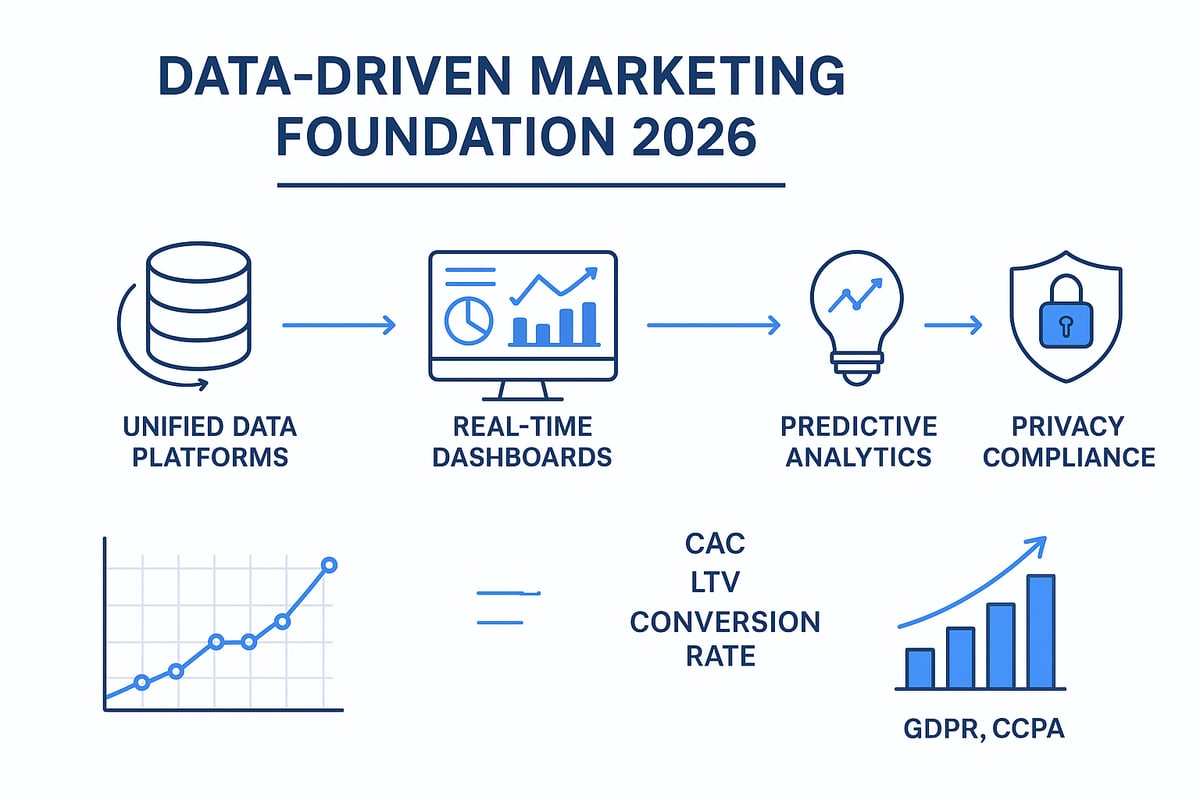
Harnessing Analytics for Smarter Decisions
To optimize marketing, businesses must leverage advanced analytics across all touchpoints. Unified data platforms are essential, integrating information from web, mobile, CRM, and social channels into one accessible hub. Real-time dashboards allow marketers to monitor performance instantly, spot trends, and react to shifting consumer behavior.
Tracking key metrics is fundamental. Focus on:
- Customer Acquisition Cost (CAC)
- Lifetime Value (LTV)
- Conversion rates
- Attribution models
These metrics provide a comprehensive view of which channels and campaigns drive the best results. Predictive analytics takes this further, allowing brands to forecast trends and anticipate customer needs. For example, leading retailers use AI to predict inventory requirements and personalize offers, ensuring they always meet demand.
A recent industry benchmark shows companies using advanced analytics achieve 30 percent faster growth. This underscores the importance of investing in analytics to optimize marketing efforts. For those seeking actionable tactics to build this foundation, explore Digital marketing strategies for growth for practical guidance.
Integrating analytics does not just improve reporting. It empowers teams to make data-backed decisions, refine targeting, and unlock new opportunities to optimize marketing at every stage.
Integrating First-Party Data and Privacy Compliance
As third-party cookies phase out, collecting and leveraging first-party data is now a necessity to optimize marketing. Brands must prioritize direct relationships with their audience, gathering data through website interactions, email signups, and loyalty programs. This approach not only enhances personalization but also builds consumer trust.
Compliance is non-negotiable. Regulations like GDPR, CCPA, and local privacy laws require marketers to handle data responsibly. A strong compliance checklist includes:
- Transparent consent management
- Secure data storage and processing
- Regular audits and updates to privacy policies
Consider how email platforms, inspired by leaders like HubSpot, now use engagement insights to optimize marketing send times for each user, all while honoring privacy preferences. This balance of relevance and respect is crucial.
Data privacy is shaping strategy for the majority. In fact, 80 percent of marketers say privacy concerns impact their ability to optimize marketing. By embedding compliance into your data-driven foundation, you future-proof your efforts and maintain consumer confidence.
Leveraging AI and Automation for Marketing Optimization
Artificial intelligence and automation are redefining how organizations optimize marketing in 2026. As technology advances, marketers are harnessing smarter tools to reach the right audience, personalize messaging, and drive measurable results.
Businesses that embrace AI-driven solutions gain a clear edge. By integrating automation, they streamline workflows, boost productivity, and deliver better customer experiences. Let’s explore how AI and automation help optimize marketing at every level.
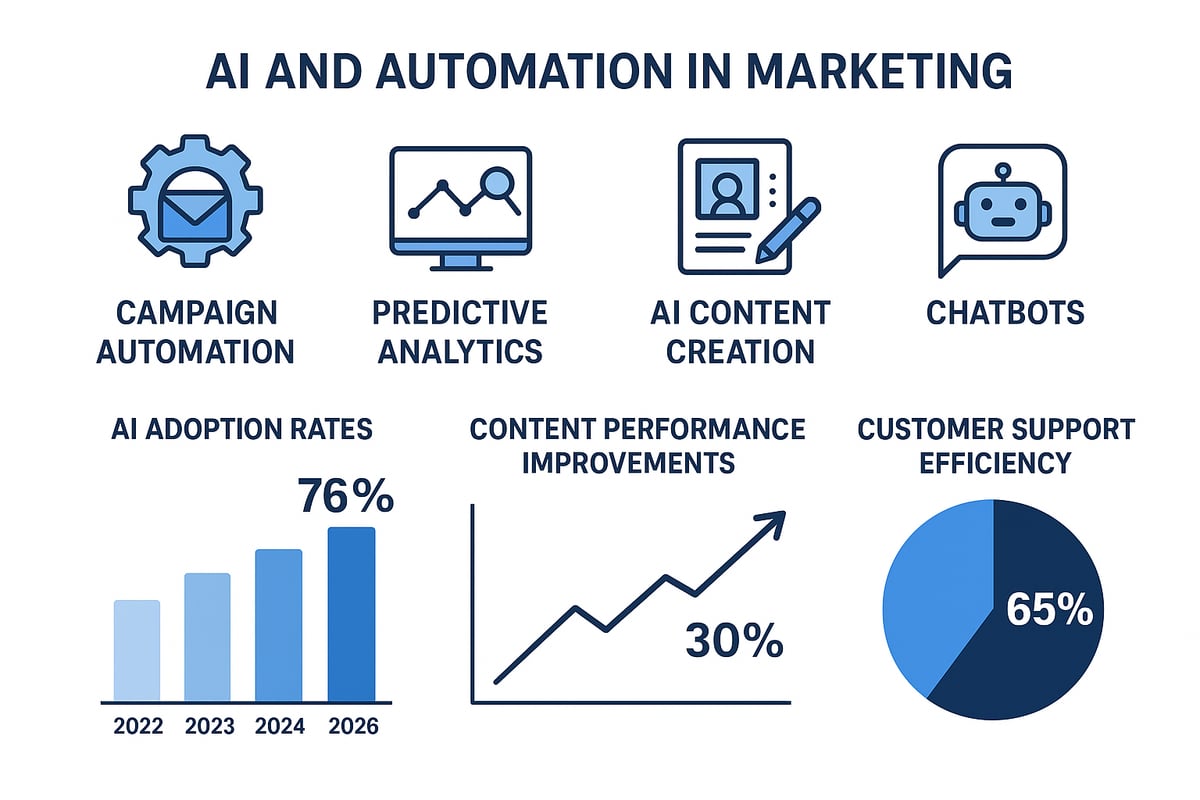
Automating Campaign Management and Personalization
Automation is the backbone for brands aiming to optimize marketing in 2026. AI-powered segmentation enables precise targeting, allowing messages to reach the most receptive audiences. Dynamic content creation adapts offers and visuals in real time, increasing relevance and engagement.
Automated scheduling tools now analyze recipient behaviors and suggest optimal send times for emails and ads. This ensures campaigns land when users are most likely to interact. According to AI’s Role in Marketing Automation, automated campaigns boast 53 percent higher open rates, demonstrating the tangible value of AI integration.
Key benefits include:
- Reduced manual workload for marketing teams
- Consistency in messaging across platforms
- Enhanced ability to scale personalized campaigns
By deploying these tools, marketers can optimize marketing with less effort and more impact.
Predictive Analytics and Customer Journey Mapping
Predictive analytics is transforming how brands optimize marketing strategies. By analyzing large data sets, AI can forecast trends, identify high-value leads, and suggest next best actions for each customer segment.
Customer journey mapping powered by AI provides a holistic view of every touchpoint. Marketers can visualize the entire path from awareness to loyalty, uncovering friction points and opportunities for improvement. For example, predictive lead scoring helps sales teams focus on prospects most likely to convert.
A recent benchmark shows that predictive analytics can increase conversion rates by up to 20 percent. This evidence highlights why organizations that leverage these insights are better positioned to optimize marketing outcomes.
AI-Enhanced Content Creation and Optimization
AI tools now generate blog posts, social content, and ad copy at scale, enabling brands to optimize marketing quickly and efficiently. These platforms analyze audience preferences, rewrite headlines, and suggest creative variations to boost engagement.
Continuous A B testing is streamlined through automation. Marketers can easily compare different content versions and quickly identify what resonates. Real time performance analysis ensures that underperforming assets are improved or replaced without delay.
Consider these advantages:
- Faster content production cycles
- Improved relevance through data driven insights
- Increased click through and engagement rates
In 2026, 60 percent of marketers use AI for content creation, making it a standard practice to optimize marketing efforts.
AI-Powered Customer Support and Engagement
Customer expectations are higher than ever, so brands must optimize marketing by providing instant, personalized support. AI driven chatbots, voice assistants, and support platforms handle up to 70 percent of customer queries, offering 24 7 availability.
These AI systems deliver tailored responses, resolve issues quickly, and seamlessly escalate complex cases to human agents when needed. For local service businesses, AI voice receptionists manage bookings and inquiries efficiently.
Key benefits include:
- Faster response times
- Consistent support experiences
- Scalability as customer demand grows
By leveraging AI powered engagement, companies can optimize marketing and foster lasting loyalty.
Creating Seamless Omni-Channel Experiences
Delivering a seamless omni-channel experience is essential as customers interact with brands across more platforms than ever. To optimize marketing for 2026, businesses need to unify their messaging and create a consistent journey from digital to physical touchpoints. This approach not only enhances brand perception but also drives higher customer retention and loyalty.
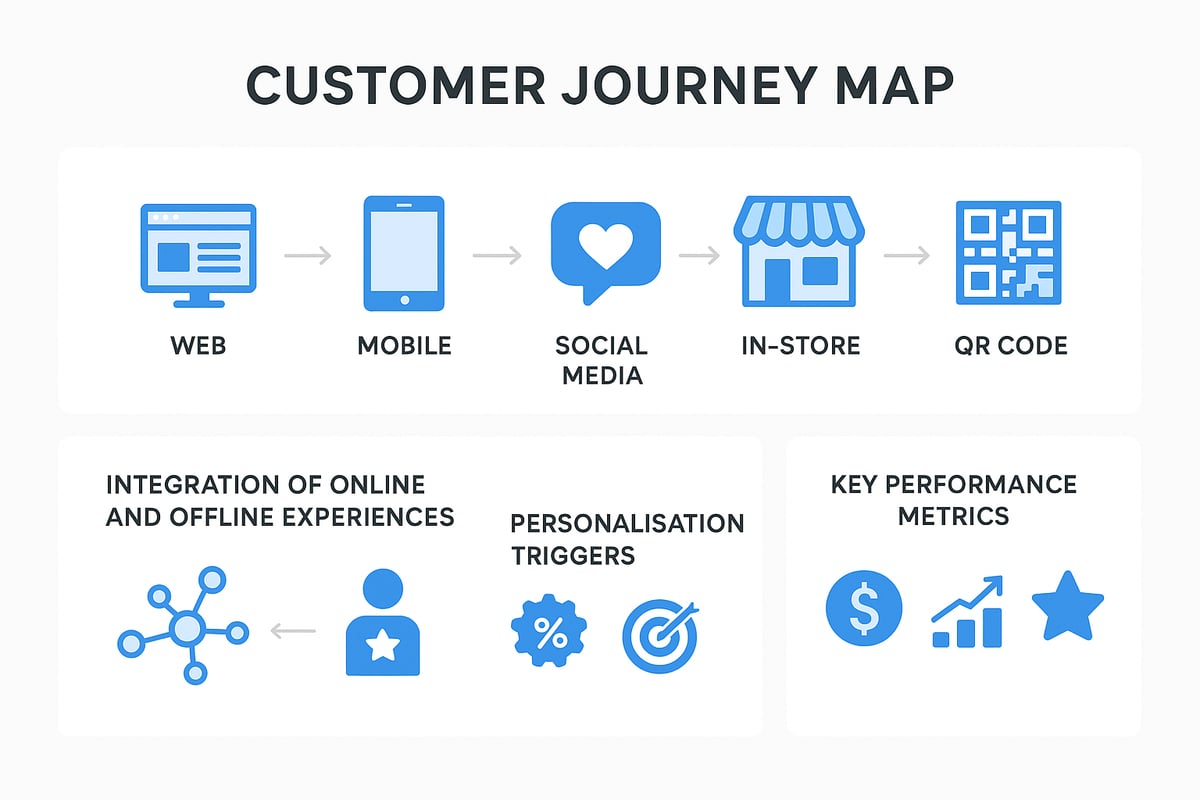
Integrating Online and Offline Touchpoints
A successful omni-channel strategy begins with integrating every customer touchpoint. This means ensuring your website, social channels, mobile apps, and physical locations all deliver consistent messaging and branding. By aligning these elements, you create a unified brand experience that resonates at every interaction.
Retailers, for instance, increasingly use QR codes in stores to connect physical and digital engagement. Customers can scan a code to access exclusive offers, product information, or even make purchases directly from their phones. These efforts help optimize marketing by closing the gap between online discovery and in-person action.
Consistency extends to digital presence as well. Brands that optimize their website for better SEO and user experience set the foundation for seamless omni-channel journeys. Unified messaging across all platforms ensures that customers receive the same value proposition, reinforcing trust and increasing conversion rates.
According to recent studies, omni-channel strategies can boost retention rates by up to 89 percent. This demonstrates the significant impact of integrated touchpoints on long-term business growth.
Personalization Across Channels
Personalization is crucial when you optimize marketing for omni-channel success. Customers expect brands to deliver relevant content and offers at every stage of their journey. Leveraging data enables you to tailor messages based on preferences, behaviors, and real-time triggers.
For example, brands can use location data to send real-time SMS offers when customers are near a store. Social media ads can be dynamically adjusted based on recent website activity, while email campaigns can be personalized with product recommendations.
Best practices for omni-channel personalization include:
- Segmenting audiences by behavior and engagement
- Using predictive analytics to anticipate needs
- Coordinating campaigns across multiple platforms
Personalized omni-channel campaigns are proven to drive three times higher engagement than single-channel efforts. By focusing on relevance and timing, you ensure every touchpoint adds value, making it easier to optimize marketing outcomes.
Measuring and Optimizing Omni-Channel Performance
To truly optimize marketing, brands must track and measure performance across all channels. This involves mapping the entire customer journey and using attribution models to understand which touchpoints drive the most impact.
Multi-touch attribution is especially important for complex B2B sales, where customers interact with multiple channels before making a decision. By analyzing these journeys, marketers can allocate resources more effectively and refine their strategies for better results.
However, 58 percent of marketers report challenges in measuring omni-channel ROI. Overcoming this requires investment in unified analytics platforms and a commitment to continuous testing and improvement.
Ultimately, the key to omni-channel success lies in ongoing optimization. By tracking performance, learning from data, and adapting strategies, businesses can stay ahead and deliver exceptional experiences at every stage.
Optimizing Content and Messaging for 2026 Audiences
Staying relevant in 2026 requires brands to continually optimize marketing strategies, especially when it comes to content and messaging. As audience preferences evolve, only those who adapt and deliver value-driven communications will capture attention and foster loyalty.
Crafting Compelling, Value-Driven Content
To optimize marketing in 2026, brands must focus on content that educates, entertains, and solves real problems. Audiences are drawn to messaging that feels authentic and meaningful, not just promotional.
Incorporate a mix of content types to engage diverse audiences:
- Educational blog posts and how-to guides
- Entertaining short videos
- Solution-focused product demos
- User-generated content, such as reviews and testimonials
Authentic storytelling is essential. Brands that partner with micro-influencers often achieve higher engagement, as these creators bring credibility and a personal touch to campaigns. According to recent studies, 82% of consumers trust content from people they know, highlighting the importance of leveraging real voices and experiences.
Consistently delivering value-driven content helps optimize marketing impact by building trust and long-term relationships. This approach transforms passive viewers into active brand advocates.
Adapting Content Formats for Emerging Platforms
The digital landscape in 2026 is shaped by rapid innovation in content formats and distribution channels. To optimize marketing efforts, brands must embrace new technologies and platforms, meeting audiences where they are.
Short-form video dominates platforms like TikTok and Instagram Reels, while interactive content and AR/VR experiences offer immersive engagement. Voice-optimized content, such as Alexa Skills or Google Actions, is increasingly important as 50% of households use voice search daily.
Generative AI is revolutionizing how brands create video ads, enabling faster production and greater customization. In fact, nearly 90 percent of advertisers will use generative AI to build video ads, according to Generative AI in Video Advertising. Embracing these formats allows brands to optimize marketing by staying relevant and maximizing reach across emerging touchpoints.
Timing and Frequency Optimization
Delivering the right message at the right time is crucial to optimize marketing performance. Advanced analytics and AI tools now determine the best posting and sending times for every contact, ensuring content reaches audiences when they are most receptive.
To avoid fatigue, use frequency capping and segmentation. This approach tailors the number of messages each audience segment receives, improving engagement and reducing unsubscribes. For example, leading email platforms automatically optimize send times based on user behavior, resulting in open rate increases of up to 30 percent.
Consistent measurement and adjustment of timing strategies are key. Brands that monitor and refine their schedules can optimize marketing outcomes, ensuring communications remain fresh and impactful.
Future-Proofing Your Marketing Strategy: Trends and Tactics for 2026
To truly optimize marketing for 2026, businesses must look ahead and embrace change before it arrives. The future of marketing is defined by rapid technological evolution, shifting consumer expectations, and the relentless demand for measurable results. Staying ahead is not just about adopting new tools, but also about building a strategy that can adapt and scale as the landscape transforms.
Preparing for New Technologies and Channels
The pace of innovation in marketing is accelerating, making agility a core requirement to optimize marketing efforts. Brands should actively monitor emerging technologies like Web3, blockchain, and the metaverse. Early adoption provides a competitive edge, allowing businesses to test new ad formats and explore untapped audiences.
For instance, 40% of brands plan to experiment with metaverse marketing, showing the appetite for innovation. Staying current with industry trends is essential, and leveraging resources such as the AI Marketing Adoption Rates by Industry helps marketers understand where their sector is heading.
Key strategies include:
- Participating in pilot programs for new platforms
- Attending industry conferences focused on future tech
- Allocating budget for testing emerging channels
This proactive approach ensures brands can optimize marketing as new opportunities arise.
Building Resilient, Scalable Marketing Systems
Scalability and resilience are foundational to optimize marketing in a volatile environment. Invest in flexible tech stacks that can integrate with automation tools and adapt as needs change. Cross-functional teams trained in continuous learning can deploy campaigns faster and adapt to unexpected challenges.
Agile marketing teams can launch campaigns twice as fast by breaking silos and fostering collaboration. Consider referencing guides like the Search engine marketing strategies guide for actionable steps on optimizing core channels and building robust systems.
Core elements of a scalable marketing system:
- Modular technology platforms that support new integrations
- Automated workflows for campaign management
- Ongoing team training and upskilling
These practices equip organizations to optimize marketing across all touchpoints, regardless of future disruptions.
Measuring Long-Term Success and ROI
To future-proof your strategy, shift focus from vanity metrics to outcomes that truly optimize marketing performance. Use frameworks like OKRs (Objectives and Key Results) to directly connect marketing efforts to business goals. Continuous testing, learning, and iteration ensure ongoing improvement and alignment with evolving objectives.
Today, 67% of CMOs prioritize ROI measurement, recognizing its importance for sustainable growth. Adopt advanced attribution models and analytics dashboards to track multi-channel impact and long-term value.
Best practices for measuring success:
- Set clear, quantifiable objectives aligned with business outcomes
- Implement multi-touch attribution to understand the full customer journey
- Regularly review and refine KPIs based on real results
By embedding measurement and adaptability into your approach, you can optimize marketing to meet both today’s needs and tomorrow’s challenges.
Jean runs growth strategy at AimSetWin, a performance marketing agency specializing in local service businesses across Texas. he's helped plumbers, HVAC companies, pest control operators, and home service brands build predictable revenue systems using data-driven advertising and conversion optimization.


