
Unlock expert insights on pay per click marketing services for 2026 with this essential guide covering strategies platforms trends and tips to maximize your ROI
In today’s fast-changing digital world, pay per click marketing services are evolving faster than ever, shaping how businesses attract and convert leads as we approach 2026.
Businesses now demand marketing solutions that provide rapid, measurable, and scalable results. Pay per click marketing services deliver immediate visibility and high ROI, making them vital for everyone from local service providers to national brands.
This guide is your essential resource for mastering pay per click marketing services in 2026. Inside, you’ll uncover the latest trends, actionable strategies, and expert insights to maximize your PPC investment.
Explore PPC fundamentals, platform choices, campaign setup, optimization, advanced trends, and tips for selecting the best partner for your business success.
Understanding Pay Per Click Marketing in 2026
Pay per click marketing services are transforming how businesses capture attention and drive results in 2026. As digital competition intensifies, understanding the mechanics, benefits, and evolving landscape of PPC is crucial for any growth-focused organization. Let’s explore what defines PPC today and why it remains a cornerstone of digital marketing success.

What is PPC and Why Does It Matter?
Pay per click marketing services operate on a simple yet powerful principle: you only pay when someone clicks your ad. This model delivers immediate visibility on major search engines and social platforms, making it a go-to solution for businesses needing fast, targeted traffic.
Unlike organic strategies such as SEO, PPC gives brands control over their message placement and audience targeting. This means you can appear at the top of search results or in users’ feeds within hours, not months.
Recent data shows that businesses using PPC experience up to 500% more impressions and 190% higher engagement rates compared to non-PPC channels. For example, a local HVAC company can launch a PPC campaign and start generating leads the same day, giving them a competitive edge.
As more industries embrace pay per click marketing services, the approach is proving essential for both immediate wins and sustained business growth. Whether you’re a startup or an established brand, PPC offers the agility and scale needed to thrive in today’s market.
Key Benefits of PPC for Businesses
The advantages of pay per click marketing services go beyond quick results. Here are some key benefits:
- Fast Results: Launch campaigns and see traffic or leads in real time.
- High ROI: Only pay for actual clicks, making every dollar count.
- Detailed Targeting: Reach specific demographics, locations, and interests.
- Measurable Outcomes: Track every click, conversion, and cost.
- Budget Flexibility: Scale spend up or down as needed.
Transparency is a major strength, with monthly reporting and analytics providing clear insights into campaign performance. According to recent case studies, PPC can boost ad conversions by 156% and increase loan volume by 40% for financial businesses.
Consider a plumbing company using local PPC ads. By targeting nearby homeowners searching for urgent repairs, they can fill their schedule with booked jobs during peak seasons. For more on industry-specific tactics, see 7 Proven PPC Strategies to Generate High-Quality Plumbing Leads.
PPC’s adaptability lets businesses respond to seasonality and real-world events instantly. It also works alongside other channels like SEO and social media, enhancing overall marketing performance. Whether you’re B2B or B2C, pay per click marketing services scale from small businesses to large enterprises, making them a versatile choice for any growth stage.
The PPC Ecosystem: Platforms and Ad Types
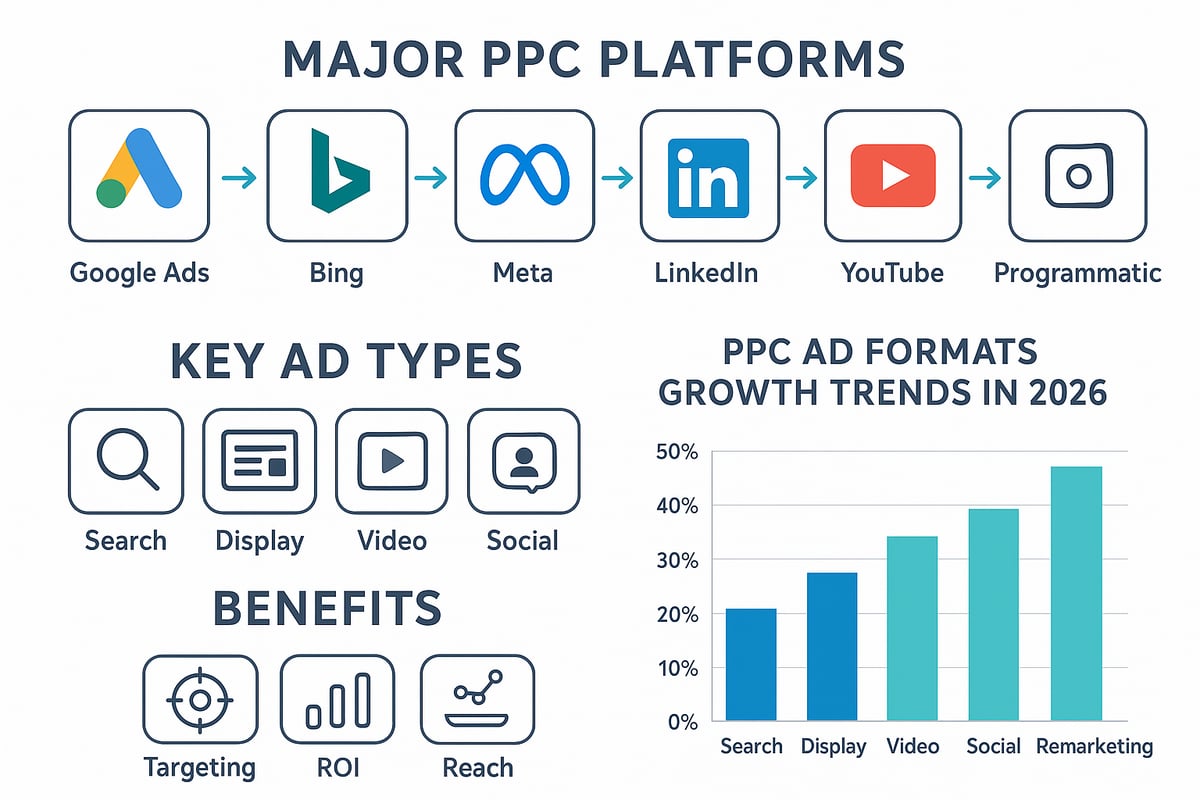
The landscape of pay per click marketing services in 2026 is broader than ever. Major platforms include:
| Platform | Ad Types | Best For |
|---|---|---|
| Google Ads | Search, Display, Shopping, Video | High-intent leads, broad reach |
| Bing Ads | Search, Display | Niche audiences, lower cost |
| Meta (Facebook/Instagram) | Social, Remarketing | Audience targeting, brand awareness |
| Sponsored Content, InMail | B2B, professional targeting | |
| YouTube | Video | Engagement, storytelling |
| Programmatic | Display, Video, Native | Automated, data-driven buying |
Each platform serves unique goals. For instance, Google Search Ads excel at capturing high-intent queries, while Facebook and Instagram specialize in granular audience targeting. Remarketing ads help recapture visitors who didn’t convert the first time.
In 2026, ad formats are evolving with more video, interactive, and AI-driven options. Cross-platform strategies are now essential, as leading agencies like ACS and Thrive leverage multiple channels for maximum reach and impact.
Expertise in these platforms is critical for optimizing pay per click marketing services and unlocking their full potential.
Common PPC Myths and Misconceptions
Despite its proven track record, several myths persist around pay per click marketing services:
- “PPC is too expensive.” With proper management, PPC can be highly cost-effective.
- “It’s only for big brands.” Small businesses often see some of the highest ROI.
- “Set-and-forget works.” Ongoing optimization is essential for sustained results.
Daily monitoring and continuous improvement, as practiced by leading agencies, prevent wasted spend and maximize returns. For example, a local retailer with a modest PPC budget can outperform larger competitors by refining targeting and creative.
AI and automation are now reducing manual errors, making PPC more accessible and efficient for all business sizes. However, expert oversight remains key to avoiding costly mistakes and ensuring that pay per click marketing services deliver measurable value.
Choosing the Right PPC Platforms and Ad Types
Selecting the optimal platforms and ad types is a crucial step in maximizing the effectiveness of your pay per click marketing services. The digital advertising landscape in 2026 is more diverse than ever, offering businesses a wide array of channels and strategies to reach high-intent audiences.
Google Ads: The Cornerstone of PPC
Google Ads remains the foundational element for most pay per click marketing services. Its unmatched reach, variety of ad formats, and robust targeting options make it indispensable for businesses aiming to attract quality leads.
You can choose from search, display, shopping, and video ads, each tailored for different business goals. Certified Google Ads experts, like those at ACS and Thrive, leverage advanced targeting by keyword, location, device, and time, ensuring campaigns reach the right audience.
For example, ACS achieved an impressive 88 percent month-over-month lead growth by optimizing Google Ads campaigns for a service business. Google’s ongoing innovation, including AI-powered bidding and automation, enables advertisers to stay ahead of the competition.
To maximize results, regularly review keyword performance, adjust bids based on peak times, and test new ad features. For more on the latest trends shaping these platforms, see PPC statistics and trends for 2025.
Expanding Reach with Bing, YouTube, and Programmatic
While Google Ads is essential, diversifying your pay per click marketing services with additional platforms can unlock new opportunities. Bing Ads offers access to unique demographics and often delivers lower cost-per-clicks, making it a savvy choice for niche industries and budget-conscious campaigns.
YouTube Ads harness the power of video to drive brand awareness and engagement, especially for businesses looking to tell their story visually. Programmatic advertising automates media buying, using data-driven insights to place ads across a wide range of websites and apps.
Thrive’s use of programmatic and YouTube Ads demonstrates how combining automation with creative assets can boost campaign reach. Integrating Bing, YouTube, and programmatic channels ensures your business is visible wherever your audience spends time online, supporting a diversified PPC approach.
Social Media PPC: Facebook, Instagram, and LinkedIn
Social platforms are a vital part of pay per click marketing services, offering powerful targeting and creative ad formats. Facebook and Instagram Ads excel in reaching audiences based on interests, demographics, and behaviors, while the Facebook Audience Network expands your reach beyond the core platforms.
ACS’s approach leverages employer, interest, and location-based targeting to connect with highly qualified prospects. LinkedIn Ads are particularly effective for B2B lead generation, enabling you to reach decision-makers by job title, industry, or company size.
| Platform | Best For | Unique Feature |
|---|---|---|
| B2C, local, broad | Detailed audience data | |
| Visual, millennial | Story & carousel formats | |
| B2B, professionals | Job/industry targeting |
Creative formats like carousel, video, and instant lead forms keep users engaged and encourage direct action. Statistics show that 56 percent of online adults use multiple social platforms, reinforcing the value of integrated campaigns.
Combining social PPC with search advertising creates a full-funnel strategy, capturing both awareness and high-intent conversions. This blend is what makes pay per click marketing services adaptable and effective for diverse business models.
Remarketing and Display Ads: Recapturing Lost Leads
Remarketing is a core tactic in pay per click marketing services, enabling you to re-engage users who previously visited your website. Display ads, which appear across a network of partner sites, help build brand awareness and keep your business top-of-mind.
ACS reports that remarketing can increase ad responses by up to 400 percent. For example, a business can show tailored ads to past visitors, encouraging them to return and complete a purchase or inquiry.
Best practices include segmenting audiences based on behavior, using dynamic creative, and ensuring your ads are visually consistent with your brand. Always-on remarketing supports ongoing conversion rate optimization and ensures you never miss an opportunity to win back interested prospects.
Emerging PPC Channels and Innovations for 2026
The landscape for pay per click marketing services is rapidly evolving. New channels and ad formats, such as AI-driven targeting, voice search ads, and interactive experiences, are gaining momentum in 2026.
Privacy-first solutions are becoming standard, with platforms adopting features that prioritize user consent and data security. Staying informed about these innovations ensures your campaigns remain competitive and compliant.
To maintain a leading edge, regularly evaluate new PPC technologies and be ready to test emerging strategies that align with your business goals.
Setting Up and Managing High-Performance PPC Campaigns
Launching and managing high-performance pay per click marketing services requires a structured, data-driven approach. Each phase builds on the last, ensuring campaigns deliver measurable results and continuous growth. Here is a step-by-step guide to setting up and optimizing your PPC campaigns for maximum ROI.
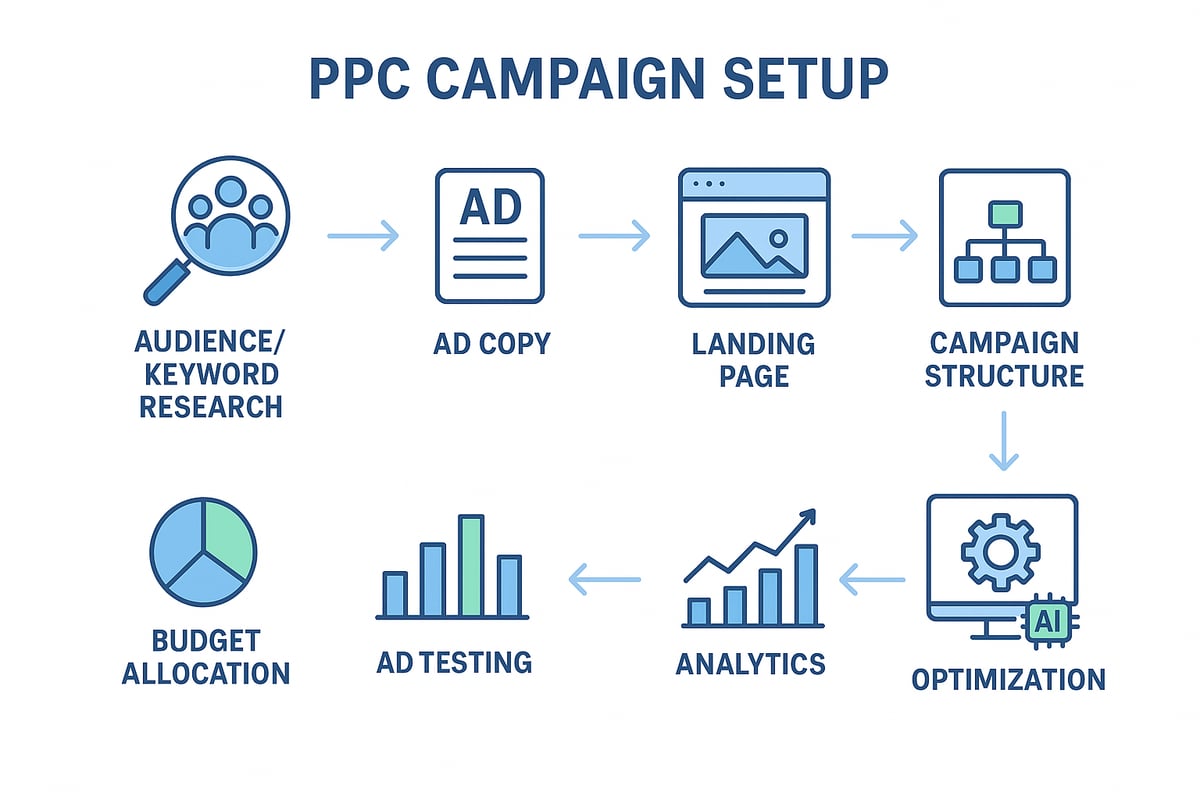
Step 1: Audience and Keyword Research
Identifying the right audience and keywords is the foundation of every successful pay per click marketing services strategy. Start by defining your ideal customer profiles, considering demographics, interests, and buying intent.
Use advanced keyword research tools to find high-value search terms and analyze competitor strategies. Negative keywords are essential for filtering out irrelevant traffic, reducing wasted spend, and boosting campaign efficiency.
For local service businesses, targeting keywords like “emergency AC repair near me” or “best local plumber” can drive high-intent leads. Ongoing research keeps you ahead as trends shift.
For HVAC businesses, actionable campaign research is critical. Explore 8 HVAC PPC Tips for Dominating the Online Market for industry-specific strategies that can be adapted to other local services.
Step 2: Crafting Compelling Ad Copy and Creative
Effective ad copy is vital for grabbing attention and driving clicks in pay per click marketing services. Focus on clear value propositions and strong calls to action, such as “Book Now” or “Get a Free Quote.”
Professional design elements and relevant visuals enhance display campaigns, while concise, benefit-driven language works best for search ads. Use ad extensions like callouts, sitelinks, and structured snippets to provide more information and improve visibility.
A/B testing headlines and images helps identify what resonates with your audience. Refresh creative regularly to prevent ad fatigue and ensure compliance with platform policies.
Step 3: Landing Page Optimization for Conversions
A dedicated landing page tailored to each campaign is crucial for converting clicks into leads with pay per click marketing services. Prioritize fast load times, mobile responsiveness, and clear, simple forms to maximize conversions.
Message match between ad copy and landing page content boosts trust and relevance. Use strong headlines, benefit-focused copy, and visible calls to action.
Track all user actions—calls, forms, chats—using analytics and pixels. Regularly A/B test elements like headlines, images, and form layouts to identify what drives the best results. Conversion rate optimization should be a continuous process.
Step 4: Campaign Structure, Budgets, and Bidding Strategies
Organizing your campaigns and ad groups properly gives you better control and insight into pay per click marketing services performance. Segment by product, service, or location for precise management.
Allocate budgets based on your business goals, adjusting for seasonality and local demand. Use a mix of manual and automated bidding strategies, such as target CPA or ROAS, to optimize spend.
Exclude irrelevant placements and use negative keywords to avoid wasted impressions. Daily monitoring and flexible budget reviews ensure your campaigns remain cost-efficient and competitive.
| Bidding Strategy | Best Use Case | Automation Level |
|---|---|---|
| Manual CPC | Niche, low-volume | Low |
| Target CPA | Lead generation | High |
| Maximize Clicks | Traffic growth | Medium |
Step 5: Tracking, Reporting, and Analytics
Robust tracking and transparent reporting are essential for measuring ROI in pay per click marketing services. Set up conversion tracking for every important action, from form fills to phone calls.
Leverage tools like Google Analytics, platform dashboards, and call tracking to attribute results accurately. Create custom dashboards to visualize performance by channel, campaign, and audience segment.
Monthly reporting keeps stakeholders informed and highlights areas for improvement. Track micro-conversions alongside primary goals for a complete view of campaign health. Use data to identify underperforming segments and reallocate budget for better results.
Step 6: Ongoing Optimization and Scaling
Continuous optimization is key to long-term success with pay per click marketing services. Regularly adjust bids, refine keywords, and rotate ad creative to maintain high performance.
Scale successful campaigns by expanding your keyword list, increasing budgets, or adding new platforms. For seasonal businesses, ramp up spend during peak months and scale back when needed.
Automation tools can handle routine adjustments, but human oversight ensures strategy remains aligned with business goals. Frequent reviews of performance data enable proactive adaptation to platform changes and evolving market trends.
Ongoing optimization transforms PPC from a simple ad buy into a powerful engine for business growth.
Advanced Trends and Technologies in PPC for 2026
The landscape of pay per click marketing services is evolving rapidly as we enter 2026. Businesses must stay ahead by understanding the latest trends, leveraging new technologies, and adapting to regulatory changes. Below, we explore the most critical advancements shaping the future of PPC.
AI and Automation in PPC Management
Artificial intelligence is transforming pay per click marketing services by automating complex tasks and enhancing campaign performance. AI-driven tools now handle bid management, audience segmentation, and even generate ad copy. This reduces manual effort while improving accuracy and speed.
For example, platforms leverage machine learning to optimize bids in real time, ensuring each dollar is spent efficiently. Human oversight remains essential to guide creative direction and strategy. According to AI and automation in PPC, combining automation with expert input delivers the best results.
Staying competitive in 2026 means adopting automation while continually training teams to use these evolving tools.
Privacy, Data, and the Evolving PPC Landscape
Privacy regulations like GDPR and CCPA are reshaping pay per click marketing services. Marketers must shift toward first-party data, gaining consent directly from users and relying less on third-party cookies. This change impacts targeting options and requires new strategies for audience building.
Many businesses now use CRM data and contextual targeting to maintain relevance. The importance of ethical data practices and compliance cannot be overstated. As noted in Emerging PPC trends for 2026, privacy-first approaches are a growing priority.
Adapting to these changes is vital for maintaining trust and effectiveness in PPC campaigns.
Video, Voice, and Interactive PPC Ads
The rise of multimedia is revolutionizing pay per click marketing services. Video ads, especially on platforms like YouTube and Meta, capture attention and drive engagement. Interactive formats, such as quizzes or shoppable videos, encourage deeper user participation.
Voice search advertising is also emerging as more consumers use smart speakers and voice assistants. Mobile-first video and interactive ads are now essential for reaching modern audiences. These formats can boost conversion rates and brand recall.
However, measuring success across different media types requires advanced analytics and new attribution models to track performance accurately.
Integrating PPC with Omnichannel Marketing
Pay per click marketing services now play a central role in holistic digital strategies. Integrating PPC with SEO, conversion rate optimization, and social media creates a seamless customer journey. Shared data and unified reporting help align messaging across all touchpoints.
For example, remarketing can bring back organic visitors, while PPC amplifies high-performing content. Automation tools enable cross-channel orchestration and real-time adjustments. Consistent branding and audience insights ensure campaigns work together, not in isolation.
This integrated approach maximizes ROI and delivers measurable results across the entire marketing funnel.
Measuring Success: KPIs and Benchmarking in 2026
Tracking the right metrics is essential for optimizing pay per click marketing services. Key performance indicators (KPIs) include click-through rate (CTR), cost per click (CPC), cost per acquisition (CPA), return on ad spend (ROAS), and impression share.
Here’s a table summarizing essential KPIs:
| Metric | Purpose |
|---|---|
| CTR | Measures ad relevance |
| CPC | Controls budget efficiency |
| CPA | Tracks cost per conversion |
| ROAS | Assesses profitability |
| Impr. Share | Gauges market coverage |
Regular benchmarking and cohort analysis help refine goals. Using AI-powered analytics, businesses can predict trends and adjust strategies for continued growth in 2026.
How to Choose the Right PPC Marketing Partner
Choosing the right partner for your pay per click marketing services can make the difference between wasted spend and sustainable growth. The right agency brings expertise, transparency, and proven strategies to the table, ensuring your campaigns deliver measurable results. Let us explore what to look for, questions to ask, and common pitfalls to avoid when selecting your PPC partner.
Qualities to Look for in a PPC Agency
When evaluating providers of pay per click marketing services, prioritize agencies with recognized platform certifications like Google and Meta. Certified specialists demonstrate up-to-date knowledge and a commitment to best practices. Look for transparency, clear communication, and a track record of ongoing optimization.
Agencies should offer monthly reporting, regular strategy sessions, and showcase industry experience—especially in sectors like local services, eCommerce, or B2B. Consider those who provide holistic digital marketing, not just PPC. Client testimonials and case studies are essential for verifying results.
For a deeper dive into holistic approaches, review the Search Engine Marketing Strategies: A Complete Guide, which complements your understanding of pay per click marketing services.
Questions to Ask Before You Hire
Before you commit to any pay per click marketing services, ask critical questions. How does the agency measure success? Which platforms do they manage? What does their reporting process look like?
Request sample reports or campaign audits to evaluate transparency. Understand contract terms, management fees, and the level of ongoing support. Watch for red flags, such as vague answers or agencies that avoid sharing performance data.
Choose an agency that tailors strategies to your business goals and provides clear onboarding. Consistent communication and regular updates should be non-negotiable for any successful partnership.
Comparing DIY vs. Professional PPC Management
Managing pay per click marketing services in-house can seem cost-effective, but the complexity of modern platforms often leads to missed opportunities and wasted budget. DIY management requires significant time, expertise, and constant learning.
Professional agencies bring advanced tools, creative resources, and technical know-how. They optimize campaigns, enhance landing pages, and stay ahead of trends, as highlighted in PPC trends affecting B2B paid media.
Consider a hybrid model if you want some control with expert guidance. Ultimately, professional management is ideal for businesses seeking to scale and get the most from their pay per click marketing services.
Aim Set Win: PPC Solutions for Local Service Businesses
Aim Set Win specializes in pay per click marketing services for local service businesses, including HVAC, plumbing, and home detailing. Their offerings feature AI-enhanced PPC, Google and Meta Ads management, conversion-focused websites, and a 24/7 AI voice receptionist.
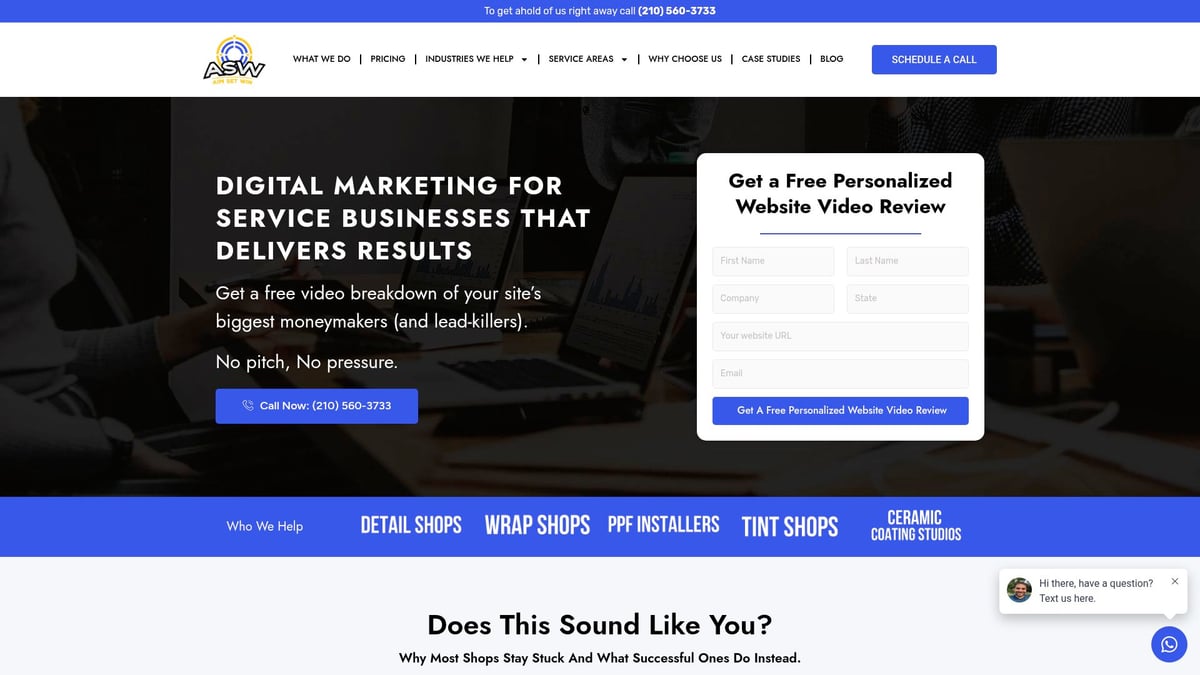
By focusing on local PPC targeting and reducing wasted spend, Aim Set Win ensures you get more high-quality leads and booked jobs. Their expertise in pay per click marketing services helps clients dominate local rankings and increase call volume.
Transparent reporting and a commitment to ROI make Aim Set Win a top choice for service providers wanting to turn marketing into a revenue driver.
Red Flags and Mistakes to Avoid When Selecting a PPC Partner
Selecting the wrong provider for pay per click marketing services can have costly consequences. Avoid choosing agencies solely based on price or those lacking experience. Insist on a proven process, regular reporting, and direct communication.
Beware of agencies that outsource campaign management or use black-box tactics. Cookie-cutter strategies rarely deliver optimal results. Always vet your partner thoroughly and prioritize those who offer ongoing optimization.
A strong PPC partner should focus on long-term growth, not just short-term wins. Regular reviews and proactive communication are the hallmarks of a relationship that will help you succeed with your pay per click marketing services.
Jean runs growth strategy at AimSetWin, a performance marketing agency specializing in local service businesses across Texas. he's helped plumbers, HVAC companies, pest control operators, and home service brands build predictable revenue systems using data-driven advertising and conversion optimization.


