
Learn how performance marketing campaigns deliver measurable results for home service businesses. Proven strategies to maximize ROI and leads.
Performance marketing campaigns have completely changed how home service businesses spend their advertising dollars. Unlike traditional marketing where you pay upfront and hope for results, you’re only investing in actions that matter to your bottom line. For plumbers, HVAC contractors, electricians, and roofers in Texas, this means every dollar spent directly connects to phone calls, form fills, and booked jobs. If you’re tired of throwing money at marketing without knowing what’s working, it’s time to understand how performance based campaigns can transform your lead generation. Ready to learn how to build campaigns that actually pay for themselves? Let’s get into it.
What Makes Performance Marketing Different From Traditional Advertising
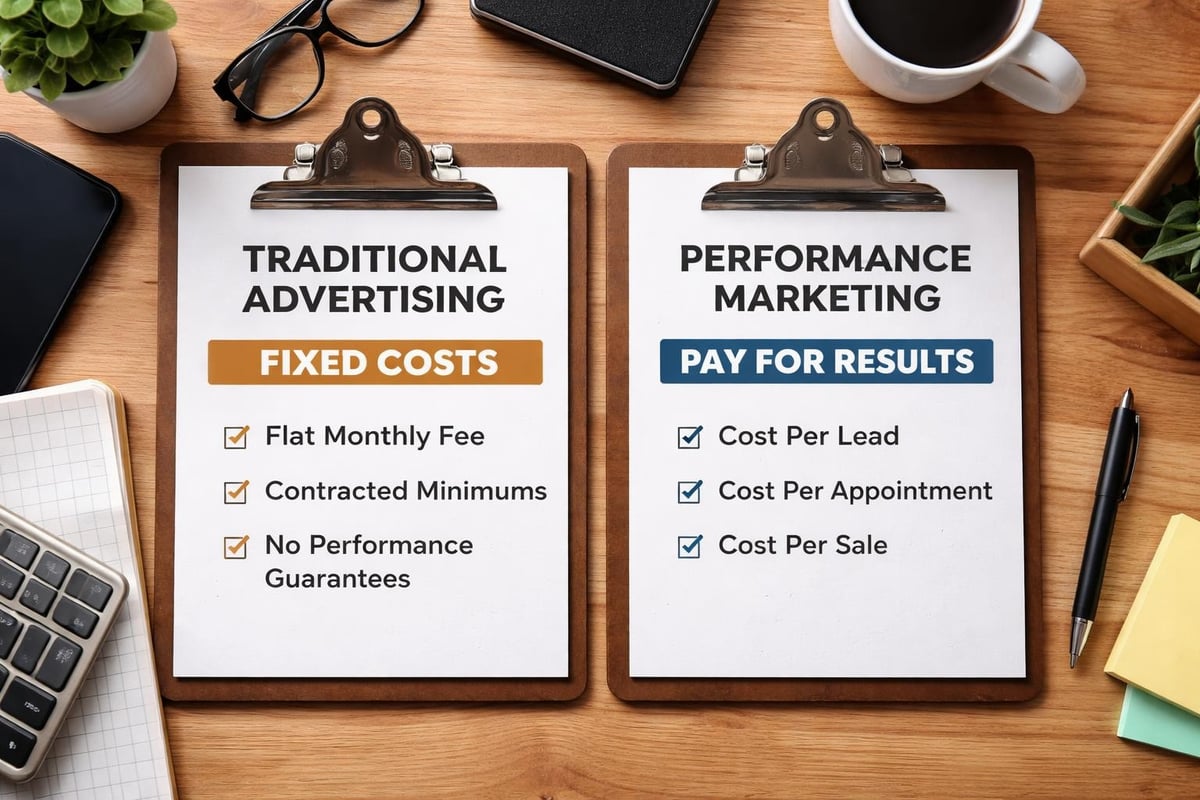
Traditional marketing asks you to pay for exposure.
Performance marketing campaigns make you pay only for results.
Think about the difference between a billboard and a pay per click ad. That billboard costs you the same whether one person calls or a hundred people call. A performance campaign charges you based on clicks, calls, or conversions.
Here’s what sets performance marketing apart:
- You track every single action
- You pay for measurable outcomes
- You can optimize in real time
- You know your exact cost per lead
- You scale what works and kill what doesn’t
For home service businesses, this is huge. You’re not guessing whether your marketing works. You’re looking at data that tells you exactly how many calls came from which campaign, what you paid per call, and which keywords or ads generated the most booked jobs.
The beauty of performance marketing is accountability. Every channel, every ad, every keyword gets measured. If your Google Ads campaign for “emergency plumber Houston” costs you $45 per call and generates $3,500 in average job value, you know that’s a winner. If your Facebook ads cost $200 per lead with only 5% booking rate, you know to either fix it or shut it down.
The Core Metrics That Actually Matter
Not all metrics are created equal.
Vanity metrics like impressions and reach make you feel good but don’t pay the bills. Performance marketing campaigns focus on metrics that directly connect to revenue.
| Metric | What It Measures | Why It Matters |
|---|---|---|
| Cost Per Click (CPC) | Price for each ad click | Controls your ad spend efficiency |
| Cost Per Lead (CPL) | Price for each qualified contact | Shows lead generation efficiency |
| Conversion Rate | Percentage who take action | Reveals landing page and offer strength |
| Return On Ad Spend (ROAS) | Revenue per dollar spent | Proves campaign profitability |
| Customer Acquisition Cost (CAC) | Total cost to gain one customer | Determines long term sustainability |
Your HVAC company in Dallas might get 1,000 impressions on a Facebook ad. That’s nice, but meaningless. What matters is the 47 people who clicked, the 12 who called, the 8 who booked appointments, and the 6 who became paying customers worth $4,200 each.
That’s the performance marketing mindset. Every action connects to business results. Understanding these core metrics helps you make smarter decisions about where to invest your marketing budget.
Building Your First Performance Marketing Campaign
Starting a performance campaign isn’t complicated, but it does require planning.
You can’t just throw up some ads and hope for the best. You need a system that tracks results from first click to final payment.
The essential components you need:
- Clear conversion goals (phone calls, form submissions, chat messages)
- Tracking systems (call tracking, analytics, CRM integration)
- Optimized landing pages (mobile friendly, fast loading, clear calls to action)
- Targeted ad campaigns (Google Ads, Facebook, LSA)
- Regular performance reviews (weekly data checks, monthly optimizations)
Let’s say you run a plumbing company in San Antonio. You want more emergency plumbing calls. Your conversion goal is simple: phone calls from people with urgent plumbing issues.
You set up call tracking numbers that show exactly which ads generated which calls. You build a landing page focused entirely on emergency plumbing services with your phone number prominently displayed. You launch Google Ads targeting keywords like “emergency plumber San Antonio” and “24 hour plumber near me.”
Within the first week, you see data. Some keywords cost $30 per click and generate zero calls. Others cost $18 per click and generate three calls per day. You shift budget from the losers to the winners. That’s performance marketing in action.
Choosing The Right Performance Channels
Not every channel works for every business.
Your plumbing company needs different channels than a roofing contractor. The key is testing what works for your specific service area and customer type.
Top performance channels for home service businesses:
- Google Search Ads – High intent customers actively searching for your services
- Google Local Services Ads – Pay per lead with Google guarantee badge
- Facebook & Instagram Ads – Target homeowners by location, age, and interests
- YouTube Ads – Video content for bigger projects like HVAC replacements
- Nextdoor Ads – Hyper local targeting for neighborhood based services
Google Search Ads typically deliver the highest intent traffic. Someone searching “furnace repair Austin TX” right now needs help right now. That’s hot traffic worth paying premium prices for.
Facebook ads work better for services people don’t need immediately but will need eventually. HVAC maintenance plans, gutter cleaning, and annual plumbing inspections perform well on social platforms where you can nurture interest over time.
Google’s Performance Max campaigns combine multiple Google channels into one automated campaign, using machine learning to find your best customers across Search, Display, YouTube, and Gmail.
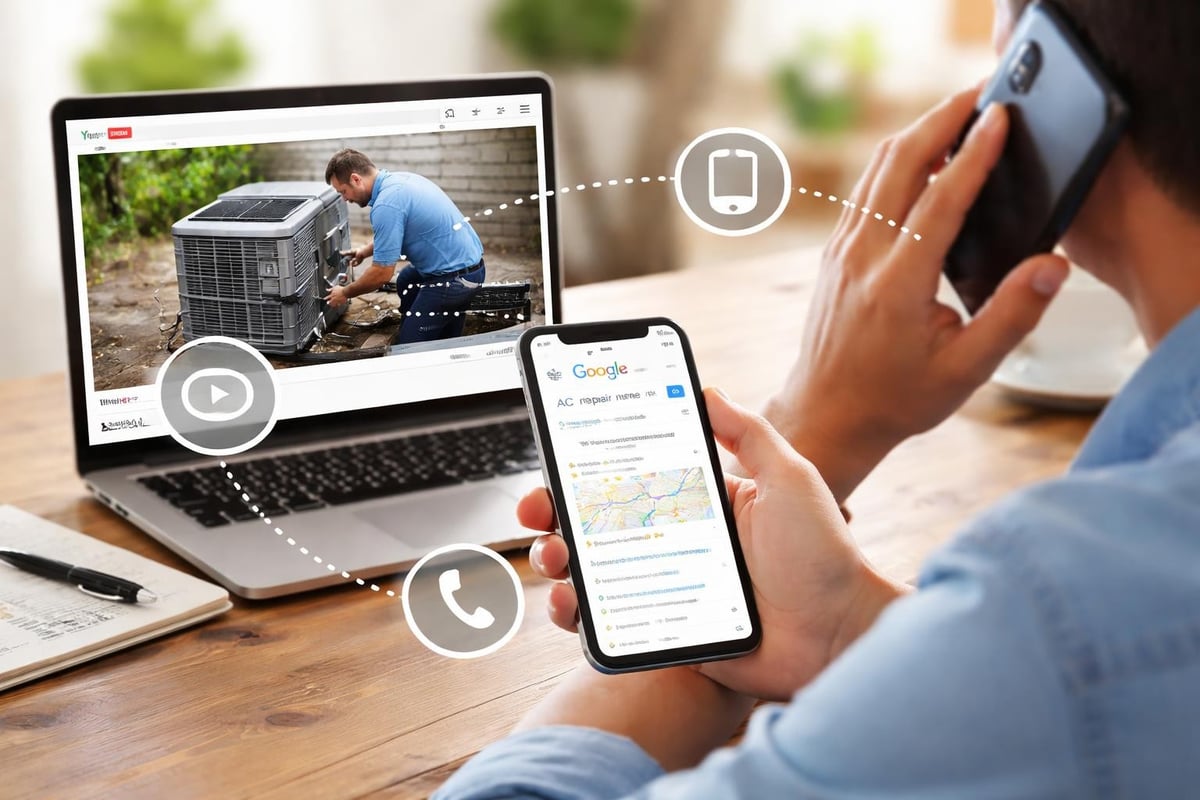
For home service businesses in competitive markets like Houston or Dallas, you need multi channel presence. Your ideal customer might see your YouTube ad on Monday, search for your service on Wednesday, and call you on Friday. Performance tracking lets you connect those dots.
Optimizing For Maximum Performance
Launching campaigns is step one.
Optimization is where you make real money.
Most home service businesses leave 30-50% of potential performance on the table because they set campaigns and forget them. The companies winning with performance marketing campaigns treat optimization as an ongoing process, not a one time task.
The Weekly Optimization Checklist
Performance optimization happens in layers. You’re constantly testing, measuring, and improving.
Week one priorities:
- Review search term reports and add negative keywords
- Check which ad copy generates highest click through rates
- Identify underperforming campaigns or ad groups
- Adjust bids on high converting keywords
- Test new ad variations against current winners
Week two priorities:
- Analyze landing page conversion rates by traffic source
- Review call recordings to identify qualified versus junk leads
- Test new audience segments on social campaigns
- Expand successful keyword themes
- Kill ads or keywords with zero conversions after 50+ clicks
The data tells you what to do. Your “water heater installation” campaign might show 8% conversion rate while “water heater repair” only converts at 2%. You double down on installation and either fix or pause repair.
Your San Antonio HVAC campaigns might perform great on weekday mornings but terrible on weekend evenings. You adjust ad scheduling to show ads when people actually convert. These small optimizations compound into serious performance improvements.
Regular troubleshooting of low performing campaigns prevents wasted spend and keeps your cost per lead competitive.
Landing Page Performance Factors
Your landing page can make or break campaign performance.
A great ad sending traffic to a terrible landing page wastes money. You need pages built specifically for conversion, not just general information.
| Element | Poor Performance | High Performance |
|---|---|---|
| Load Time | 5+ seconds | Under 2 seconds |
| Mobile Experience | Desktop only design | Mobile first, thumb friendly |
| Call To Action | Hidden or unclear | Multiple prominent CTAs |
| Trust Signals | No reviews or credentials | Reviews, licenses, guarantees |
| Form Fields | 10+ required fields | 2-3 essential fields only |
Your HVAC landing page for “AC repair Fort Worth” should focus entirely on AC repair in Fort Worth. Not your full service list. Not your company history. Just AC repair, why customers choose you, and how to book service now.
The best performing landing pages for home service businesses include phone numbers in the header, middle, and footer. They show real customer reviews. They feature response time guarantees. They display license numbers and insurance proof. They make calling or booking absurdly easy.
Testing different landing page versions reveals what your market responds to. Your Houston plumbing audience might convert better with emergency response messaging while your Austin audience responds better to fair pricing guarantees. You won’t know until you test.
Advanced Performance Marketing Strategies
Once you master the basics, advanced strategies multiply your results.
These tactics separate the companies generating 50 leads per month from those generating 500.
Advanced performance techniques:
- Remarketing campaigns that follow website visitors with targeted offers
- Lookalike audiences that find people similar to your best customers
- Sequential messaging that changes ads based on previous interactions
- Conversion value optimization that prioritizes high value customers
- Multi touch attribution that credits all touchpoints in the customer journey
Remarketing is powerful for home services because most people don’t buy on first visit. They research multiple companies. A remarketing campaign keeps your business in front of them with special offers or additional trust signals.
Let’s say someone visits your plumbing services page but doesn’t call. You show them a remarketing ad featuring five star reviews and a limited time discount. Three days later, when their slow drain becomes an emergency, they remember your name and call you first.
Lookalike audiences use Facebook’s algorithm to find people similar to your existing customers. You upload your customer list, and Facebook finds thousands of homeowners in your service area with similar demographics, interests, and behaviors. This dramatically improves targeting accuracy.
Attribution And Multi Touch Tracking
Performance marketing gets complicated when customers interact with multiple campaigns before converting.
Someone might see your Facebook ad, click your Google ad a week later, and then directly search your company name before calling. Which campaign gets credit?
Common attribution models:
- Last click – Credits the final touchpoint before conversion
- First click – Credits the initial awareness touchpoint
- Linear – Spreads credit equally across all touchpoints
- Time decay – Gives more credit to recent touchpoints
- Position based – Credits first and last touch more heavily
For home service businesses, position based attribution often makes the most sense. The first touchpoint created awareness. The last touchpoint drove action. Both deserve credit.
Understanding attribution helps you allocate budget correctly. You might discover that Facebook ads rarely generate direct conversions but create awareness that leads to branded Google searches that do convert. Without proper attribution, you’d kill the Facebook campaign and wonder why your branded search volume dropped.
Case studies on performance marketing success show how sophisticated tracking reveals the true customer journey and improves campaign performance across all channels.

Performance Marketing For Different Home Service Verticals
Each home service vertical has unique performance characteristics.
What works for plumbers won’t necessarily work for HVAC contractors or electricians. Understanding these differences helps you build better campaigns.
Plumbing Performance Campaigns
Plumbing leads are often emergency driven. People need help NOW.
Your performance campaigns need to emphasize speed, availability, and immediate response. The best converting plumbing ads highlight 24/7 service, same day appointments, and fast arrival times.
High performing plumbing keywords:
- Emergency plumber + city
- 24 hour plumber near me
- Plumber open now
- Same day plumbing repair
- Burst pipe repair
Cost per click for emergency plumbing terms runs high, often $25-$75 in major Texas markets. But conversion rates are also high because the need is urgent. Your plumbing digital marketing strategy should focus on being the first company that answers the phone.
Performance optimization for plumbing means testing different response time guarantees, emergency service messaging, and pricing transparency. The companies that clearly communicate arrival times and upfront pricing typically see 20-40% higher conversion rates than those with vague messaging.
HVAC Performance Campaigns
HVAC campaigns split between emergency and planned purchases.
Someone whose AC died in July needs immediate help. Someone researching new systems in March is planning ahead. Your performance marketing campaigns need different strategies for each.
Emergency HVAC campaigns focus on:
- Fast response times
- Weekend and evening availability
- Financing for unexpected repairs
- Licensed and insured technicians
Planned replacement campaigns focus on:
- Energy efficiency and cost savings
- Rebates and financing options
- System comparisons and recommendations
- Installation quality and warranties
Your HVAC digital marketing performance will vary dramatically by season. Summer cooling campaigns generate higher volume and urgency. Winter heating campaigns in Texas generate lower volume but higher value jobs. Spring and fall are perfect for preventive maintenance campaigns with lower cost per lead but longer sales cycles.
The best performing HVAC campaigns segment audiences by need type and customize messaging accordingly. Emergency repair ads differ completely from system replacement ads, even though both target homeowners in the same zip code.
Service Area Specific Performance Factors
Your performance changes based on where you operate.
Running campaigns in Houston differs from running campaigns in smaller Texas markets. Competition, cost per click, and customer expectations all vary.
| Market Type | CPC Range | Competition Level | Best Strategies |
|---|---|---|---|
| Major Metro (Houston, Dallas, Austin) | $20-$80 | Very High | Hyper local targeting, specific service areas |
| Mid Size Cities (Corpus Christi, Plano) | $12-$45 | Moderate | Broader keywords, brand building |
| Smaller Markets (Laredo, Tyler) | $8-$25 | Lower | Dominate local search, capture all volume |
In Houston, you might target specific neighborhoods or zip codes because citywide targeting becomes too expensive. Your Houston plumbing SEO and PPC campaigns work together to own specific service areas rather than trying to cover the entire metro.
In smaller markets, you have opportunity to dominate with lower budget. You can afford broader targeting and compete for every relevant keyword without breaking the bank.
Understanding local digital marketing dynamics helps you set realistic performance benchmarks for your specific market conditions.
Budget Allocation And Scaling Performance
Starting with the right budget sets you up for success.
Too small and you don’t generate enough data to optimize. Too large and you waste money before learning what works.
Recommended starting budgets for home service performance campaigns:
- Test phase (Month 1-2): $2,000-$3,500/month minimum
- Optimization phase (Month 3-4): $3,500-$6,000/month
- Scaling phase (Month 5+): $6,000-$15,000+/month
The test phase is about gathering data. You’re running campaigns across different channels and keywords to see what converts. You need enough budget to generate meaningful data but not so much that poor performance breaks the bank.
Month one might show your Google Search campaigns generate leads at $55 each while Facebook costs $180 per lead. You adjust allocation. Month two focuses 70% on Google and 30% on Facebook testing. By month three, you’ve identified your winners and can scale with confidence.
Smart Scaling Strategies
Scaling performance campaigns is about more than increasing budget.
You’re expanding what works while maintaining or improving efficiency.
The right way to scale:
- Increase budgets on proven winners first
- Expand into related keywords that match winning themes
- Test new geographic areas with successful campaign structures
- Add new campaign types only after mastering current ones
- Maintain efficiency targets as you grow spend
If your “AC repair Austin” campaigns convert at $42 per lead with 25% booking rate, you don’t just triple the budget overnight. You gradually increase spending while monitoring whether efficiency holds. You expand to related terms like “air conditioning repair Austin” and “AC service Austin” using the same proven ad copy and landing pages.
Many businesses make the mistake of trying to scale too fast and watching their cost per lead skyrocket. Best practices for maximizing ROI emphasize gradual scaling that maintains profitability metrics.
Smart scaling also means knowing when you’ve saturated a market. Your Austin campaigns might max out at $8,000/month in profitable spend. Beyond that, you’re paying premium prices for lower quality traffic. That’s when you expand to new markets like Round Rock or Pflugerville rather than overspending in saturated areas.
Technology And Tools For Performance Marketing
The right tools make performance marketing dramatically easier.
You can’t manually track every click, call, and conversion across multiple channels. You need technology that automates tracking and reveals insights.
Essential performance marketing tools:
- Call tracking software (CallRail, CallTrackingMetrics) to track phone conversions
- Analytics platforms (Google Analytics 4) to understand user behavior
- CRM systems (HubSpot, Salesforce) to track leads through sales process
- Heatmap tools (Hotjar, Crazy Egg) to optimize landing pages
- Bid management platforms (Optmyzr, WordStream) to automate optimization
Call tracking is non negotiable for home service businesses. Most of your conversions happen over the phone, not through online forms. You need dynamic number insertion that shows different tracking numbers to different traffic sources so you know exactly which campaign generated which call.
Your Google Analytics setup should track not just visits but specific actions. Form submissions, chat initiations, click to call buttons, and direction requests all signal interest and should trigger conversion tracking.
CRM integration closes the loop between marketing and revenue. When a lead from your Google Ads campaign becomes a $4,500 HVAC installation, that revenue data should flow back to your ad platform. This enables conversion value optimization where algorithms prioritize traffic likely to generate high value jobs.
Dashboard And Reporting Systems
Looking at data across six different platforms is exhausting.
You need consolidated dashboards that show performance at a glance.
| Dashboard Element | What To Track | Update Frequency |
|---|---|---|
| Campaign Performance | Spend, clicks, conversions by campaign | Daily |
| Lead Quality | Answer rate, booking rate, job value | Weekly |
| Channel ROI | Revenue and profit by traffic source | Weekly |
| Keyword Performance | Top converting and wasting keywords | Weekly |
| Geographic Performance | Results by city, zip, or service area | Monthly |
Your morning routine should include a quick dashboard check. Total spend, total leads, cost per lead, and any major changes from yesterday. This takes three minutes and keeps you informed without getting lost in details.
Weekly deep dives review campaign performance, identify optimization opportunities, and plan tests for the coming week. Monthly reviews look at bigger trends and strategic decisions about channel allocation and budget adjustments.
The businesses seeing the best results from performance marketing campaigns check data frequently but don’t overreact to daily fluctuations. They look for weekly and monthly trends that inform strategic decisions.
Common Performance Marketing Mistakes To Avoid
Even experienced marketers make costly mistakes.
Knowing what to avoid saves you thousands in wasted spend.
The biggest performance marketing mistakes:
- Setting up campaigns without proper conversion tracking
- Judging performance too quickly (shutting down campaigns before gathering enough data)
- Ignoring lead quality (only focusing on volume)
- Using generic landing pages instead of campaign specific pages
- Not excluding existing customers from lead generation campaigns
- Failing to track offline conversions (phone calls, walk-ins)
- Copying competitor strategies without testing for your market
The tracking mistake is the most expensive. If you can’t measure what’s working, you can’t optimize. You’re flying blind, making decisions based on gut feeling instead of data.
The quality versus quantity mistake ruins many campaigns. Your HVAC company might generate 100 leads per month at $50 each from Facebook. Sounds great until you realize only 5% are qualified and only 2% book jobs. Meanwhile, Google Ads generates 30 leads at $125 each but 40% are qualified and 25% book. The Google campaign delivers better ROI despite higher cost per lead.
Learning from performance marketing case studies helps you avoid common mistakes and implement proven strategies faster.
Quality Score And Ad Relevance Issues
Poor quality scores destroy performance efficiency.
Google rewards relevant ads with lower costs and better positions. Irrelevant ads pay premium prices for poor placement.
Factors that tank your quality score:
- Landing pages that don’t match ad messaging
- Slow website load times
- Poor mobile experience
- Low historical click through rates
- Irrelevant keywords in ad groups
If your ad promises “24 hour emergency plumbing” but lands on your general homepage, quality score suffers. If your landing page takes six seconds to load on mobile, quality score suffers. If your ad hasn’t been clicked in two months, quality score suffers.
The fix is alignment. Your keyword, ad copy, and landing page should all match perfectly. Your “drain cleaning San Antonio” ad group should only contain drain cleaning keywords, your ad copy should highlight drain cleaning services, and your landing page should focus exclusively on drain cleaning in San Antonio.
Companies with high quality scores pay 50% less per click than competitors with poor scores targeting the same keywords. This compounds over time into massive cost advantages.
Seasonal Performance Marketing Strategies
Home service demand fluctuates throughout the year.
Smart performance marketing campaigns adjust for seasonality rather than running the same strategy year round.
Seasonal planning for performance campaigns:
- Peak season (Summer for AC, Winter for heating): Maximum budgets, aggressive bidding
- Shoulder season (Spring, Fall): Moderate budgets, maintenance and replacement focus
- Off season: Minimum budgets, brand building, next season preparation
Your Austin HVAC campaigns should increase budget 200-300% in June, July, and August when AC demand peaks. Your cost per click will increase due to competition, but conversion rates and job values also increase because need is urgent.
During shoulder seasons, shift messaging from emergency repair to preventive maintenance and system upgrades. These have longer sales cycles but fill your schedule during slower periods. Your performance metrics look different but still generate profitable work.
Off season is perfect for brand building and preparing for next peak. Run awareness campaigns with lower cost per click. Collect remarketing audiences. Test new messaging and landing pages when traffic costs are low. Build your local SEO presence so you’re dominating search results when peak season hits.
Planning Around Texas Weather Patterns
Texas weather creates unique performance opportunities.
Extreme heat, freeze events, and storms drive emergency service demand that you can capitalize on with responsive campaigns.
Your Houston plumbing company should have emergency freeze campaigns ready to activate when temperatures drop below 32 degrees. These campaigns highlight burst pipe repair, frozen pipe thawing, and emergency water damage restoration. They launch within hours of freeze warnings and pause when temperatures normalize.
Your Dallas HVAC campaigns should spike during heat waves when temperatures exceed 100 degrees for multiple consecutive days. People tolerate a struggling AC until it’s 105 outside for the fourth straight day. That’s when emergency replacement campaigns perform best.
Weather responsive performance marketing requires preparation and quick activation. You build the campaigns during slow periods so they’re ready to launch immediately when conditions trigger demand spikes.
Performance marketing campaigns deliver measurable, profitable results when you implement proper tracking, focus on the right metrics, and continuously optimize based on data. For home service businesses across Texas, this approach transforms marketing from an expense into a reliable lead generation system that scales with your growth goals. Aim Set Win specializes in building revenue focused performance marketing systems for plumbing, HVAC, electrical, and home service companies throughout Texas, combining technical expertise with proven strategies that generate consistent inbound calls and qualified leads that actually turn into booked jobs.
Jean runs growth strategy at AimSetWin, a performance marketing agency specializing in local service businesses across Texas. he's helped plumbers, HVAC companies, pest control operators, and home service brands build predictable revenue systems using data-driven advertising and conversion optimization.


