
Discover how a plumbing marketing agency can transform your business. Expert strategies for SEO, PPC, and lead generation in Texas.
Running a plumbing business means you’re constantly juggling service calls, managing technicians, and keeping customers happy. But here’s the thing: you also need a steady stream of new customers to keep your trucks rolling and your revenue growing. That’s where a plumbing marketing agency comes in. These specialized agencies understand the unique challenges plumbers face and build marketing systems that actually generate qualified leads. Not just traffic or impressions, but real phone calls from homeowners who need your services right now. If you’re tired of watching your competitors dominate Google rankings while you’re stuck on page three, or if you’re burning through ad budgets without seeing results, keep reading. We’re breaking down exactly what a plumbing marketing agency does and how to choose the right partner for your business.
What Does a Plumbing Marketing Agency Actually Do?
A plumbing marketing agency specializes in promoting plumbing companies through digital channels.
They’re not generalists who work with every industry under the sun. They focus specifically on plumbers, which means they understand your business model, your customer journey, and the search terms that drive actual revenue.
Here’s what sets them apart from regular marketing agencies:
- Industry expertise: They know the difference between emergency calls and scheduled maintenance, and how to target each
- Local focus: Plumbing is a local business, so they prioritize strategies that dominate your service area
- Lead quality over vanity metrics: They care about phone calls and form fills, not just website visits
- Service-specific campaigns: They create separate strategies for water heater replacement, drain cleaning, and slab leak detection
Core Services Offered
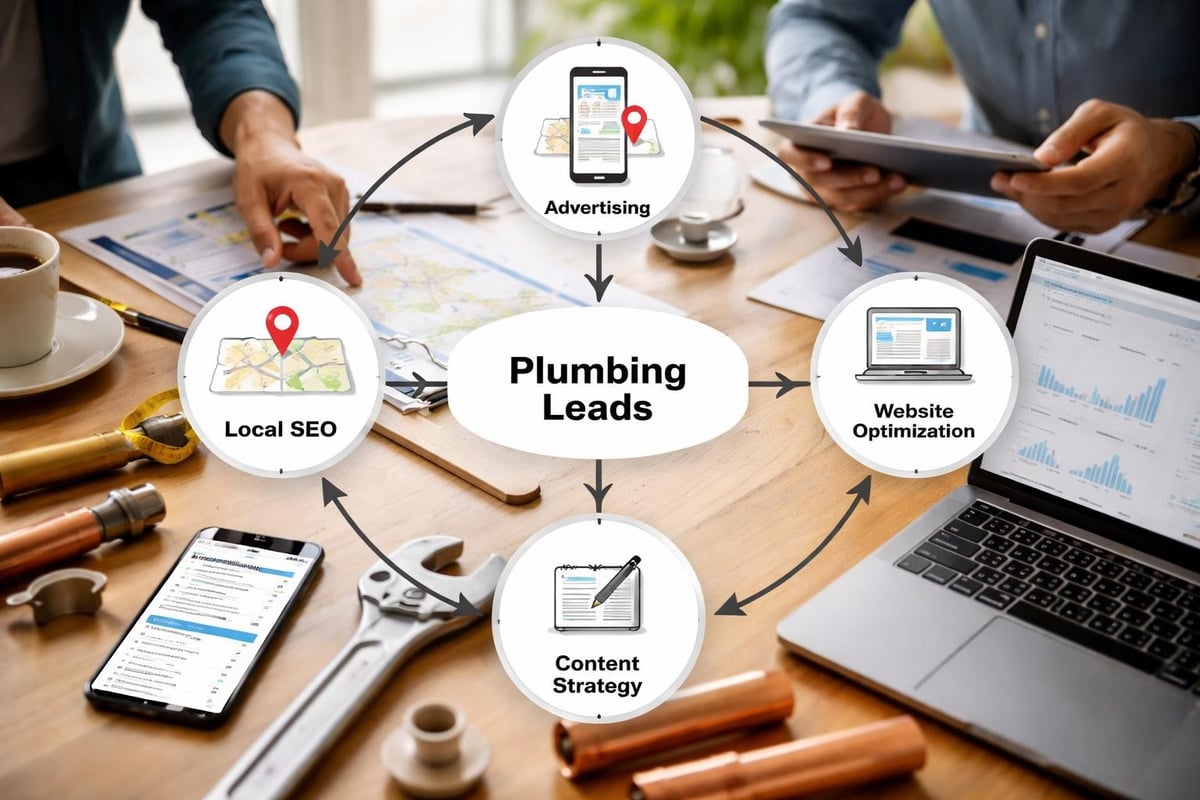
Most plumbing marketing agencies provide a comprehensive suite of services designed to work together as a system.
| Service Type | What It Does | Typical Timeline |
|---|---|---|
| Local SEO | Gets you ranked in Google Maps and local organic results | 3-6 months for significant results |
| PPC Advertising | Generates immediate leads through Google Ads and Local Service Ads | Immediate traffic, optimization ongoing |
| Website Design | Creates a conversion-focused site that turns visitors into callers | 4-8 weeks for launch |
| Content Marketing | Builds authority and targets long-tail keywords | Ongoing, compounds over time |
| Reputation Management | Monitors and builds your online reviews | Ongoing maintenance |
The best agencies don’t just offer these services in isolation. They integrate them into a cohesive growth system where each element supports the others.
For example, your local SEO strategy feeds keyword data to your PPC campaigns, while your content marketing supports both organic rankings and paid quality scores.
Why Plumbers Need Specialized Marketing Expertise
You wouldn’t hire an electrician to fix your plumbing, right?
The same logic applies to marketing. General marketing agencies simply don’t understand the plumbing industry’s unique dynamics.
The Plumbing Customer Journey Is Different
When someone’s basement is flooding at 2 AM, they’re not browsing through ten different websites comparing services.
They’re grabbing their phone and calling the first plumber who shows up in Google Maps with good reviews. Effective plumbing marketing requires understanding these high-intent moments and positioning your business to capture them.
Here’s what makes plumbing marketing unique:
- Emergency-driven searches: A significant portion of your revenue comes from urgent situations where speed matters more than price
- Seasonal fluctuations: Winter pipe bursts and summer water heater failures create predictable demand patterns
- High-value transactions: Many plumbing jobs range from $500 to $5,000+, justifying higher marketing investments
- Repeat business potential: Homeowners need plumbing services every few years, making customer lifetime value substantial
Geographic Targeting Complexity
Unlike e-commerce businesses that can serve anyone, plumbers need to dominate specific neighborhoods and ZIP codes.
A plumbing marketing agency understands how to build geographic relevance through citations, location-specific content, and service area optimization. They know that ranking for “plumber in Dallas” is different from “emergency plumber in Uptown Dallas” or “water heater replacement in Plano TX.”
This granular approach requires deep knowledge of local SEO mechanics and how Google determines which businesses to show for location-specific searches.
Key Marketing Channels That Drive Plumbing Leads
Let’s break down the specific channels that actually move the needle for plumbing companies.
Google Business Profile: Your Digital Storefront
Your Google Business Profile (formerly Google My Business) is arguably the most important marketing asset for any local plumber.
When optimized correctly, it puts you in the coveted Map Pack, those three businesses that show up above organic results with phone numbers, reviews, and directions.
Optimization checklist:
- Complete every section of your profile with accurate, keyword-rich information
- Upload high-quality photos of your trucks, technicians, and completed work
- Post regular updates about services, offers, and plumbing tips
- Respond to every review within 24 hours
- Use Google Posts to highlight emergency services and seasonal offers
According to industry research on plumbing marketing strategies, businesses with fully optimized profiles get 7x more clicks than incomplete profiles.
That’s not a minor difference. That’s the gap between getting 10 calls per week and getting 70.
Search Engine Optimization (SEO)
SEO is the long game, but it’s the game that pays dividends for years.
When you rank organically for high-intent keywords like “water heater repair near me” or “emergency plumber open now,” you’re capturing customers without paying for every click.
A quality plumbing marketing agency approaches SEO systematically:
- Technical foundation: Fast loading speeds, mobile optimization, proper site structure
- On-page optimization: Service pages targeting specific plumbing jobs in specific cities
- Content development: Blog posts answering common plumbing questions and targeting long-tail keywords
- Link building: Earning backlinks from local directories, suppliers, and industry websites
- Citation management: Ensuring your NAP (Name, Address, Phone) is consistent across the web
Understanding the importance of SEO for plumbing businesses can transform how you think about long-term lead generation.
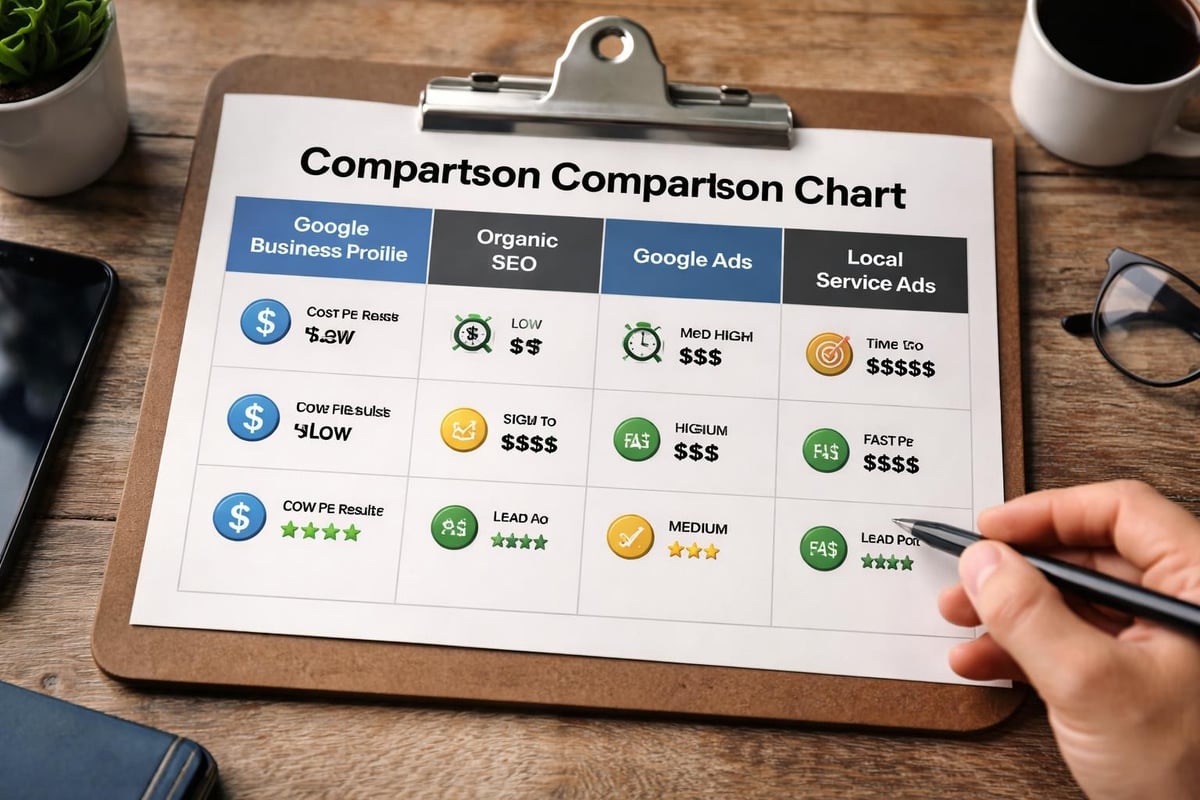
Pay-Per-Click Advertising
While SEO builds over time, PPC delivers immediate results.
Google Ads and Local Service Ads put you at the top of search results for high-value keywords, generating calls within hours of launching campaigns.
Google Ads advantages:
- Immediate visibility for competitive keywords
- Precise geographic targeting down to ZIP code level
- Budget control with daily spending limits
- Detailed conversion tracking and ROI measurement
Local Service Ads benefits:
- Google-guaranteed badge builds instant trust
- Pay per lead, not per click
- Prominent placement above regular ads
- Background check verification increases credibility
The most effective approach combines both. Proven PPC strategies for plumbers often layer LSAs for emergency services with traditional Google Ads for scheduled work like water heater installations.
Website Design and Conversion Optimization
Your website isn’t a brochure. It’s a lead generation machine.
Or at least it should be.
Most plumber websites fail because they’re designed to look pretty rather than convert visitors into callers. A specialized plumbing marketing agency builds sites with one goal: getting that phone to ring.
Conversion-focused elements:
- Click-to-call buttons: Large, prominent phone numbers on mobile devices
- Service area pages: Dedicated pages for each city or neighborhood you serve
- Emergency messaging: Clear communication that you offer 24/7 service
- Trust signals: Licenses, certifications, insurance information, and customer testimonials
- Fast loading speed: Every second of delay costs you potential customers
Your website should also showcase specific services with dedicated landing pages. Don’t just have a generic “Services” page. Create separate pages for water heater repair, drain cleaning, sewer line replacement, and every other service you offer.
This approach helps with technical SEO for plumbers while also giving you targeted pages for PPC campaigns.
How to Choose the Right Plumbing Marketing Agency
Not all marketing agencies are created equal.
Some will promise the world and deliver mediocre results. Others specialize in specific industries and deliver consistent ROI.
Here’s how to separate the experts from the pretenders.
Industry Specialization Matters
Ask prospective agencies how many plumbing clients they currently serve.
If the answer is zero or one, they’re learning on your dime. You want an agency that works with multiple plumbing companies and understands the nuances of the industry.
Questions to ask:
- How many plumbing clients do you currently serve?
- Can you show me case studies with actual results (calls, leads, revenue)?
- Do you understand the difference between emergency and maintenance plumbing?
- How do you track ROI for plumbing-specific campaigns?
Transparency in Reporting
You should never wonder what you’re paying for.
A professional plumbing marketing agency provides detailed monthly reports showing exactly where your budget went and what results it generated.
| Report Element | What to Look For |
|---|---|
| Keyword Rankings | Position changes for target keywords in your service area |
| Website Traffic | Total visits, traffic sources, and behavior metrics |
| Lead Volume | Total calls, form submissions, and chat inquiries |
| Conversion Rates | Percentage of visitors who become leads |
| Cost Per Lead | How much you’re spending to acquire each customer |
If an agency can’t provide these metrics or speaks in vague terms about “brand awareness” without tying it to actual leads, keep looking.
Local Market Knowledge
Plumbing marketing strategies that work in Phoenix might not work in Houston.
Each market has different competitive dynamics, seasonal patterns, and customer behaviors. The best marketing ideas for plumbing businesses are tailored to local market conditions.
An agency serving Texas plumbers should understand:
- How Texas weather patterns affect plumbing demand
- Which municipalities require specific licensing or permits
- Local competitors and their marketing strategies
- Regional terminology (what Texans search for vs. other states)
Technology and Tools
Modern marketing requires sophisticated tools for tracking, analytics, and automation.
Your agency should use professional-grade platforms, not free consumer tools.
Essential technology stack:
- Call tracking software to attribute calls to specific campaigns
- CRM integration to track leads through your sales process
- Rank tracking tools to monitor SEO performance
- Heat mapping and session recording to optimize website conversions
- Marketing automation for email follow-up and nurture campaigns
Common Marketing Mistakes Plumbers Make
Even experienced plumbers make critical marketing errors that cost them thousands in lost revenue.
Let’s address the biggest ones.
Neglecting Mobile Optimization
Over 70% of plumbing searches happen on mobile devices.
If your website isn’t mobile-friendly, you’re literally turning away the majority of potential customers. And “mobile-friendly” doesn’t just mean it displays properly on phones. It means fast loading, easy navigation, and prominent click-to-call buttons.
Google now uses mobile-first indexing, which means it primarily looks at your mobile site when determining rankings. A slow or poorly designed mobile experience tanks your SEO performance.
Ignoring Online Reviews
Your online reputation is your digital word-of-mouth.
When homeowners search for plumbers, they’re looking at reviews before they ever call. A plumber with 150 five-star reviews will get the call over a plumber with 12 reviews, even if the second plumber charges less.
Effective marketing strategies for plumbing businesses include systematic review generation processes:
- Ask satisfied customers immediately after completing the job
- Send automated follow-up emails with direct review links
- Make it easy by providing links to your Google, Yelp, and Facebook profiles
- Respond professionally to every review, even negative ones
- Showcase reviews on your website and marketing materials
Trying to Do Everything Yourself
Here’s the reality: you’re a plumber, not a marketing expert.
Your time is worth $150-$300 per hour fixing plumbing problems. Spending that time trying to figure out Google Ads or SEO is a massive opportunity cost.
Expert marketing strategies require specialized knowledge that takes years to develop. The DIY approach might save money short-term, but it costs you significant revenue in the long run.
Focusing on the Wrong Metrics
Website traffic is great. Social media followers are nice. But they don’t pay your bills.
The only metrics that truly matter are:
- Number of qualified leads generated
- Cost per lead
- Lead-to-customer conversion rate
- Customer acquisition cost
- Return on ad spend
A plumbing marketing agency keeps you focused on revenue-driving metrics instead of vanity numbers that look good but don’t impact your bottom line.

Building a Marketing Budget That Works
How much should you spend on marketing?
Industry benchmarks suggest 5-10% of gross revenue for established plumbing companies, with higher percentages for newer businesses trying to gain market share.
Allocation Across Channels
Smart plumbers don’t put all their eggs in one basket.
A balanced approach spreads investment across channels while doubling down on what’s working.
Sample budget allocation:
- Local SEO and website maintenance: 30%
- Google Ads and Local Service Ads: 40%
- Review management and reputation monitoring: 10%
- Content creation and marketing: 10%
- Tracking, analytics, and optimization: 10%
These percentages shift based on your specific goals and market position. A brand-new plumbing company might allocate more to PPC for immediate results, while an established business might invest heavily in SEO for long-term dominance.
Seasonal Adjustments
Plumbing demand isn’t consistent year-round.
Smart marketing budgets flex with seasonal demand patterns. Winter typically brings emergency freeze-related calls, while summer drives water heater and AC-related plumbing work.
Increase your marketing spend during peak seasons to capture maximum demand, then scale back during slower periods. This approach maximizes ROI by matching investment to opportunity.
The Role of Content in Plumbing Marketing
Content marketing isn’t just blogging for the sake of blogging.
It’s about answering the questions your customers are already searching for and establishing your business as the trusted local expert.
Types of Content That Drive Results
Service pages: Detailed descriptions of each service you offer, optimized for local keywords. Don’t just list services; explain the problem, your solution, and why customers should choose you.
FAQ content: Answer common questions like “How much does it cost to replace a water heater?” or “What causes low water pressure?” These long-tail keywords capture ready-to-buy customers.
Emergency guides: Content like “What to do when your pipe bursts” positions you as helpful while capturing high-intent emergency traffic.
Video content: Short videos explaining common plumbing issues, showing your team at work, or walking through your service process build trust and engagement.
Content strategies that boost conversions focus on solving customer problems while naturally incorporating relevant keywords and service area mentions.
Local Content Dominance
Generic plumbing advice doesn’t build local relevance.
Create content specific to your service areas. Write about common plumbing issues in specific neighborhoods, local building codes, or seasonal problems unique to your region.
For example: “Top 5 Plumbing Problems in Older Dallas Homes” or “How Houston’s Hard Water Affects Your Pipes” provides valuable local context while reinforcing geographic relevance.
Advanced Strategies for Competitive Markets
If you’re in a crowded market like Houston, Dallas, or San Antonio, basic marketing won’t cut it.
You need advanced strategies that create separation from competitors.
Hyper-Local Targeting
Don’t just target “Dallas.” Target specific neighborhoods, subdivisions, and ZIP codes where your ideal customers live.
Create dedicated landing pages for each service area with locally relevant content. Mention nearby landmarks, discuss neighborhood-specific plumbing challenges, and showcase work you’ve completed in that area.
This granular approach helps you dominate local search results even in competitive markets where bigger companies outspend you.
Strategic Partnerships
Partner with complementary businesses to expand your reach.
HVAC companies, electricians, home remodelers, and real estate agents all work with homeowners who need plumbing services. Create referral partnerships where you send business to each other.
These relationships also create backlink opportunities, which strengthen your SEO while building legitimate business connections.
Retargeting and Nurture Campaigns
Not everyone who visits your website calls immediately.
Retargeting ads keep your business top-of-mind for people who visited your site but didn’t convert. When they’re ready to hire a plumber, you’ll be the first name they remember.
Email nurture campaigns work similarly for leads who inquired but didn’t book. Send helpful tips, seasonal reminders, and special offers to stay engaged until they need your services.
Measuring Success: What Good Looks Like
How do you know if your plumbing marketing agency is actually delivering results?
Set clear benchmarks and track progress monthly.
Lead Volume Benchmarks
A well-marketed plumbing company should generate enough leads to keep your technicians consistently busy.
Realistic monthly benchmarks:
- Small operation (1-2 trucks): 40-80 qualified leads
- Medium business (3-5 trucks): 100-200 qualified leads
- Larger company (6+ trucks): 200+ qualified leads
These numbers vary based on service area population, competition, and average job value. The key is tracking trends over time and seeing consistent growth.
Quality Metrics
Raw lead volume means nothing if the leads are garbage.
Track lead quality through metrics like:
- Booking rate: Percentage of leads that turn into scheduled appointments
- Show rate: Percentage of scheduled appointments that actually happen
- Close rate: Percentage of appointments that convert to paying jobs
- Average ticket value: Revenue per completed job
If your lead volume is high but booking rates are low, you’re attracting the wrong audience or your follow-up process needs work.
Attribution and ROI
Know which channels drive the most valuable customers.
Call tracking and CRM integration show you exactly which marketing source generated each lead and whether they became paying customers.
| Marketing Channel | Avg. Cost Per Lead | Close Rate | Customer Lifetime Value |
|---|---|---|---|
| Google Maps SEO | $35 | 45% | $3,200 |
| Google Ads | $85 | 38% | $2,800 |
| Local Service Ads | $55 | 42% | $3,100 |
| Organic SEO | $25 | 48% | $3,500 |
This data tells you where to invest more heavily and where to cut back. Maybe organic SEO generates cheaper leads with higher close rates, making it your most valuable channel long-term.
Staying Ahead: Marketing Trends for 2026
The digital marketing landscape evolves constantly.
Smart plumbing companies stay ahead of trends rather than reacting when competitors have already seized the advantage.
AI-Powered Search Optimization
Google’s search experience is becoming more AI-driven with features like Search Generative Experience (SGE) and AI-powered snippets.
Ranking in AI search results requires optimizing for how AI models extract and present information. This means:
- Structured data markup to help AI understand your content
- Clear, direct answers to common questions
- Comprehensive content that covers topics thoroughly
- Authority signals through reviews, citations, and backlinks
Voice Search Optimization
More homeowners use voice search through smartphones and smart speakers.
Voice queries are longer and more conversational than typed searches. Someone might type “plumber Dallas” but say “OK Google, find me an emergency plumber near me who’s open right now.”
Optimize for these natural language queries by incorporating question-based content and conversational keywords.
Video Marketing Dominance
Video content continues to outperform text across platforms.
Short videos showcasing your team, explaining common problems, or highlighting customer testimonials build trust faster than written content. Industry trends show that businesses using video generate 66% more qualified leads than those relying solely on text.
Platform-specific strategies matter:
- YouTube for detailed how-to content and customer testimonials
- Instagram and TikTok for quick tips and behind-the-scenes content
- Facebook for local community engagement and service promotions
Integration with Business Operations
Marketing doesn’t exist in a vacuum.
The best results come when your marketing systems integrate seamlessly with your business operations.
CRM and Scheduling Integration
Your marketing agency should connect with your business management tools.
When a lead comes in from Google Ads, it should automatically flow into your CRM, trigger follow-up sequences, and notify your dispatch team. This integration ensures no leads fall through the cracks and provides complete attribution data.
Call Handling and Response Times
You can generate 500 leads per month, but if you don’t answer the phone or respond within minutes, those leads will call your competitor.
Benchmark data shows that calling back within 5 minutes vs. 30 minutes increases conversion rates by 10x. Your marketing investment is wasted if your operational systems can’t handle the lead volume efficiently.
Technician Training
Your technicians are your brand ambassadors.
They interact directly with customers and have more influence on reviews and referrals than any marketing campaign. Train them on asking for reviews, explaining services clearly, and representing your brand professionally.
The best plumbing marketing agency strategies account for the entire customer experience, not just the initial acquisition.
Marketing your plumbing business effectively requires specialized expertise, consistent effort, and strategic investment across multiple channels. The right approach combines immediate lead generation through PPC with long-term organic growth through SEO, all supported by a conversion-optimized website and strong reputation management. Aim Set Win specializes in building exactly these types of revenue-focused digital growth systems for plumbing contractors across Texas. We combine local SEO, technical optimization, high-intent content, and data-driven strategy to generate consistent inbound calls and qualified leads for plumbers in Houston, Dallas, Austin, San Antonio, and throughout the state. If you’re ready to stop losing customers to competitors and start dominating your local market, let’s build a marketing system that actually moves the needle for your business.
Jean runs growth strategy at AimSetWin, a performance marketing agency specializing in local service businesses across Texas. he's helped plumbers, HVAC companies, pest control operators, and home service brands build predictable revenue systems using data-driven advertising and conversion optimization.


