
Scalable lead generation transforms HVAC business growth by turning existing demand into booked jobs. Learn key systems, examples, and pitfalls to avoid.
When customer calls slow down, the pressure to keep revenue steady can feel intense for every Texas HVAC and plumbing business owner. The difference between wasted opportunities and consistent growth often comes down to how leads are captured and managed. Discover how a scalable lead generation system harnesses digital architecture and automation to create predictable, high-quality prospects, transforming revenue recovery without spending more on ads.
Table of Contents
- What Is Scalable Lead Generation?
- Types and Components of Lead Generation Systems
- How Scalable Systems Drive Revenue Recovery
- Implementing Scalable Processes for Local Services
- Common Pitfalls and How to Avoid Them
Key Takeaways
| Point | Details |
|---|---|
| Scalable Lead Generation | Involves automated processes to consistently attract and convert potential customers efficiently as demand grows. |
| Integration of Technology | Effective systems leverage AI and CRM to enhance lead quality and maintain low acquisition costs. |
| Continuous Monitoring | Regular analytics and audits help optimize performance and address bottlenecks in lead generation processes. |
| Avoiding Common Pitfalls | Organizations must focus on data management, technological integration, and communication to prevent system failures. |
What Is Scalable Lead Generation?
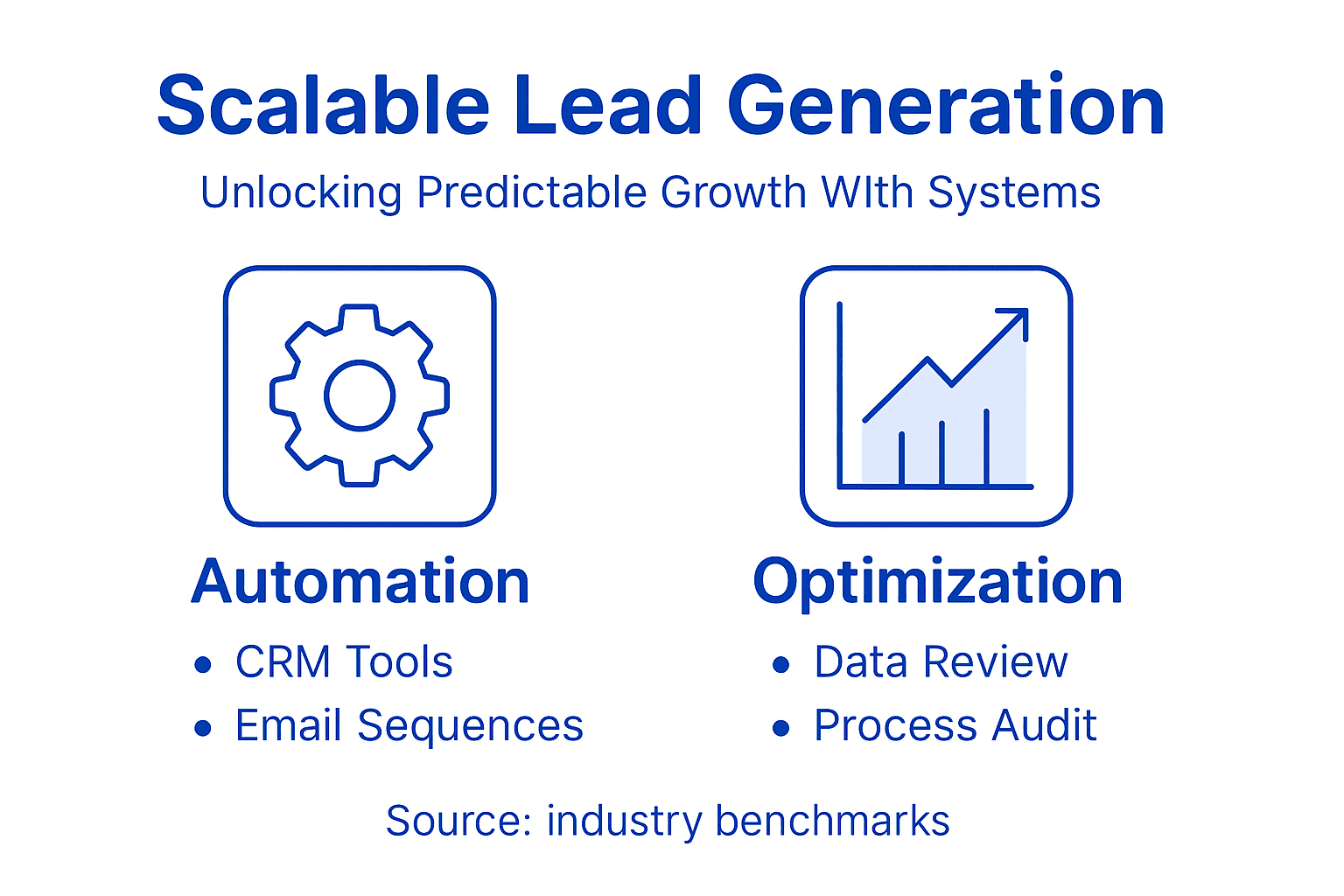
Scalable lead generation is a systematic approach to predictably acquiring potential customers through automated, repeatable processes that can expand efficiently as business demand grows. Unlike traditional lead generation methods that require increasing manual effort, scalable systems leverage technology and strategic workflows to generate consistent results with minimal incremental resource investment.
At its core, scalable lead generation involves designing automated digital architectures that transform how businesses attract and convert potential customers. These systems are characterized by several key features:
- Automated Lead Capture: Utilizing digital tools that continuously collect and qualify potential customer information
- Process Optimization: Implementing algorithmic strategies that improve lead quality and conversion rates
- Cost-Effective Expansion: Creating systems that maintain or reduce per-lead acquisition costs as volume increases
- Predictable Performance: Establishing consistent lead generation mechanisms that deliver reliable outcomes
The fundamental goal of scalable lead generation is transforming lead acquisition from a labor-intensive, unpredictable process into a strategic, technology-driven system. By integrating AI, automation, and data-driven methodologies, businesses can create lead generation engines that produce high-quality prospects without proportionally increasing time, effort, or expenses.

Pro tip: Invest in robust customer relationship management (CRM) systems that can track, analyze, and automate lead interactions to maximize your scalable lead generation strategy.
Types and Components of Lead Generation Systems
Lead generation systems are complex frameworks designed to attract, capture, and nurture potential customers through strategic digital and human-powered approaches. Comprehensive lead generation models encompass multiple interconnected components that work together to transform potential contacts into qualified business opportunities.
These systems typically fall into three primary categories:
- Automated Lead Generation Systems
- Digital marketing platforms
- Programmatic advertising networks
- AI-powered chatbots and engagement tools
- Manual Lead Generation Systems
- Direct sales outreach
- Networking events
- Personal referral networks
- Hybrid Lead Generation Systems
- Integrated digital and human touchpoint strategies
- Combination of automated tools and personal interactions
- Customized engagement workflows
Each lead generation system contains critical functional components that determine its effectiveness:
Here’s a comparison of the main types of lead generation systems and how they function:
| System Type | Main Approach | Key Strength | Typical Challenge |
|---|---|---|---|
| Automated | Digital automation and AI | Sc scalable with less labor | Needs ongoing tech investment |
| Manual | Direct human outreach | Personalized and flexible | Costly to scale up |
| Hybrid | Combines automation and human effort | Balances scale and relationship | Coordination Complexity |
- Data Acquisition Mechanisms: Tools and strategies for collecting potential customer information
- Lead Qualification Filters: Processes that assess and rank potential leads based on predefined criteria
- Nurturing Workflows: Systematic approaches to engage and convert potential leads
- Performance Tracking Systems: Analytics and reporting tools that measure lead generation effectiveness
Pro tip: Regularly audit and optimize your lead generation system by analyzing conversion rates, identifying bottlenecks, and implementing data-driven improvements.
How Scalable Systems Drive Revenue Recovery
Scalable systems transform revenue recovery by creating predictable, repeatable processes that maximize existing business opportunities without requiring constant manual intervention. Predictive analytics enable strategic lead identification that dramatically improve marketing efficiency and return on investment.
The core mechanisms driving revenue recovery through scalable systems include:
- Automated Lead Prioritization
- Intelligent ranking of potential customer opportunities
- Real-time assessment of lead conversion probability
- Automated routing to most appropriate sales channels
- Continuous Performance Optimization
- Dynamic adjustment of marketing strategies
- Data-driven campaign refinement
- Instant identification of high-potential customer segments
- Resource Allocation Intelligence
- Precise targeting of marketing investments
- Minimized customer acquisition costs
- Maximum return from existing customer databases
Effective revenue recovery systems leverage advanced technologies to transform traditional linear marketing approaches. By implementing intelligent workflows that automatically analyze, segment, and engage potential customers, businesses can create self-optimizing revenue generation engines that consistently deliver measurable results.
Scalable systems turn unpredictable revenue streams into reliable, repeatable business growth mechanisms.
Successful implementation requires a strategic approach that integrates data analytics, automated communication tools, and continuous performance monitoring. These systems do more than simply generate leads – they create a comprehensive ecosystem designed to maximize every potential customer interaction.
Pro tip: Implement a quarterly review process that analyzes your lead generation system’s conversion rates, identifying and eliminating bottlenecks to maintain peak performance.
Implementing Scalable Processes for Local Services
Local service businesses require strategic approaches to build scalable lead generation processes that transform traditional marketing limitations. Digital marketing strategies enable systematic lead acquisition by creating repeatable, technology-driven engagement mechanisms that consistently generate high-quality customer opportunities.
Successful implementation involves several critical components:
- Technology Infrastructure
- Cloud-based customer relationship management (CRM) systems
- Automated communication platforms
- Integration of marketing and sales technologies
- Data-Driven Targeting
- Precise customer segmentation
- Behavioral analysis tools
- Personalized marketing workflows
- Continuous Performance Monitoring
- Real-time lead tracking
- Conversion rate analytics
- Predictive performance modeling
The foundational elements of scalable local service lead generation require businesses to move beyond traditional marketing approaches. This means developing integrated systems that automatically capture, qualify, and nurture potential customer interactions without constant manual intervention.
Scalability transforms local service marketing from unpredictable efforts into precise, measurable business growth engines.
Technological integration plays a crucial role in creating scalable processes. Local businesses must invest in tools that enable seamless communication, automated follow-ups, and intelligent lead routing, ensuring that no potential customer opportunity falls through the cracks.
Pro tip: Implement a monthly technology audit to ensure your lead generation systems remain cutting-edge and aligned with evolving market demands.
Common Pitfalls and How to Avoid Them
Scalable lead generation systems can quickly become ineffective when businesses overlook critical operational vulnerabilities. Systematic lead management prevents common implementation failures by addressing fundamental structural and communication challenges that undermine revenue generation efforts.
The most prevalent pitfalls in lead generation systems include:
- Data Management Failures
- Incomplete lead tracking
- Inconsistent data collection processes
- Poor lead qualification standards
- Technological Integration Challenges
- Disconnected marketing and sales platforms
- Manual data transfer between systems
- Lack of real-time performance analytics
- Communication Breakdown
- Misaligned departmental objectives
- Inconsistent lead handoff procedures
- Absence of unified performance metrics
Successful organizations recognize that scalable lead generation requires more than just implementing technology. It demands a holistic approach that integrates people, processes, and technological infrastructure to create a seamless, high-performance system.
Effective lead generation is not about collecting contacts, but about creating meaningful, convertible connections.
Businesses must develop robust strategies that anticipate and mitigate potential system failures. This involves creating redundant communication channels, establishing clear qualification criteria, and implementing continuous training and performance monitoring mechanisms.
The table below summarizes common lead generation pitfalls and strategies TO prevent them:
| Pitfall Area | Common Result | Prevention Strategy |
|---|---|---|
| Data Management | Lost leads, poor tracking | Standardize data processes |
| Tech Integration | Delayed action, errors | Use unified platforms |
| Communication | Missed conversions | Align team objectives regularly |
Pro tip: Conduct quarterly interdepartmental workshops to align lead generation strategies, ensuring seamless communication and shared performance objectives.
Unlock Predictable Growth with Scalable Lead Generation Systems
Struggling to turn inconsistent lead flow into steady business growth? This article highlights the challenge of building scalable lead generation processes that avoid costly manual efforts and unpredictable outcomes. If you are ready to recover missed revenue and create a system that works quietly in the background to convert existing demand into booked jobs, Aim Set Win has the proven solution to help local service businesses like HVAC and plumbing.
Experience the power of our Revenue Recovery System that re-engages past customers within 30 days or less without the need for new leads or additional ad spend. Once that foundation is solid, we layer in efficient systems such as paid search, SEO content, and AI call handling to scale your revenue reliably. Learn more about how to build a predictable growth engine at Aim Set Win and explore practical strategies tailored to local services by visiting our Lawn Care Archives – Aim Set Win for relevant case studies and insights. Take control now — don’t let another lead slip away.
Frequently Asked Questions
What is scalable lead generation?
Scalable lead generation is a systematic approach that uses automated processes to predictably acquire potential customers, allowing businesses to efficiently grow without increasing manual efforts.
How can scalable lead generation drive revenue recovery?
Scalable lead generation helps recover revenue by creating predictable processes that optimize existing opportunities, reduce customer acquisition costs, and enhance marketing efficiency through automated lead prioritization and performance optimization.
What are the different types of lead generation systems?
Lead generation systems typically fall into three categories: automated systems that use digital tools, manual systems reliant on human outreach, and hybrid systems that combine both approaches for balanced engagement.
What are common pitfalls in lead generation systems?
Common pitfalls include data management failures, technological integration challenges, and communication breakdowns, which can undermine efforts. It’s important to standardize processes, use unified platforms, and ensure aligned communication among teams.
Recommended
- Marketing Digital LinkedIn Guide: Strategies for 2026 Success – Aim Set Win
- Lead Re-Engagement Tools for Texas Plumbers – 2026
- Essential Guide to Marketing to Businesses in 2026 – Aim Set Win
- HVAC Predictable Growth Process for Reliable Revenue Boost
Jean runs growth strategy at AimSetWin, a performance marketing agency specializing in local service businesses across Texas. he's helped plumbers, HVAC companies, pest control operators, and home service brands build predictable revenue systems using data-driven advertising and conversion optimization.


