
Discover how to perform a specialized SEO audit for your Texas HVAC business to improve local rankings, capture emergency searches, and generate more qualified leads in 2026.
Texas HVAC businesses lose thousands of qualified emergency service calls every month because generic SEO audits miss critical local search signals. Most audits fail to address mobile speed for urgent AC repair searches, ignore seasonal demand patterns unique to Texas markets, and overlook the EEAT signals that build trust with both search engines and homeowners. This guide delivers a specialized, step-by-step SEO audit process designed specifically for HVAC contractors competing in Houston, Dallas, Austin, and other Texas cities to capture more local leads and emergency service requests.
Table of Contents
- Preparing Your HVAC Website For An Effective SEO Audit
- Executing The Specialized SEO Audit: Key Focus Areas For HVAC Businesses
- Implementing SEO Improvements And Verifying Audit Results
- Grow Your Texas HVAC Leads With Specialized SEO Services
Key takeaways
| Point | Details |
|---|---|
| Mobile speed impacts emergency conversions | HVAC sites must load in under 3 seconds to capture urgent repair searches effectively. |
| Local SEO consistency drives visibility | NAP accuracy across all listings and dedicated service area pages improve local rankings. |
| EEAT signals build search authority | Real technician bios, completed job photos, and customer reviews demonstrate expertise. |
| Seasonal optimization captures demand | Auditing keyword usage for March to June peak periods maximizes lead generation. |
| Technical fixes deliver immediate results | Correcting crawl errors and mobile usability issues quickly improves search performance. |
Preparing your HVAC website for an effective SEO audit
Before diving into the audit itself, you need to establish a solid foundation that makes the process effective and actionable. HVAC websites often suffer from slow mobile load times, directly impacting search rankings and emergency service conversions. Your first step is benchmarking current mobile performance and targeting load times under 3 seconds, which is critical when homeowners search for immediate AC repair during Texas summer heat waves.
Next, verify your NAP consistency across every online listing, your website footer, contact pages, and Google My Business profile. Inconsistent business information confuses search engines and dilutes your local SEO authority. Collect proof points that demonstrate real-world expertise: technician certification photos, before and after project images, detailed case studies from actual Texas homes, and authentic customer testimonials with specific service details.
Your Google My Business profile must be complete and optimized with accurate service areas, business hours including emergency availability, high quality photos of your team and trucks, and regular posts about seasonal maintenance tips. HVAC SEO services require this local foundation to generate qualified leads consistently. Plan to create dedicated service area pages for each city you serve, with unique content addressing local climate challenges, common HVAC issues in that area, and neighborhood-specific service examples.
Pro Tip: Use Google PageSpeed Insights to benchmark your mobile speed before starting the audit, then prioritize fixing render-blocking resources and image compression to achieve sub-3-second load times that capture emergency searches.
Gather analytics access credentials for Google Analytics, Google Search Console, and any existing rank tracking tools. Document your current local search positions for priority keywords like “emergency AC repair Houston” or “HVAC installation Austin” to establish baseline metrics. Compile a list of your top competitors in each service area to analyze their local SEO strategies during the audit process.
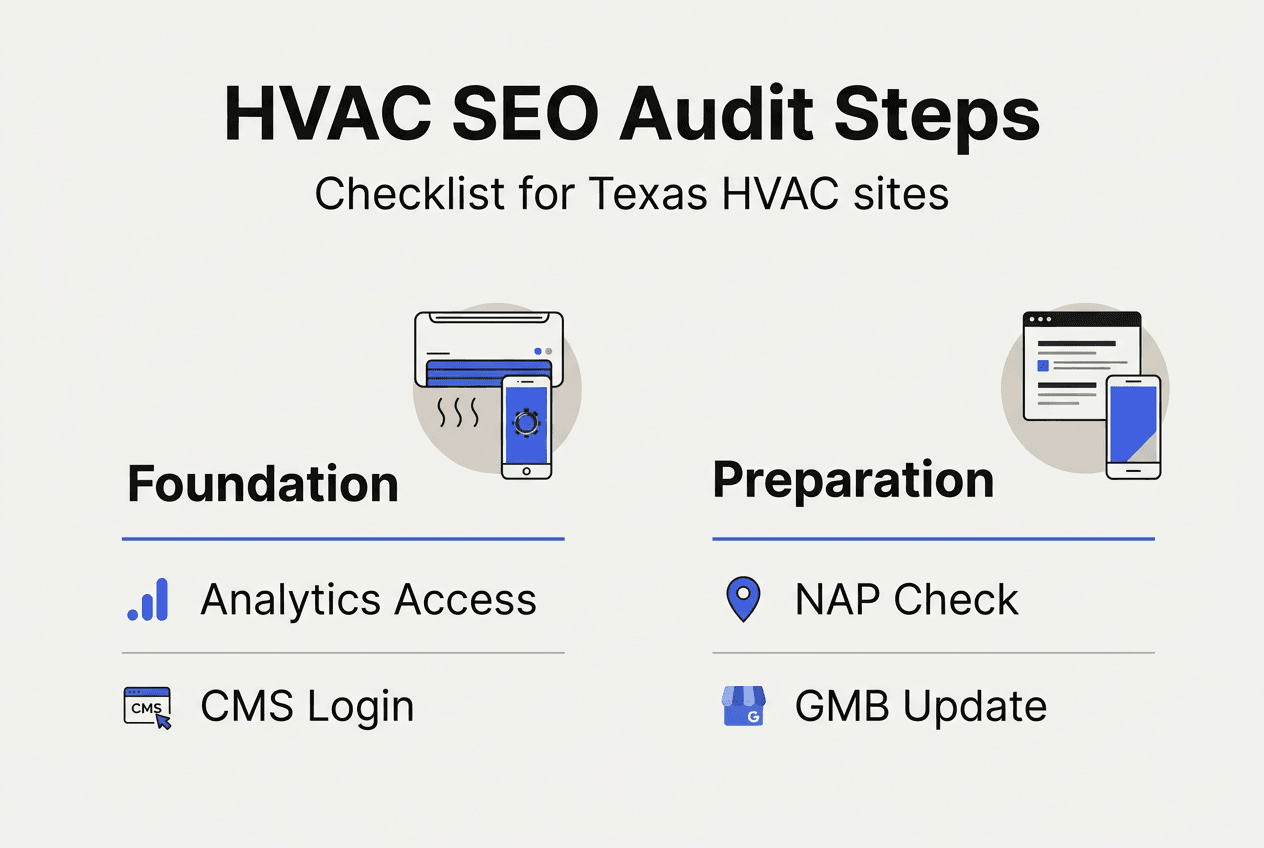
Finally, ensure you have content management system access to make technical changes quickly. Local SEO for HVAC companies in Texas depends on rapid implementation of audit findings, especially during peak season when every day of improved visibility translates to booked jobs and revenue growth.
Executing the specialized SEO audit: key focus areas for HVAC businesses
With preparation complete, execute your audit systematically across three core areas: technical performance, content quality, and local search signals. Start with technical diagnostics using Google PageSpeed Insights, Screaming Frog, or similar crawling tools to identify site speed issues, mobile usability problems, crawl errors, broken links, and HTTPS security gaps. Mobile performance is non-negotiable for HVAC businesses because homeowners experiencing AC failures in 100-degree Texas heat will abandon slow-loading sites within seconds.
- Run a complete technical crawl to identify 404 errors, redirect chains, and duplicate content issues that waste crawl budget.
- Test mobile responsiveness across multiple device types, ensuring emergency contact buttons are prominently placed above the fold.
- Verify HTTPS implementation across all pages, as Google penalizes non-secure sites in search rankings.
- Analyze Core Web Vitals metrics including Largest Contentful Paint, First Input Delay, and Cumulative Layout Shift for user experience optimization.
- Check XML sitemap accuracy and robots.txt configuration to ensure search engines can efficiently crawl your service pages.
Next, evaluate content through the lens of EEAT: Experience, Expertise, Authoritativeness, and Trust. SEO success is tied to the EEAT framework, which Google uses to assess content quality and ranking worthiness. Your HVAC website must showcase real technician profiles with certifications, detailed descriptions of completed projects with photos, and educational content that demonstrates deep knowledge of Texas-specific HVAC challenges like humidity control and heat pump efficiency.

Inspect every service page for unique, valuable content that addresses homeowner questions and concerns. Generic manufacturer descriptions or thin content pages harm your rankings. HVAC SEO combines technical website optimization, strategic content creation, and local search signals to generate organic leads consistently. Review your blog content for seasonal keyword optimization, targeting high-intent searches during March through June when Texas AC demand peaks.
| Audit Focus Area | Common HVAC Issues | Ranking Impact |
|---|---|---|
| Mobile site speed | Slow load times, unoptimized images | High: Directly affects bounce rate and conversions |
| NAP consistency | Mismatched addresses across listings | High: Confuses search engines and reduces local visibility |
| EEAT signals | Missing technician bios, no project photos | Medium: Affects trust and authority rankings |
| Service area pages | Duplicate content, thin descriptions | High: Reduces local keyword rankings |
| Emergency contact visibility | Hidden phone numbers, slow-loading CTAs | Critical: Loses urgent service leads |
Audit your local SEO signals meticulously. Verify NAP consistency across your website, Google My Business, Yelp, Facebook, industry directories, and citation sources. Check your Google My Business optimization including complete service listings, accurate business hours with emergency availability noted, regular photo uploads, and consistent posting of seasonal maintenance tips. Analyze your review profile across platforms, looking for response rates, review velocity, and keyword mentions in customer feedback.
Pro Tip: Prioritize fixing mobile speed and emergency call-to-action placement first, as these directly affect urgent lead capture when homeowners need immediate AC repair during Texas heat emergencies.
Examine competitor local SEO strategies in your service areas. Compare their Google My Business optimization, service area page structure, content depth, and backlink profiles to identify gaps in your own approach. Use HVAC SEO services in Houston as a benchmark for what comprehensive local optimization looks like in competitive Texas markets.
Document every finding with screenshots, metric data, and priority ratings. Organize issues into immediate fixes that can be completed within days, short-term improvements requiring content creation or technical development, and long-term strategic initiatives like building authoritative backlinks. HVAC SEO tips to boost service leads should guide your prioritization based on potential impact versus implementation effort.
Implementing SEO improvements and verifying audit results
With audit findings documented and prioritized, begin implementation immediately starting with high-impact technical fixes. Address mobile speed issues by compressing images, enabling browser caching, minifying CSS and JavaScript files, and implementing lazy loading for below-the-fold content. Website speed directly impacts conversion rates; even a 1-second delay can reduce conversions by 7%, which translates to lost emergency service calls worth thousands in revenue.
Fix crawl errors, broken links, and redirect chains to improve search engine crawling efficiency. Ensure HTTPS is properly implemented across all pages with valid SSL certificates. Update your XML sitemap and submit it through Google Search Console to accelerate indexing of new or updated content. These technical corrections often deliver ranking improvements within weeks.
Revise content to strengthen EEAT signals throughout your website. Add detailed technician bio pages with certifications, years of experience, and specializations in Texas HVAC systems. Create before and after project galleries with specific details about the work performed, challenges overcome, and customer outcomes. Develop educational blog content addressing common Texas HVAC questions like optimal thermostat settings for humidity control or heat pump efficiency in mild winters.
Update service area pages with unique, locally relevant content for each city you serve. Instead of duplicating the same service description across locations, write custom content addressing neighborhood-specific HVAC challenges, local climate considerations, and area testimonials. Include embedded Google Maps, local business schema markup, and links to relevant local resources to strengthen geographic relevance signals.
Correct NAP inconsistencies across all online listings, starting with your Google My Business profile, major directories like Yelp and Angie’s List, and industry-specific citation sources. Ensure your business name, complete address, and phone number match exactly across every platform. Implement local business schema markup on your website to help search engines understand your service areas and contact information.
| Metric | Before Audit | After Implementation | Improvement |
|---|---|---|---|
| Mobile load time | 5.2 seconds | 2.1 seconds | 60% faster |
| Local pack ranking (Houston AC repair) | Position 8 | Position 3 | 5 positions |
| Organic traffic (monthly) | 1,200 visits | 2,800 visits | 133% increase |
| Phone call conversions | 45 calls | 89 calls | 98% increase |
Implement a systematic verification process to track improvement progress. Set up Google Search Console to monitor crawl errors, index coverage, mobile usability issues, and Core Web Vitals performance. Configure Google Analytics goals to track phone clicks, form submissions, and other conversion actions from organic search traffic. Use local rank tracking tools to monitor position changes for priority keywords in each service area.
Avoid common implementation mistakes that undermine SEO progress:
- Changing URLs without proper 301 redirects, which loses existing ranking authority
- Over-optimizing content with keyword stuffing that triggers spam filters
- Neglecting mobile testing after making desktop changes
- Ignoring page speed impacts when adding new features or content
- Failing to update Google My Business after website changes
Establish monthly monitoring routines using Google Search Console to review performance reports, identify new crawl errors, and track Core Web Vitals trends. Monitor local ranking positions weekly during peak season and monthly during slower periods. Review Google Analytics traffic sources, user behavior metrics, and conversion data to identify emerging opportunities or declining performance areas.
Pro Tip: Use Google Search Console and local rank tracking tools monthly for continuous monitoring, but avoid making hasty changes based on short-term fluctuations; SEO improvements typically require 4 to 8 weeks to show meaningful results.
Document all changes with dates, metrics before and after, and observed impacts to build institutional knowledge. Recover lost HVAC revenue by identifying which optimizations deliver the strongest ROI, then double down on those strategies. Create a quarterly review schedule to reassess your SEO performance, update content for seasonal relevance, and identify new opportunities based on search trend data.
Implement easy SEO tips to grow your HVAC business online consistently rather than in sporadic bursts. Search engines reward websites that demonstrate ongoing improvement, fresh content, and sustained technical excellence. Set up automated monitoring alerts for critical issues like site downtime, sudden ranking drops, or spikes in crawl errors so you can respond immediately.
Grow your Texas HVAC leads with specialized SEO services
Executing a thorough SEO audit and implementing improvements requires significant time, technical expertise, and ongoing attention that most HVAC business owners struggle to maintain while running daily operations. Professional HVAC SEO services provide tailored audits, strategic optimization, and continuous monitoring designed specifically for Texas markets where seasonal demand swings and competitive intensity require specialized approaches.

Expert HVAC SEO agencies understand the unique challenges of capturing emergency service searches, optimizing for extreme seasonal demand fluctuations, and building local authority in competitive cities like Houston, Dallas, and Austin. They conduct deeper technical audits using enterprise tools, develop comprehensive content strategies based on search intent analysis, and build authoritative backlink profiles that generic marketing agencies cannot match.
Aim Set Win delivers proven results for heating and cooling companies across Texas through our specialized HVAC SEO agency in Houston, HVAC SEO agency in Austin, and other major markets. We focus exclusively on home service businesses, which means our strategies address the specific search patterns, conversion triggers, and competitive dynamics of the HVAC industry rather than applying generic SEO templates.
Partnering with specialists who understand Texas HVAC markets saves you time, accelerates results, and maximizes your local search ROI through data-driven optimization that turns website traffic into booked jobs and measurable revenue growth.
FAQ
How often should I perform an SEO audit for my HVAC website?
Conduct a comprehensive SEO audit at least twice per year, with additional focused reviews before peak HVAC seasons in March and October to ensure your website is optimized for demand surges. Regular audits help catch technical issues early, adapt to search algorithm changes, and identify new keyword opportunities as search patterns evolve. If you launch new service areas, redesign your website, or notice sudden ranking drops, perform an immediate audit to diagnose and address issues quickly.
What are the critical technical issues to check in an HVAC SEO audit?
Focus on mobile site speed targeting sub-3-second load times, crawl errors that prevent search engines from indexing your pages, HTTPS security implementation, responsive design across all device types, and Core Web Vitals metrics that affect user experience rankings. Prioritize fixing mobile performance issues first because emergency AC repair searches happen predominantly on smartphones, and slow-loading sites lose urgent service calls to faster competitors. Also verify your XML sitemap accuracy, robots.txt configuration, and structured data markup for local business information.
How can I show expertise and trust on my HVAC website?
Include detailed technician bio pages with certifications, licensing information, years of experience, and specializations in Texas HVAC systems to demonstrate real expertise. Showcase before and after project photos with specific details about the work performed, challenges solved, and customer outcomes. Display authentic customer reviews prominently with responses showing your engagement. Create location-specific service pages with unique content addressing local climate challenges and neighborhood HVAC issues rather than generic descriptions.
How do I measure the success of SEO audit improvements?
Track local search ranking positions for priority keywords in each service area, organic website traffic growth, mobile page load time reductions, and phone call leads attributed to organic search sources. Use Google Analytics to monitor user behavior metrics like bounce rate, pages per session, and conversion actions. Review Google Search Console data for impressions, click-through rates, and index coverage improvements. Measure business outcomes including call volume increases, booked job growth, and revenue from organic leads to calculate true ROI from SEO investments.
Recommended
- HVAC digital marketing in Texas: SEO strategies 2026
- SEO Strategies for HVAC 2026: Proven Paths to Growth
- HVAC SEO Agency in Dallas TX That Drives Daily Jobs
- HVAC SEO Agency Austin That Grows HVAC Leads
Jean runs growth strategy at AimSetWin, a performance marketing agency specializing in local service businesses across Texas. he's helped plumbers, HVAC companies, pest control operators, and home service brands build predictable revenue systems using data-driven advertising and conversion optimization.


