
Discover the top content marketing agencies that drive real results for home service businesses. Learn what to look for and how to choose wisely.
Finding the right content marketing partner can transform your home service business from invisible to indispensable. You’re not just looking for writers. You need strategists who understand how homeowners search for plumbers, HVAC techs, and electricians when their AC dies at midnight or their basement floods. The top content marketing agencies combine technical SEO expertise, conversion-focused content creation, and data-driven strategy to generate qualified leads that actually pick up the phone. Whether you’re a plumbing contractor in Houston or an HVAC company in Dallas, choosing the right agency determines whether your content drives revenue or just collects digital dust. Ready to find your perfect match?
What Makes Content Marketing Agencies Essential for Home Service Businesses
Content marketing isn’t what it used to be.
Gone are the days when you could slap up a blog post about “5 plumbing tips” and watch the leads roll in. Today’s homeowners are savvier, search algorithms are smarter, and your competitors are investing serious money into their digital presence.
The top content marketing agencies understand this shift. They know that service businesses need content that targets high-intent keywords, answers specific questions at the exact moment homeowners are searching, and guides potential customers from panic mode to phone call.
Here’s what separates exceptional agencies from mediocre ones:
- Deep understanding of search intent for emergency and scheduled services
- Local SEO expertise that dominates map pack results
- Conversion optimization that turns readers into callers
- Technical content skills that build authority without confusion
- Data analytics capabilities that prove ROI, not just traffic
Most marketing agencies treat all industries the same. They apply generic strategies across plumbers, lawyers, and e-commerce stores alike. That’s a recipe for wasted budget.
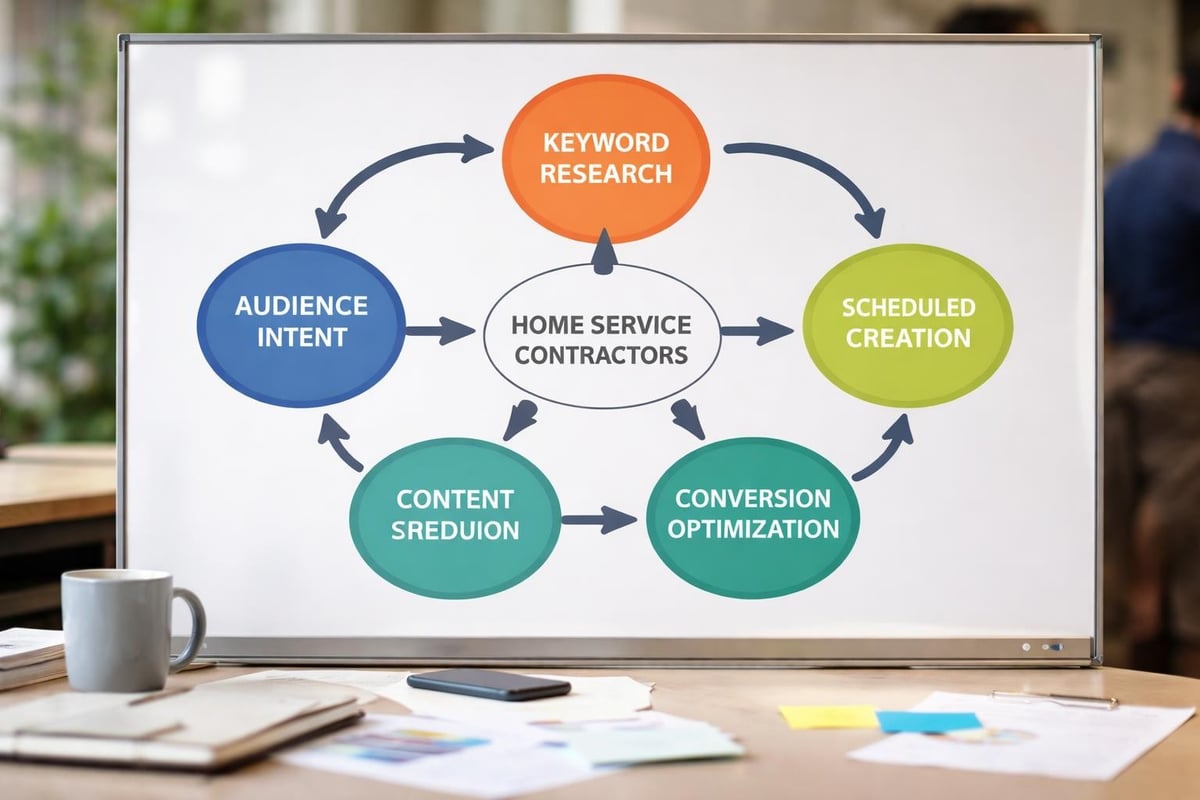
The best content marketing partners specialize. They understand that a homeowner searching “emergency plumber near me” at 2 AM has different needs than someone researching “best HVAC system for Texas heat” in March.
Service businesses face unique content challenges:
- Seasonal demand fluctuations requiring strategic content timing
- Emergency versus planned service keyword targeting
- Local competition requiring geo-specific content strategies
- Technical topics that must be accessible to non-experts
- Trust-building in high-stakes situations (water damage, no heat, electrical hazards)
When you partner with specialists who understand these nuances, your content does more than rank. It converts. According to industry experts, choosing an agency that prioritizes data ethics and authentic content creation delivers sustainable results.
This matters because Google’s algorithm updates increasingly reward genuine expertise and penalize generic content. You can’t fake authority in the home services space.
Top Content Marketing Agencies That Deliver Measurable Results
The landscape of content marketing agencies is crowded, but only a handful consistently deliver for service businesses.
Let’s cut through the noise and examine what actually works.
Agencies Specializing in Local Service Industries
Not all top content marketing agencies are created equal, especially when it comes to local service businesses. You need partners who understand the specific challenges of ranking in competitive markets like Austin, San Antonio, or Houston.
What to look for in service-focused agencies:
| Criterion | Why It Matters | Red Flags |
|---|---|---|
| Local SEO track record | Proven map pack rankings | Only organic rankings mentioned |
| Home service portfolio | Industry-specific expertise | Generic B2B or e-commerce focus |
| Call tracking integration | Measures actual lead quality | Traffic metrics only |
| Technical content ability | Explains complex topics simply | Overly technical or too basic |
| Conversion rate focus | Optimizes for calls, not clicks | No mention of conversion strategy |
The best content marketing agencies in 2026 share common characteristics: they combine strategic thinking with execution excellence, maintain transparent reporting, and demonstrate clear ROI for clients.
Top performers understand these critical elements:
- Service area pages that rank for neighborhood-specific searches
- Emergency service content optimized for midnight mobile searches
- Seasonal content calendars aligned with HVAC, plumbing, and electrical demand
- FAQ content that captures voice search queries
- Case studies and testimonials positioned strategically throughout the buyer journey
Many agencies claim expertise in home services, but few can show concrete results. Ask for specific examples of ranking improvements, lead volume increases, and cost per acquisition reductions.
When evaluating potential partners, request data on:
- Average time to first-page rankings for competitive keywords
- Lead quality metrics (not just quantity)
- Client retention rates over 24+ months
- Content production volume and consistency
- Integration capabilities with your existing CRM and call tracking
The right agency becomes an extension of your team. They understand your market, speak your language, and obsess over the metrics that matter to your bottom line.
Content Strategy Frameworks That Generate Qualified Leads
Strategy separates top content marketing agencies from content mills churning out generic blog posts.
A solid content framework starts with understanding your customer journey from problem awareness to service completion. Most homeowners don’t wake up thinking about their water heater until it breaks. Your content needs to intercept them at every stage.
The effective home service content framework includes:
- Emergency content targeting immediate pain points (no heat, burst pipe, electrical hazard)
- Research content for planned investments (new AC system, water heater replacement)
- Maintenance content building ongoing relationships (seasonal tune-ups, preventive care)
- Authority content establishing expertise (technical guides, industry insights)
- Local content dominating geographic searches (neighborhood guides, city-specific advice)
This isn’t theory. It’s what works in competitive Texas markets where homeowners have dozens of contractors to choose from.
Consider the search journey of a homeowner whose AC dies during a July heat wave. They don’t start researching HVAC brands. They Google “emergency AC repair near me” or “AC not working San Antonio.”
Your content needs to be there, immediately answering their question and providing a clear path to call your business. That’s where specialized digital marketing strategies prove their worth.

SEO Integration and Technical Optimization
Content without SEO is like a billboard in your garage. Nobody sees it.
The top content marketing agencies don’t just write well. They engineer content to dominate search results through meticulous technical optimization.
Critical SEO elements for home service content:
- Schema markup for services, local business, FAQ, and reviews
- Mobile optimization for on-the-go emergency searches
- Page speed optimization (crucial for mobile emergency searches)
- Internal linking strategies that distribute authority
- Local citation consistency across directories
Google’s algorithm prioritizes Experience, Expertise, Authoritativeness, and Trustworthiness (E-E-A-T). For service businesses, this means your content must demonstrate real-world knowledge, not recycled generic advice.
When evaluating agencies, ask how they approach technical SEO integration. Do they just hand off content to developers, or do they handle implementation? Can they explain their schema strategy? Do they understand Core Web Vitals and their impact on rankings?
According to content marketing experts, quality always trumps quantity. One well-optimized service page targeting the right keywords generates more leads than ten generic blog posts.
This is especially true for service businesses operating in competitive markets. Your content needs to outrank established competitors, many of whom have been building their online presence for years.
Technical optimization checklist for service content:
- Keyword research focused on commercial and transactional intent
- Competitive gap analysis identifying ranking opportunities
- On-page optimization (title tags, meta descriptions, header structure)
- Image optimization with descriptive alt text and compression
- URL structure aligned with service categories and locations
- Internal linking connecting related services and location pages
The difference between ranking #3 and #8 for “emergency plumber Houston” can mean hundreds of leads per year. Technical optimization makes that difference.
Evaluating Agency Expertise and Industry Specialization
Not every agency that claims home service expertise actually has it.
You need to separate authentic specialists from generalists trying to expand their client roster. This distinction matters because home service marketing requires specific knowledge that doesn’t transfer from other industries.
Questions to Ask Before Signing a Contract
Due diligence prevents expensive mistakes. Before committing to any agency partnership, ask these revealing questions:
Strategy and Approach:
- How do you research keywords specific to emergency versus scheduled services?
- What’s your process for creating content calendars aligned with seasonal demand?
- How do you differentiate content strategy for different service types (plumbing, HVAC, electrical)?
- Can you explain your approach to local content optimization?
- What role does content play in your overall digital marketing strategy?
Experience and Results:
- How many home service clients do you currently serve?
- Can you share case studies with specific ranking and lead generation results?
- What’s your average client retention period for service contractors?
- Have you worked with businesses in competitive Texas markets?
- What results have you achieved for emergency service keywords?
Process and Collaboration:
- What’s your content production workflow from strategy to publication?
- How do you handle content revisions and feedback?
- What tools do you use for project management and communication?
- How frequently do you provide performance reports?
- What metrics do you prioritize in reporting?
The answers reveal whether an agency truly understands your business. Vague responses or generic examples suggest limited relevant experience. Choosing the right agency requires evaluating both their strategic capabilities and execution track record.
Watch for these warning signs:
- Inability to explain their content strategy in clear, specific terms
- No documented case studies from home service businesses
- Overemphasis on vanity metrics (traffic, impressions) versus conversions
- Unwillingness to guarantee regular reporting and communication
- Cookie-cutter approaches without customization for your market
Portfolio Analysis and Case Study Review
Past performance indicates future results. Any top content marketing agencies worth considering will eagerly share detailed case studies demonstrating their impact.
What to look for in case studies:
| Element | Good Example | Weak Example |
|---|---|---|
| Baseline data | “Client ranked #47 for ’emergency plumber Dallas'” | “Client had poor rankings” |
| Specific tactics | “Created 12 neighborhood service pages with schema markup” | “Improved SEO” |
| Timeline | “Achieved top 3 rankings within 6 months” | “Rankings improved over time” |
| Quantified results | “Increased organic leads from 8 to 47 per month” | “Generated more leads” |
| ROI documentation | “Reduced cost per lead from $127 to $43” | “Improved marketing efficiency” |
Real case studies include challenges faced, strategies implemented, and measurable outcomes. They show the agency’s problem-solving abilities and commitment to results.
Ask to speak with current clients. Any agency confident in their work will facilitate these conversations. Current clients provide unfiltered insights into working relationships, communication quality, and actual results versus promises.
Key questions for client references:
- How responsive is the agency to questions and concerns?
- Have you seen measurable increases in qualified leads?
- How do they handle strategy adjustments when something isn’t working?
- Is their reporting clear and actionable?
- Would you renew your contract?
Don’t just review their best case studies. Ask about challenging situations where results took longer or required strategy pivots. How agencies handle adversity reveals their true partnership value.
You can see examples of real-world results in documented case studies that demonstrate the impact of strategic content marketing for home service businesses.
Content Production Capabilities and Quality Standards
Volume without quality wastes money. Quality without consistency wastes opportunity.
The top content marketing agencies balance both, delivering high-quality content on a reliable schedule that supports your ranking and conversion goals.
Content Types That Drive Service Business Growth
Different content formats serve different purposes in your marketing ecosystem. Understanding which types deliver the best ROI helps you evaluate agency capabilities.
Essential content types for home service businesses:
- Service pages: Detailed descriptions of specific offerings optimized for transactional keywords
- Location pages: Geo-targeted content for each service area you cover
- Blog posts: Educational content targeting informational queries and building authority
- FAQ content: Quick answers to common questions, optimized for voice search
- Guides and resources: Comprehensive content establishing expertise
- Video transcripts: Text versions of video content for SEO value
Not all content requires the same investment. A cornerstone service page demands more research, optimization, and polish than a seasonal blog post. Smart agencies allocate resources based on content purpose and potential impact.
Content production volume benchmarks:
- New service businesses: 4-8 optimized pages monthly
- Established businesses expanding: 8-12 pieces monthly
- Competitive market dominance: 12-20 pieces monthly
- Enterprise-level programs: 20+ pieces monthly
These numbers include all content types, not just blog posts. A month might include two service pages, one location page, three blog posts, and six FAQ answers.
Quality standards matter as much as quantity. Every piece should demonstrate expertise, provide genuine value, and guide readers toward contacting your business. Generic content that could apply to any contractor in any city wastes everyone’s time.
Editorial Standards and Review Processes
Top content marketing agencies maintain rigorous quality control through multi-stage editorial processes.
Content should flow through these checkpoints before publication:
Stage 1: Research and Planning
- Keyword research and competitive analysis
- Search intent verification
- Outline development with strategic heading structure
- Source identification for data and statistics
Stage 2: Content Creation
- First draft by experienced writer with industry knowledge
- Technical accuracy verification
- Brand voice alignment
- SEO optimization (keywords, headers, internal links)
Stage 3: Editorial Review
- Grammar and clarity editing
- Fact-checking and source verification
- Readability optimization
- Conversion element placement (CTAs, contact information)
Stage 4: Client Review
- Draft delivery for feedback
- Revision implementation
- Final approval process
Stage 5: Publication and Optimization
- Technical SEO implementation
- Schema markup application
- Image optimization and upload
- Internal linking to relevant pages
Agencies that skip steps produce inferior content that neither ranks nor converts. Ask potential partners to walk you through their editorial workflow. Detailed, systematic processes indicate commitment to quality.
Your involvement should be strategic, not tactical. You shouldn’t need to rewrite content or fix basic errors. Your role is providing industry insights, approving messaging, and ensuring technical accuracy.

Measurement, Reporting, and ROI Optimization
Marketing without measurement is just spending money and hoping for the best.
The top content marketing agencies obsess over data, tracking every metric that indicates content performance and business impact. They don’t just report numbers. They interpret data to guide strategy adjustments.
Key Performance Indicators for Content Marketing
Not all metrics matter equally. Vanity metrics look impressive in reports but don’t pay your bills. Focus on KPIs that connect directly to revenue.
Primary KPIs for home service content marketing:
| Metric | Why It Matters | Target Benchmark |
|---|---|---|
| Organic leads generated | Direct revenue impact | 15-30% monthly increase |
| Cost per lead | Efficiency measure | Below PPC cost per lead |
| Keyword rankings (top 10) | Visibility indicator | 25-50 keywords year one |
| Organic traffic to service pages | Intent-driven visitors | 100-300% annual growth |
| Conversion rate | Content effectiveness | 3-8% for service pages |
| Average time on page | Content engagement | 2-4 minutes for guides |
Secondary metrics provide context but shouldn’t drive strategy alone. These include total organic traffic, impressions, click-through rates, and bounce rates.
Your agency should explain exactly how they track each metric, what tools they use, and how often they review performance. Monthly reporting is standard, with quarterly strategy reviews examining longer-term trends.
Questions about reporting and analytics:
- How do you attribute leads to specific content pieces?
- What call tracking integration do you provide?
- Can you separate emergency service leads from scheduled service inquiries?
- How do you track assisted conversions where content plays a supporting role?
- What dashboards or tools will I have access to?
Transparent reporting builds trust. You should never wonder whether your investment is paying off. The data should clearly demonstrate content’s contribution to your lead generation and revenue goals.
When working with specialists in plumbing SEO or HVAC marketing, expect industry-specific benchmarks and performance comparisons.
Continuous Optimization and Strategy Refinement
Content marketing isn’t set-it-and-forget-it. The top content marketing agencies continuously analyze performance and refine strategy based on what the data reveals.
This ongoing optimization includes:
Monthly Activities:
- Ranking tracking for target keywords
- Lead source analysis identifying top-performing content
- Quick wins identification (pages ranking #4-10 that need small boosts)
- Seasonal content preparation for upcoming demand periods
Quarterly Reviews:
- Comprehensive content audit identifying gaps and opportunities
- Competitive analysis tracking rival content strategies
- Conversion rate optimization testing for service pages
- Strategic pivot discussions based on market changes
Annual Planning:
- Complete keyword strategy refresh
- Content calendar development for the year ahead
- Technology and tool stack evaluation
- Budget allocation based on proven ROI channels
Smart agencies proactively recommend changes before you ask. If rankings drop, they’ve already identified the cause and solution. If a competitor launches new content, they’ve analyzed it and adjusted your strategy.
This proactive approach separates strategic partners from order-takers. You’re not just buying content. You’re investing in ongoing strategic guidance that adapts to algorithm updates, competitive moves, and market shifts.
Ask potential agencies how they handle these scenarios:
- A major algorithm update impacts your rankings
- A new competitor enters your market with aggressive content
- Seasonal demand shifts earlier or later than anticipated
- A piece of content underperforms despite optimization
- An unexpected topic gains traction with your audience
Their answers reveal whether they’re prepared for the dynamic nature of content marketing or expect smooth sailing with predetermined strategies.
Integration with Broader Marketing Systems
Content marketing doesn’t exist in isolation. It works best when integrated with your complete digital marketing ecosystem.
The top content marketing agencies understand these connections and design content strategies that amplify your other marketing investments.
Connecting Content to PPC, Email, and Social Media
Your content should feed every marketing channel, multiplying its impact beyond organic search.
Content marketing integration opportunities:
- PPC campaigns: Use top-performing blog content to identify high-converting topics for paid ads. Landing pages should incorporate content elements that already prove engagement.
- Email marketing: Repurpose educational content into email nurture sequences. Service tips become newsletter content that keeps your business top-of-mind.
- Social media: Break comprehensive guides into social posts. Before/after photos, quick tips, and FAQ answers all originate from your content library.
- Remarketing: Target people who engaged with specific content with relevant ads. Someone who read your AC replacement guide sees ads for your installation services.
This integration maximizes your content investment. One well-researched guide becomes a blog post, three emails, a dozen social posts, and PPC landing page content.
When agencies understand this ecosystem approach, they create content with multiple applications in mind. The writing style, formatting, and information architecture support reuse across channels.
If you’re investing in PPC strategies alongside content marketing, your agency should demonstrate how these tactics reinforce each other for maximum impact.
CRM Integration and Lead Nurturing
Content plays a crucial role in converting leads to customers after initial contact. Smart agencies design content that supports your sales process, not just your marketing funnel.
Lead nurturing content strategies:
- Email drip sequences educating prospects on your service process
- FAQ databases your sales team can share to answer common objections
- Case studies and testimonials providing social proof at decision time
- Financing guides removing price objections for major investments
- Maintenance checklists building relationships with new customers
Your agency should understand your sales cycle and create content that addresses concerns at each stage. A homeowner researching HVAC replacement has different questions on day one versus day fourteen.
CRM integration allows content to trigger based on prospect behavior. Someone who downloaded your “Ultimate Guide to HVAC Systems” gets different follow-up content than someone who requested emergency service pricing.
This level of sophistication separates sophisticated marketing operations from basic blog writing services. When content, sales, and customer service work together, you create a seamless experience that converts more prospects and builds lasting customer relationships.
Budget Considerations and Pricing Models
Content marketing requires sustained investment to deliver results. Understanding pricing helps you budget appropriately and evaluate agency proposals.
The top content marketing agencies offer transparent pricing aligned with the value they deliver. Beware of rates that seem too good to be true or proposals that lack specific deliverables.
Typical Investment Levels for Service Businesses
Content marketing budgets vary based on market competition, business size, and growth goals. Here’s what to expect in competitive markets like Houston, Dallas, or Austin.
Monthly investment ranges by business stage:
| Business Stage | Monthly Budget | What It Includes |
|---|---|---|
| Startup/New | $2,000-$4,000 | 4-6 optimized pages, basic SEO, foundation building |
| Established Growth | $4,000-$8,000 | 8-12 pieces monthly, competitive content, ongoing optimization |
| Market Leader | $8,000-$15,000 | 15-20 pieces monthly, aggressive strategy, market dominance |
| Enterprise/Multi-location | $15,000+ | Custom volume, multiple markets, comprehensive programs |
These ranges reflect quality content marketing, not cheap content mills. You get experienced writers, strategic planning, SEO optimization, and performance tracking.
Lower-cost options exist but typically deliver inferior results. Writers with no HVAC or plumbing knowledge produce generic content that doesn’t rank or convert. You’ll spend less upfront but waste money on content that doesn’t generate leads.
Higher investments make sense when:
- You’re in highly competitive markets with established players
- You’re expanding to multiple service areas simultaneously
- You need to overcome negative online reputation quickly
- You’re launching new service lines requiring authority building
Many businesses start with moderate budgets and scale investment as they see ROI. A phased approach manages risk while building momentum.
Pricing Structures and Contract Terms
Top content marketing agencies offer various pricing models to accommodate different business needs and preferences.
Common pricing structures:
- Monthly retainer: Fixed monthly fee for defined deliverables (most common)
- Per-piece pricing: Individual content pricing based on type and complexity
- Performance-based: Compensation tied to specific results (rankings, leads)
- Project-based: One-time fee for specific content projects or audits
Monthly retainers provide budget predictability and allow agencies to develop ongoing strategies. Most service businesses prefer this model because content marketing requires consistency to work.
Per-piece pricing works for businesses supplementing internal teams or with irregular content needs. However, without strategic oversight, individual pieces rarely deliver optimal results.
Performance-based pricing sounds appealing but creates complications. Attributing results purely to content ignores other marketing factors. Legitimate agencies may offer hybrid models combining retainer and performance bonuses.
Contract term considerations:
- Minimum commitment periods (typically 6-12 months)
- Cancellation terms and notice requirements
- Content ownership after contract termination
- Deliverable guarantees and remedies for non-performance
- Rate increase provisions for multi-year agreements
Content marketing requires patience. Significant ranking improvements typically take 4-6 months. Agencies asking for 6-12 month minimums aren’t being unreasonable. They’re setting realistic expectations.
Avoid agencies requiring long-term contracts without proven performance. A balanced approach offers shorter initial terms (3-6 months) with renewal options after results demonstration.
For transparent pricing information, review detailed pricing structures that outline exactly what you receive at each investment level.
Making Your Final Agency Selection Decision
You’ve researched, evaluated, and compared. Now you need to decide which agency becomes your content marketing partner.
This decision impacts your business for years. Choose wisely by considering both objective criteria and subjective fit factors.
Red Flags and Warning Signs to Avoid
Some warning signs should immediately disqualify agencies from consideration:
Absolute dealbreakers:
- Guaranteed rankings or unrealistic promises (“first page in 30 days”)
- Inability to provide client references or case studies
- Outsourcing to unknown offshore content mills
- No documented content strategy or planning process
- Resistance to performance-based reporting
- High-pressure sales tactics or limited-time offers
- Poor communication during the sales process
Concerning signs requiring deeper investigation:
- Recent negative reviews or client complaints online
- High client turnover or short average retention periods
- Vague answers to specific questions about process
- No specialized experience in home service industries
- Overemphasis on proprietary tools or black-box systems
- Reluctance to explain pricing or deliverables clearly
Trust your instincts. If something feels off during the sales process, it won’t improve after you sign a contract. Professional agencies communicate clearly, set realistic expectations, and demonstrate expertise without arrogance.
Check their own digital presence. If a content marketing agency’s website doesn’t rank for relevant keywords or their blog hasn’t been updated in months, question their ability to deliver for you.
Research their reputation through:
- Google reviews and ratings
- Better Business Bureau records
- Industry-specific directories and rankings
- LinkedIn connections and recommendations
- Direct outreach to current and former clients
Onboarding Process and Success Timeline
Understanding the typical timeline helps set realistic expectations and evaluate agency processes.
Typical content marketing timeline:
Month 1: Foundation and Strategy
- Business and competitor analysis
- Keyword research and opportunity identification
- Content calendar development
- Initial content production begins
- Technical SEO audit and recommendations
Months 2-3: Production and Optimization
- Consistent content publishing (8-12 pieces monthly)
- Technical SEO implementation
- Internal linking structure development
- Initial ranking improvements for low-competition keywords
Months 4-6: Momentum Building
- Expanding keyword coverage
- Ranking improvements for moderate-competition terms
- Lead volume increases becoming measurable
- Strategy refinement based on early performance data
Months 7-12: Results Acceleration
- Significant ranking improvements for competitive keywords
- Measurable lead volume increases
- Content library reaching critical mass
- Authority building in local market
Beyond Year One: Market Dominance
- Top rankings for primary service keywords
- Consistent lead generation from organic content
- Reduced dependence on paid advertising
- Authority status in local market
This timeline assumes consistent execution and reasonable competition levels. Highly competitive markets may require longer timeframes. Less competitive areas might show results faster.
The best agencies provide detailed roadmaps showing expected milestones and deliverables for each phase. You should never wonder what to expect next or when results will materialize.
When evaluating timelines, consider working with specialists who understand local markets. Agencies experienced in San Antonio SEO or other Texas markets bring knowledge that accelerates results.
Regional Considerations for Texas Service Businesses
Texas markets present unique opportunities and challenges that top content marketing agencies must understand to deliver results.
The state’s size, diverse markets, and competitive service industry landscape require specialized approaches that generic national agencies often miss.
Market-Specific Content Strategies
Each major Texas market has distinct characteristics affecting content strategy.
Houston considerations:
- Massive geographic service areas requiring extensive location targeting
- Hurricane and flooding content addressing regional concerns
- Extremely competitive HVAC market due to climate demands
- Multicultural population requiring diverse content approaches
Dallas-Fort Worth considerations:
- Sprawling metroplex requiring neighborhood-level targeting
- Affluent suburbs with premium service opportunities
- High competition across all home service categories
- Growing new construction creating replacement cycle opportunities
Austin considerations:
- Tech-savvy, research-oriented homeowner demographic
- Rapidly growing market with continuous new residents
- Environmental consciousness influencing content angles
- Premium pricing acceptance for quality, expertise
San Antonio considerations:
- Military population with unique needs and schedules
- Historical home stock requiring specialized expertise
- Growing suburbs creating geographic expansion opportunities
- Strong community orientation valuing local business relationships
Your content strategy must reflect these market realities. Generic advice about “choosing an HVAC contractor” needs customization for Austin’s energy-conscious homeowners or San Antonio’s historical property considerations.
The top content marketing agencies research these nuances and incorporate them into every piece of content. Local expertise isn’t optional in competitive Texas markets.
Seasonal Content Planning for Texas Climate
Texas weather patterns create predictable service demand that smart content addresses proactively.
Essential seasonal content calendar:
January-March: Spring Preparation
- AC tune-up content before summer heat
- Plumbing inspection content preventing summer issues
- Water heater replacement content before summer demand spike
April-June: Emergency Cooling Season
- AC breakdown troubleshooting content
- Emergency repair content optimized for mobile
- Energy efficiency content addressing high bills
July-August: Peak Season Maintenance
- AC filter replacement and maintenance content
- Indoor air quality content for sealed homes
- Backup system content for critical cooling needs
September-November: Fall Transition
- Heating system preparation content
- Pipe insulation content preventing winter damage
- Maintenance content avoiding holiday emergency calls
December: Winter Readiness
- Freeze protection content for rare cold snaps
- Emergency heating content
- Holiday availability content
This calendar aligns content publication with search demand patterns. Your AC repair content needs to rank before summer, not during it. Planning 2-3 months ahead ensures content gains authority before peak season.
Agencies experienced in Texas markets understand these patterns without explanation. They’ve seen the data and know exactly when homeowners start searching for each service type.
When you’re investing in strategies like HVAC SEO in Austin or plumbing marketing in Houston, seasonal planning becomes crucial for maximizing ROI during high-demand periods.
Selecting from the top content marketing agencies determines whether your content investment generates qualified leads or just increases your hosting costs. The right partner combines home service industry expertise, local market knowledge, technical SEO capabilities, and proven content production systems that consistently deliver results. If you’re ready to dominate organic search results and generate consistent inbound calls from homeowners actively searching for your services, Aim Set Win specializes in building revenue-focused content systems specifically for Texas home service businesses like yours.
Jean runs growth strategy at AimSetWin, a performance marketing agency specializing in local service businesses across Texas. he's helped plumbers, HVAC companies, pest control operators, and home service brands build predictable revenue systems using data-driven advertising and conversion optimization.


